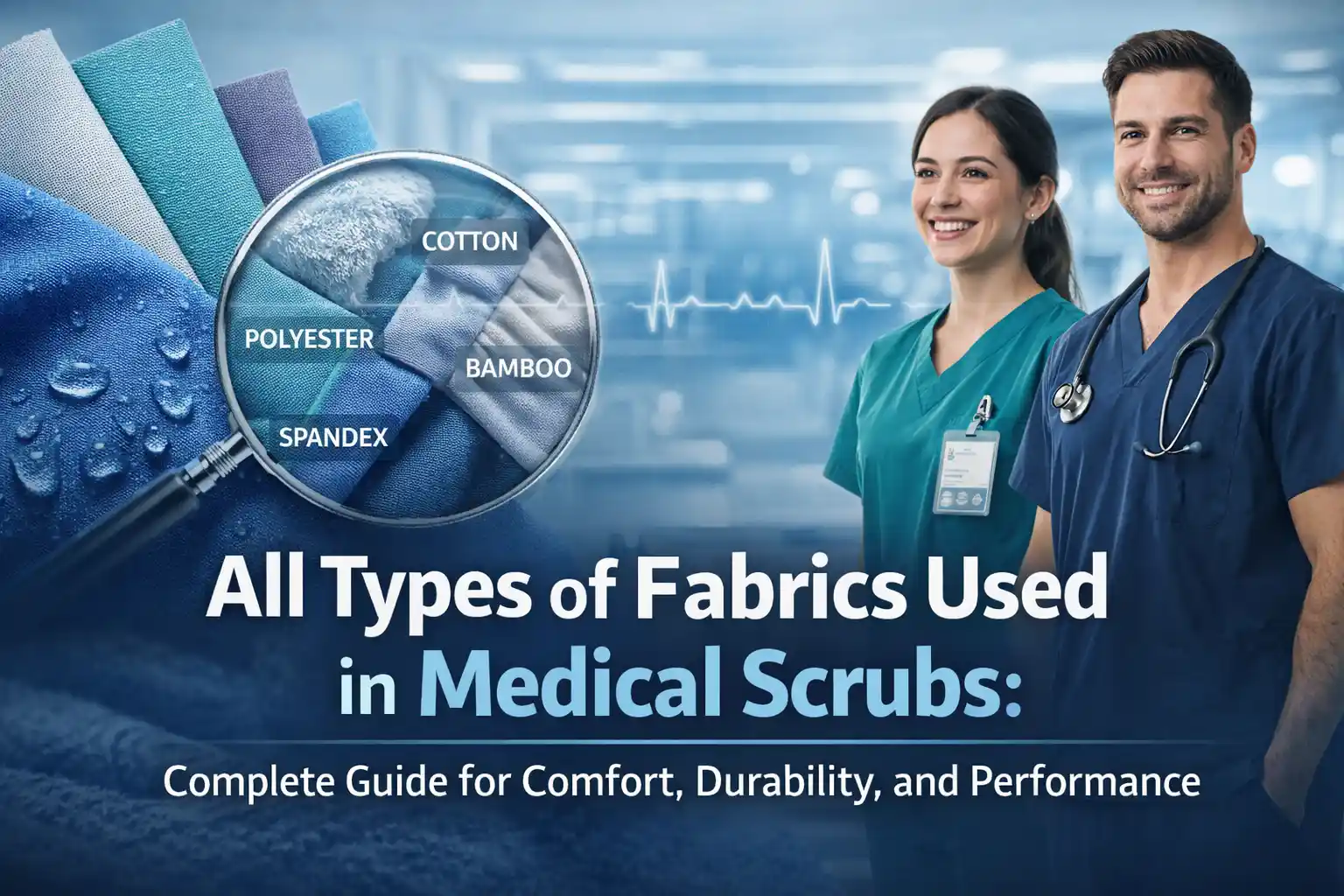


Choosing the right fabric for medical scrubs isn’t just about how they look. It affects comfort, safety, durability, and long-term costs. Hospitals, clinics, and nursing schools need uniforms that can last through long shifts, frequent washes, and strict hygiene practices. This guide covers 20 types of scrub fabrics, from cotton to blends, and explains how each affects comfort, infection control, and durability. Whether you are ordering in bulk or starting a private label, knowing the types of scrub fabrics helps you make informed, cost-effective choices that keep healthcare teams comfortable and looking professional on every shift.
Why Fabric Choice Matters in Medical Scrubs
Choosing the right fabric can make long shifts easier or harder. Soft, breathable fabrics help nurses and doctors stay cool, reduce sweating, and avoid skin irritation. Stretchy fabrics allow for easy movement when bending, lifting, or working quickly. On the other hand, stiff or rough fabrics can cause discomfort and slow down tasks, even during short shifts.
Not all fabrics are suitable for hospitals. Healthcare facilities follow guidelines from AORN, AAMI, CDC, and OSHA. These rules prefer low lint fabrics that can handle industrial washing, bleach, and high temperatures up to 160°F. Picking the right fabric ensures scrubs stay clean, safe, and meet standards over time.
Scrubs that shrink, fade, or lose shape quickly must be replaced often. Fabrics that keep their color and fit are better for staff and reduce replacement needs. Choosing the right fabric balances comfort, safety, and durability, which lowers costs over time.
How Medical Scrub Fabrics Are Classified
Medical scrub fabrics generally fall into five categories based on fiber type and performance.
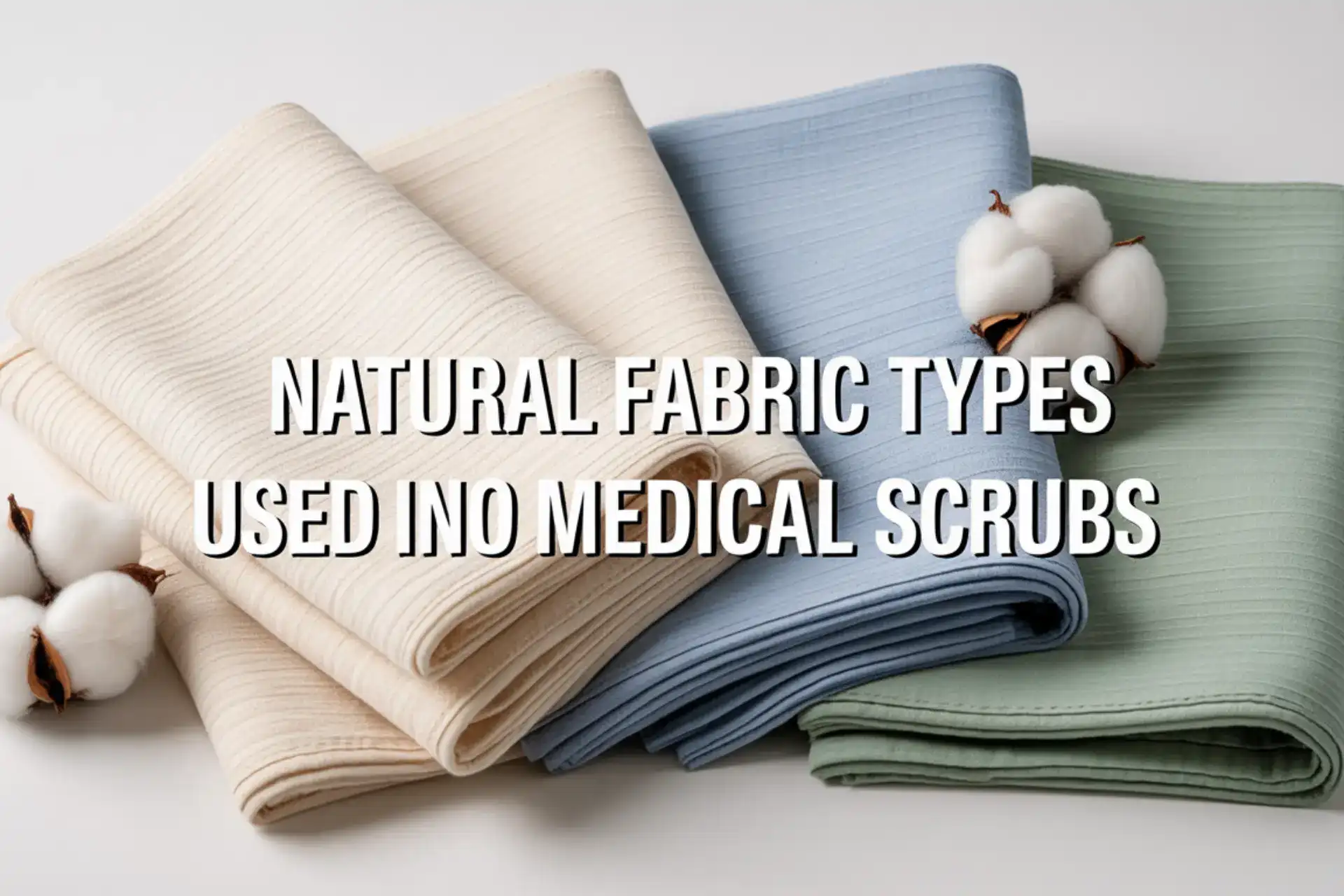
Natural fabrics like cotton and organic cotton are soft and breathable. They feel gentle on the skin, which makes them great for long shifts or sensitive skin. However, without proper treatment, natural fabrics may shrink or wear out faster than blends.
Synthetic fabrics such as polyester and nylon are often used in medical scrubs. They are strong, lightweight, and resist wrinkles and fading. These fabrics dry quickly and hold up well in industrial laundry, but they may not feel as soft as natural fibers.
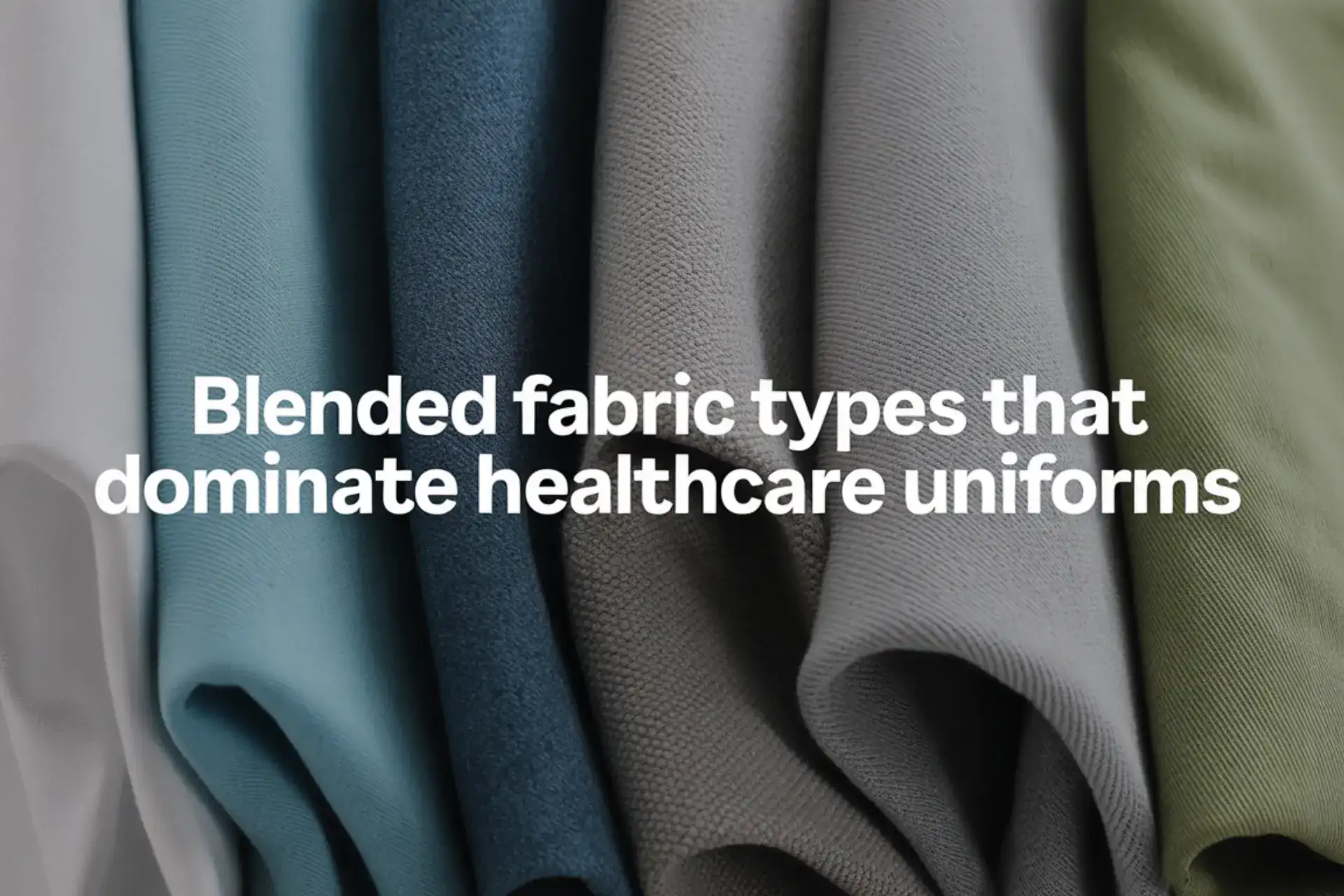
Blended fabrics mix natural and synthetic fibers. Poly cotton and cotton spandex blends provide comfort, stretch, durability, and easy care. These blends are popular in hospitals and clinics because they balance performance and cost.
Performance and treated fabrics include moisture control, antimicrobial protection, fluid resistance, and stretch features designed for demanding work settings.
Recycled polyester, bamboo blends, and Tencel are becoming more popular for medical scrubs. These materials are good for the environment while still working well, but some need special care when washing to stay strong.
Natural Fabric Types Used in Medical Scrubs
100% Cotton
Cotton scrubs are soft, breathable, and comfortable for long shifts. They allow air to flow, helping to keep you cool. However, cotton can shrink and fade after many washes, and it doesn’t resist fluids well. It requires careful laundering to maintain durability.
Organic Cotton
Organic cotton is grown without chemicals, making it safe for those with allergies, especially in pediatric environments. It offers the same comfort as regular cotton and is more sustainable, but it usually costs more and may still shrink a little. Synthetic Fabric Types Used in Medical Scrubs
Polyester
Polyester scrubs are strong, resist wrinkles, and keep their color through many washes. They dry quickly and are great for budget-friendly hospital uniforms that need to last. While not as soft as cotton, polyester offers excellent durability and low maintenance.
Nylon
Nylon is lightweight and flexible, helping with movement in active jobs. It’s not often used by itself but works well in blends to improve stretch, breathability, and long-term performance.
Blended Fabric Types That Dominate Healthcare Uniforms
Cotton Polyester Blend
This is the most common scrub fabric in healthcare. It is soft, breathable, durable, and resistant to wrinkles. It shrinks less than pure cotton and holds color well, making it great for large orders.
Polyester Rayon Spandex
This premium blend feels smooth, stretches well, and controls moisture. Rayon adds softness, spandex improves movement, and polyester ensures durability. It is popular for high-end uniforms in active departments.
Cotton Spandex
Cotton spandex offers comfort with some stretch. It is suitable for outpatient and clinical settings where softness is essential, but it may shrink if not pre-shrunk.
Polyester Spandex
This blend emphasizes durability and flexibility. It resists fading and wear while allowing full movement, making it perfect for emergency and intensive care environments.
Nylon Spandex
Lightweight and very flexible, nylon spandex blends are good for demanding jobs that need constant movement. While they are not as soft as cotton blends, they perform well under pressure.
Stretch and Performance Fabric Constructions
Two-way stretch fabrics offer flexibility for basic movement. They are great for general clinical or administrative jobs. Four-way stretch fabrics move in all directions. They provide maximum mobility in fast-paced environments like emergency and intensive care units. These fabrics help reduce strain during lifting and constant movement. Performance knit fabrics focus on moisture control, airflow, and lasting comfort. They keep staff dry and comfortable during busy shifts or warm environments.
Specialty Treated Medical Scrub Fabrics
Antimicrobial treatments reduce bacterial growth on fabric. They add protection in high-contact areas but do not replace proper washing. Moisture-wicking fabrics pull sweat away from the skin, keeping staff dry during long or active shifts.
Fluid-resistant fabrics create a barrier against splashes and spills in operating rooms, labs, and intensive care. Stain-resistant treatments make scrubs easier to clean and help keep a professional look after repeated use.
Wrinkle-resistant fabrics need less ironing and make maintenance easier in large uniform programs. These treatments follow infection control guidelines from AST, AORN, and CDC.
Sustainable and Eco Friendly Scrub Fabrics

Recycled Polyester
Recycled polyester is strong and easy to clean, made from materials that have been used before. It’s an excellent choice for hospitals that want eco-friendly uniforms.
Tencel and Lyocell
Tencel and Lyocell are soft and breathable fabrics that fight bacteria naturally. They feel nice on the skin but need careful washing to stay in good shape.
Bamboo Blends
Bamboo blends are light and comfy, with some natural antibacterial qualities. Their sustainability relies on how they are processed, and it’s essential to follow washing instructions closely.
Matching Fabric Types to Healthcare Roles
Nurses on long shifts need breathable and stretchy materials like cotton-polyester blends or cotton-spandex that control moisture. Surgical teams need lightweight fabrics that produce little lint and meet hygiene rules. Cotton blends with fluid-resistant or antimicrobial treatments offer extra protection. Emergency and intensive care staff require fabrics that allow maximum movement. Polyester-spandex or nylon-spandex blends provide comfort and support during fast-paced jobs.
Clinic and outpatient staff benefit from durable fabrics that look good and are easy to care for, needing less frequent washing. Students and budget buyers often pick cotton-polyester blends for their affordability, comfort, and decent durability, especially in bulk orders. For bulk orders, pairing durable fabrics with proven scrub color options helps ensure uniforms keep their appearance even after repeated high temperature washes.
Durability Care and Real World Performance
Medical scrubs wear out quickly and get washed often. Fabrics that aren’t pre-shrunk or colorfast can lose shape or fade fast. Washing at the proper temperatures, using the right detergents, and drying properly can help them last longer. Keeping stretch is key for blended and performance fabrics. Good-quality scrubs stay flexible after many washes, which helps prevent discomfort and reduces the need to buy new ones.
Common Fabric Selection Mistakes to Avoid
- Choosing color over fabric quality.
- Ignoring blend ratios and stretch loss.
- Assuming all stretch fabrics are breathable.
- Skipping sample testing before bulk orders.
- Trusting eco claims without certifications.
Avoiding these mistakes ensures better comfort, durability, and compliance.
FAQ About Medical Scrub Fabrics
What fabric works best for long shifts
Cotton polyester or cotton spandex blends with moisture control offer comfort and durability.
Cotton or polyester which is better
Cotton is soft but shrinks easily. Polyester is durable and easy care. Blends usually perform best.
Do scrubs shrink in hot washing
Yes especially pure cotton or untreated fabrics. Follow care guidelines to reduce shrinkage.
Are antimicrobial scrubs required
They are not mandatory but provide added protection in high exposure areas.
Which fabric lasts the longest
Polyester, nylon, and blended fabrics resist wear and washing best.
Final Buying Guidance for Healthcare Teams
Hospitals, clinics, schools, and private buyers should look for durable, comfortable, and effective products. Always ask for samples, do wash tests, and collect staff opinions before buying in bulk. Choosing the right fabric increases staff comfort, lengthens the life of uniforms, and helps manage long-term costs.