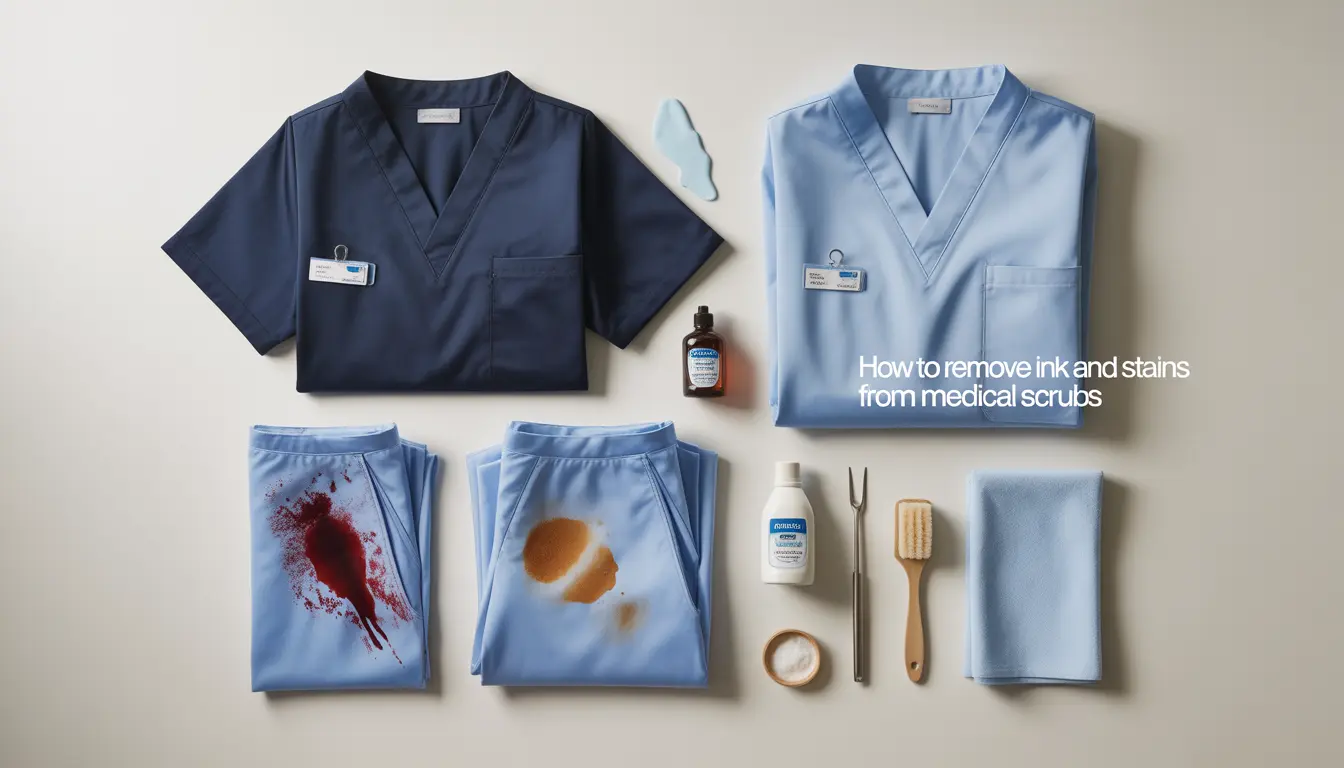

Medical scrubs are daily wear for nurses, doctors, residents, and medical students. During long shifts, scrubs get many stains, including ink, blood, coffee, and disinfectants. To remove these stains, knowing the fabric, stain type, and safe cleaning methods is important.
Most scrubs are made from polyester-cotton or polyester-spandex blends. Each fabric has different heat limits, stretch, and cleaning needs. Polyester-cotton scrubs can be washed in warm water and gently brushed. Polyester-spandex scrubs need cold water, low-heat drying, and careful use of solvents to keep them stretchy.
This guide provides easy steps for removing stains from home and hospital laundry. It includes tips for common stains like ink, blood, coffee, disinfectants, and makeup, along with quick fixes for minor stains and deeper cleaning methods. By using these nurse-tested methods, healthcare workers can make their scrubs last longer, look professional, and avoid fabric damage or fading.
Common Scrub Stains Healthcare Workers Face
Medical scrubs get many stains during hospital shifts, so cleaning them is very important. Knowing the types of stains helps teams choose the right fabrics and laundry methods for durability. Common stains on scrubs include ink, blood, drinks, disinfectants, food, makeup, and sweat. Each stain behaves differently with fabric, so understanding this helps with laundry at home and in the workplace.
The Real-Life Stain List
Healthcare workers often deal with:
- Ink – Ballpoint and gel pens can leak in pockets or on clothes.
- Blood – Fresh or dried blood sticks to fabric and needs quick treatment to remove.
- Coffee, Tea, and Energy Drinks – These drinks can spill and leave common tannin stains.
- Betadine/Iodine and Chlorhexidine – These antiseptics can leave tough, pigmented stains that are hard to remove.
- Food, Grease, and Makeup – Oil-based stains can come from meals or personal care products like foundation.
- Sweat, Deodorant, and Bodily Fluids – Long shifts can cause odours and stains to build up over time.
Why These Stains Behave Differently
Stains act differently based on their makeup and how they connect with fabric:
- Protein-based stains (such as blood) require cold water and can set with heat.
- Tannin-based stains (like coffee) stick to fibres and respond well to oxygen-based cleaners.
- Oil-based stains (such as grease) are absorbed differently and often require specialised cleaners.
- Dye-based stains (like ink) are deep and need quick blotting and special removers.
Understanding these differences helps teams pick fabrics, laundry methods, and stain treatments for each hospital area, keeping scrubs looking professional and working well.
Know Your Scrub Fabric Before Treating Stains
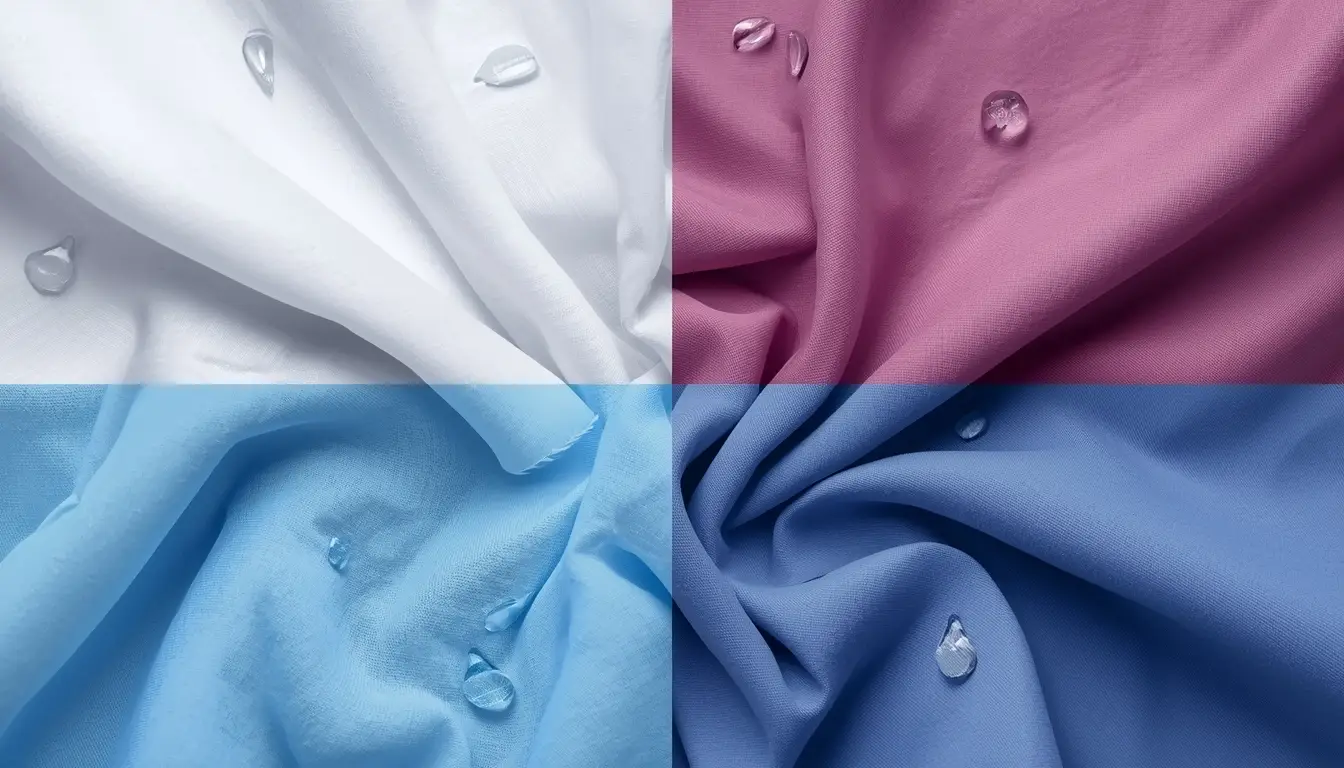
Before treating stains, it’s important to know what medical scrubs are made of. Different fabrics react differently to heat and cleaning methods. Laundry teams should consider fabric type when washing both in-house and industrial scrubs to keep them durable, colourful, and fitting well. The two most common fabrics are polyester-cotton blends and polyester-spandex blends, each needing different stain treatment methods.
Polyester Cotton Scrubs
Polyester-cotton scrubs are sturdy and breathable. They can withstand higher heat during washing and drying, making them suitable for frequent industrial cleaning. They resist wear, so they look good after many washes. For stain removal, use cold water for protein stains, such as blood. Oxygen-based cleaners are best for tannin- or dye-based stains, while enzymatic cleaners work on oil-based stains. Polyester-cotton scrubs are easy to care for, making them a smart choice for busy departments with many spills.
Polyester Spandex and Performance Scrubs
Polyester spandex scrubs are popular because they stretch and allow easy movement, helping staff perform well during long shifts. However, they can be affected by heat and wear. To avoid shrinking or changing shape, dry them on low heat. Use only safe cleaners for these scrubs, as strong stain removers can harm the fabric. Quickly blot and rinse protein, tannin, and dye stains with cold water. Proper washing is crucial to keep scrubs looking good, fitting well, and stretching correctly, making them perfect for busy hospital departments.
How to Read Care Labels on Medical Scrubs
Care labels are essential for washing and stain removal advice. They show the best washing temperature, drying methods, bleach use, and ironing limits. Procurement teams must ensure all staff understand these labels to avoid shrinkage, fading, and damage. Following specific care instructions can lower costs by reducing the need for new scrubs and keeping a professional look.
Universal Stain Removal Rules for Medical Scrubs
Effective stain removal starts with some simple rules that work for all scrubs. These tips help keep scrubs strong, maintain their color, and save hospitals and clinics money. Act quickly is the first rule. Fresh stains are easier to remove and need less harsh treatment. Waiting longer increases the risk of permanent stains or fabric damage. Blotting, not rubbing, is very important. Rubbing can spread the stain and hurt the fibers, especially in polyester–spandex scrubs. Use a clean cloth or paper towel to lift liquid stains gently.
Treat from the back whenever you can. Putting cleaner on the back of the fabric pushes the stain out rather than letting it go deeper. Use cold water first for most stains. Hot water can set stains, such as blood and sweat. After pre-treating, you can use fabric-specific cleaners as needed. Test a small area before using strong cleaners. Some cleaners can harm stretchy scrubs or change their color.
Always check a hidden spot before applying fully. Avoid the dryer until the stain is gone. Heat can permanently set stains, especially on polyester-cotton blends. Air-dry treated areas or use low heat only after confirming the stain is gone. Following these simple rules helps scrubs look professional, keep their color, and last longer, making laundry easier for hospitals and bulk buyers.
How to Remove Ink From Scrubs
Ink stains often happen in hospitals and clinics from pens and markers. Removing ink quickly helps keep scrubs looking good and lowers buyers’ costs.
Fresh Pen Marks
Fresh ink stains are easier to clean. Start by gently blotting the stain with a clean cloth to absorb excess ink without spreading it.
For Polyester Cotton
Dab a little isopropyl alcohol on a cloth and apply it to the stain, starting from the outer edge. Then use mild detergent and rinse with cold water. Stay away from hot water, as it can make the stain harder to remove.
For Polyester Spandex
Stretchy fabrics need gentle washing. Lightly dab the ink with alcohol, then use liquid detergent. Squeeze the fabric gently and rinse it with cold water. Don’t use strong solvents, as they can ruin the stretch. After pre-treating, wash your scrubs according to the care label. If stains remain, blot again and wash in cold water before drying.
Dried Ink or Pen Explosions
Dried ink stains or pen spills need several steps to clean. Start by using isopropyl alcohol or a baking soda paste on the stain. Let it sit for 5–10 minutes, then blot it. Repeat if needed. Sometimes, heavy or dark inks may not come out completely. In such cases, you might need professional cleaning with special stain removers or strong solvents. Always let the treated area air-dry first to avoid setting the stain with heat.
Home Remedies vs Ink-Specific Products
For small, fresh stains, common home remedies like alcohol, hand sanitizer, or hairspray work well. There are also commercial products, such as ink stain removers or oxygen boosters, that are better for tough or colored stains. Home methods are good for quick fixes, while commercial products are best for deep cleaning. The choice of method depends on the fabric type, the age of the stain, and how you plan to wash it.
Blood Stains on Medical Scrubs: Fresh and Dried
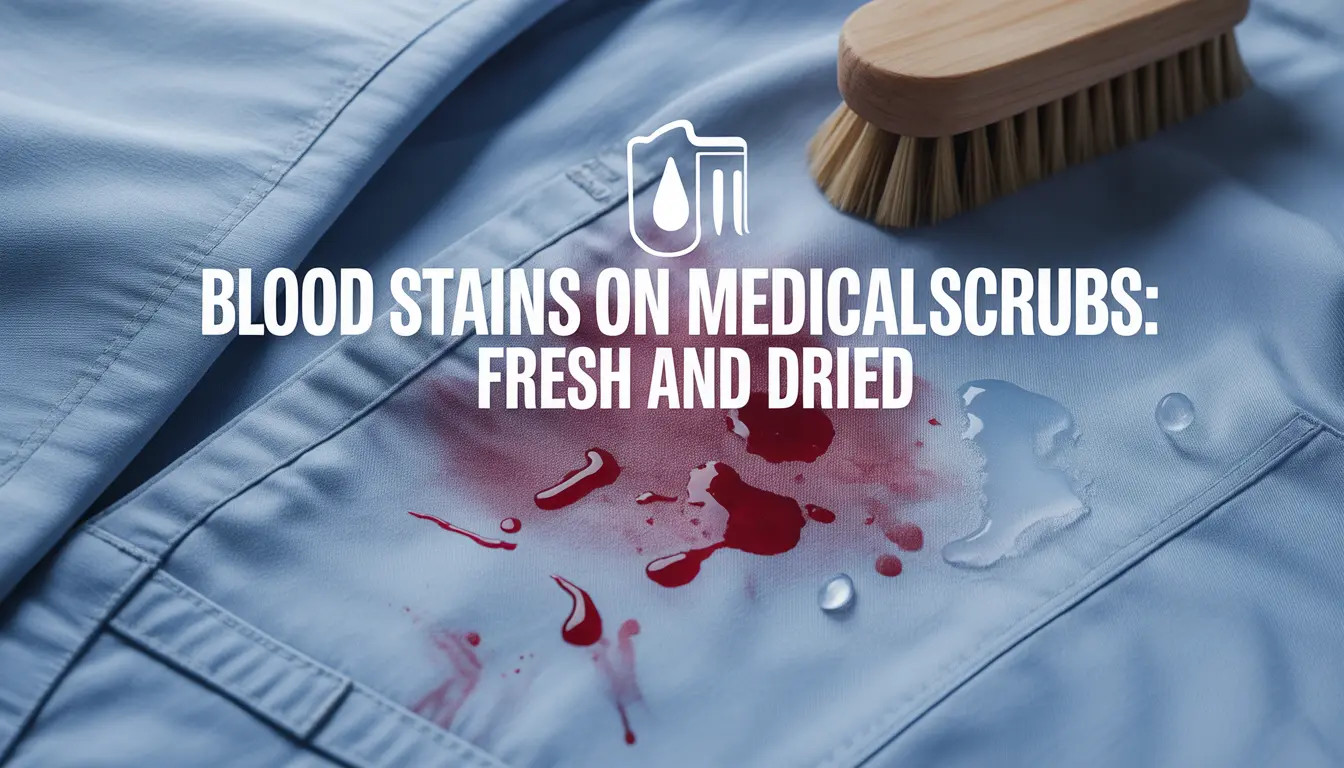
Blood stains are a common challenge for hospital and clinic staff. Properly handling these stains keeps scrubs in good condition, lowers replacement costs, and maintains hygiene.
Fresh Blood on Scrubs
Fresh blood stains are easier to treat. Start by rinsing the area with cold water to wash away excess blood. Avoid hot water, as it can make stains permanent. Apply a liquid enzyme detergent directly to the stain and gently rub it in. Enzymes help break down the proteins in the blood, making it easier to remove. After treating the stain, wash the scrubs in cold water according to the care label. In hospitals with a lot of laundry, separate heavily soiled scrubs and treat them before washing them all together. This helps reduce cross-contamination and improve stain removal.
Dried Blood Stains
Dried blood stains need more work. Soak the scrubs in cold water for 20–30 minutes to loosen the stain. For white or light-colored scrubs, use hydrogen peroxide. Let it bubble to lift the stain. For colored scrubs, use an enzyme pre-treatment to avoid discoloration. Gently rub the fabric and rinse well. If stains stay, treat them with the enzyme again before washing in the machine. Always avoid hot water and tumble drying until the stain is completely gone to prevent it from setting.
Blood on White vs Dark Scrubs
White scrubs can safely use hydrogen peroxide, but dark scrubs should avoid it to prevent fading. For colored uniforms, use enzyme detergents or oxygen-based stain removers. Treat stains quickly and rinse with cold water to keep colors bright and lower replacement costs.
Coffee, Tea, and Drink Stains on Scrubs
Coffee, tea, and other drinks often stain scrubs during hospital shifts. Acting quickly keeps scrubs looking good, saves money, and maintains a professional image.
Quick On-Shift Fix for Coffee Stains
When a drink spills, act fast. Blot the stain gently with a clean cloth or paper towel to soak up the liquid. Don’t rub the stain, as it can spread further into the fabric. If there’s a sink nearby, rinse the stained area under cold water. Put a little mild soap or detergent on the stain and work it in gently with your fingers. After blotting and rinsing, let the scrubs air dry if you can’t wash them right away. Quick fixes help prevent stubborn stains and lower the need for new uniforms in busy medical environments.
Deep Cleaning for Set Coffee and Tea Stains
For dried or set stains, you need a stronger cleaning method. First, soak the scrubs in cold water and vinegar for 20–30 minutes to help loosen the stain. If you want to protect colors, use an oxygen-based stain remover.
After soaking, wash the scrubs in cold or warm water, as directed on the care label. For polyester-cotton scrubs, don’t use high temperatures to keep their shape and prevent shrinking. Polyester-spandex scrubs need gentle cycles to protect the stretchy fibers.
Tough stains may require another pre-treatment before washing thoroughly. Hospitals and clinics that use industrial laundry can group similar stains for better cleaning, reducing fabric damage and saving money.
Disinfectants, Iodine, and Prep Solution Stains
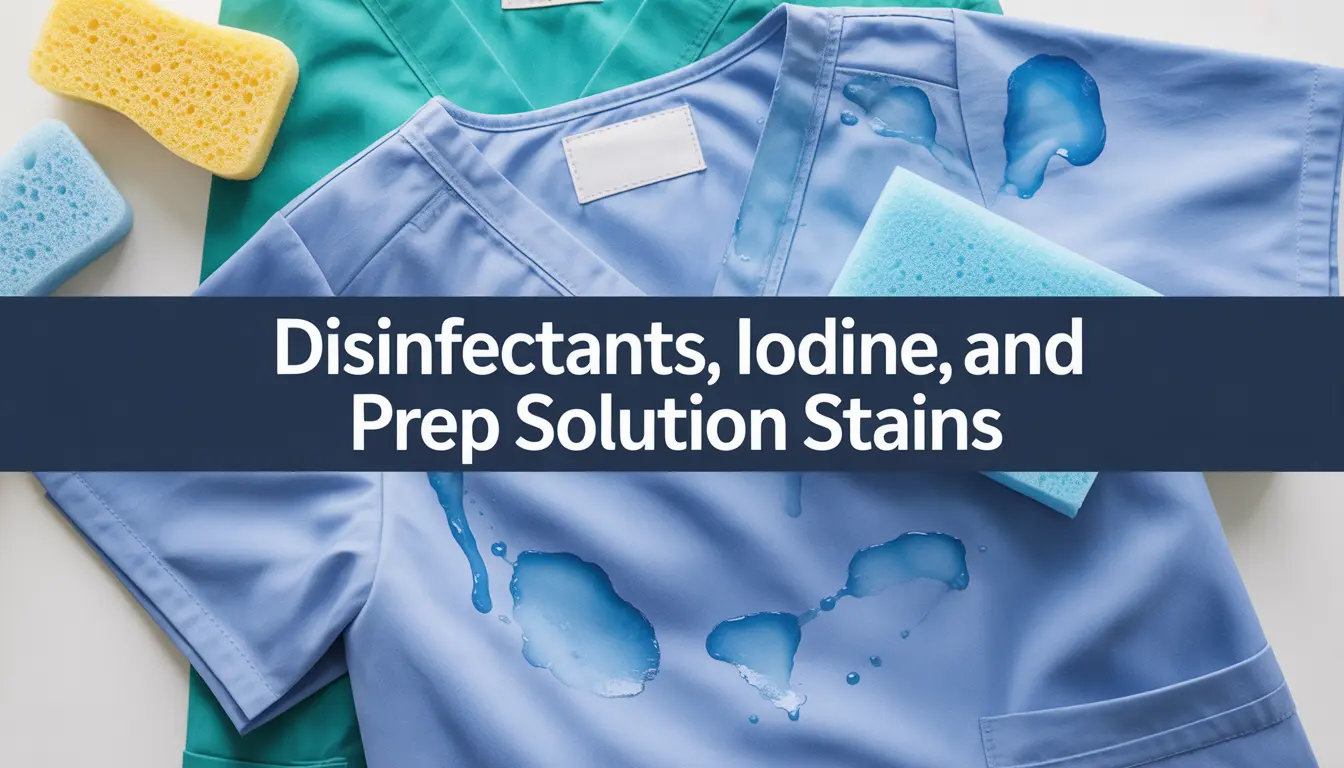
Healthcare workers often deal with stains from disinfectants, iodine, and other cleaning solutions. These are important for patient care but can leave marks on scrubs. Proper care of scrubs keeps them looking professional and reduces the need to buy new ones.
Betadine / Iodine Stains
Iodine stains, like those from Betadine, can quickly set if not treated right away. It’s important to act fast. Rinse the stained area with cold water to remove any residue.
For tougher stains, use an oxygen-based cleaner as directed. Don’t use chlorine bleach on colored scrubs, as it can damage the dyes. Gently scrub the cleaner into the fabric with a soft brush or cloth, then wash according to the care label.
Regular industrial washing with pre-treatment steps helps reduce the long-term effects of iodine stains on polyester-cotton and polyester-spandex scrubs.
Chlorhexidine and Other Antiseptics
Chlorhexidine and other hospital cleaners can leave light but lasting stains on medical uniforms. These stains can be cleaned with color-safe stain removers or oxygen boosters. Treat the stains before washing, and check that the product is safe for stretchy fabrics to keep their fit.
Blot the stains gently rather than scrubbing, as scrubbing can damage the fibers over time. In industrial laundry, separating stained items enables targeted treatment, extending fabric life and improving efficiency. Using the proper cleaning methods helps scrubs retain their color, flexibility, and professional look over many washes. It lowers replacement costs and keeps staff happy.
Food, Grease, Makeup, Sweat, and Everyday Stains on Scrubs
Medical scrubs get many stains, not just ink and blood. Food spills, grease, makeup, sweat, and deodorant marks are common during hospital shifts. Taking care of them keeps the fabric strong, maintains color, and lowers replacement costs.
Grease and Oil
Grease and oil from food or medical tools can quickly soak into scrub fibers. First, use a powder like baking soda or cornstarch to soak up the oil. Let it sit for 10-15 minutes, then gently brush it off. Next, apply a little dish soap or laundry detergent, rubbing it into the stain, then wash in cold water. Polyester-cotton scrubs handle this well, while polyester-spandex scrubs need more gentle care to avoid damage.
Makeup, Sunscreen, and Lotion Marks
Makeup, sunscreen, and lotion can leave marks on collars and sleeves. Use a soft scrubbing method with a safe stain remover or gentle soap. Stay away from strong chemicals that might damage the fabric color. First, dab the area, then clean from the back of the fabric if you can. For tough stains, soak it in cold water for a short time. Regular cleaning stops buildup and keeps clothes looking professional.
Sweat, Deodorant, and Odor Build-Up
Sweat and deodorant can cause stains and smells. Treat stains with a baking soda paste or an enzyme-based detergent to break down oils and proteins. Put it directly on the underarm or sweaty areas, let it sit for 10–15 minutes, then wash according to the care label. Don’t use high heat to dry the clothes before treating the stains, as it can make them worse. For items with a lot of sweat, industrial laundry systems can use special pre-treatment cycles. This helps keep things hygienic, extends fabric life, and saves money on bulk scrubs.
Home Remedies vs Commercial Stain Removers for Medical Scrubs
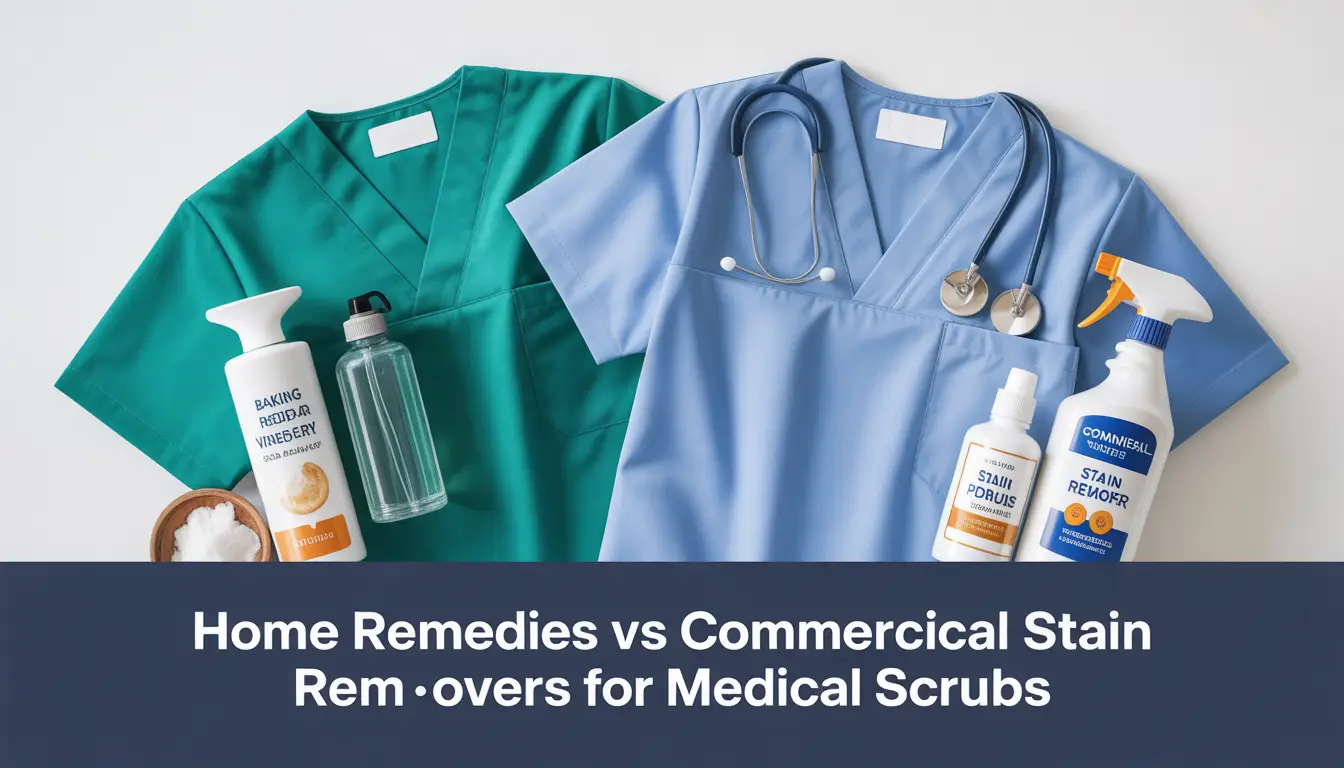
Medical scrubs get stained every day, and healthcare teams use home remedies or commercial products to clean them. Each method has benefits depending on the fabric type, the severity of the stain, and what’s available. Knowing the strengths and limits of each method helps clean effectively without hurting the scrubs.
Popular Home Remedies Healthcare Workers Actually Use
Healthcare workers often use common household items to quickly treat stains. Rubbing alcohol or hand sanitizer works well for fresh ink or marker stains. Baking soda or vinegar can help with food, coffee, or tea stains. For blood or protein stains, rinsing with cold water and using enzyme detergent is common. These methods work well for quick fixes, especially when industrial laundry isn’t an option. Staff should test any home remedy on a hidden spot first to make sure it doesn’t damage the fabric.
Best Types of Commercial Stain Removers for Scrubs
Commercial stain removers work well for cleaning large amounts of scrubs. Oxygen-based boosters are safe for polyester-cotton and polyester-spandex fabrics. Ink-specific sprays or gels remove pen marks without harming stretchy fibers. Color-safe bleach alternatives keep dark and bright scrubs looking good. Industrial laundry systems can use these products in pre-soak or pre-treatment cycles to save time and protect fabrics. Procurement teams should select products tested for medical uniforms that meet performance and durability standards.
Washing Temperatures, Cycles, and Drying for Long-Lasting Scrubs
Proper washing and drying are key to keeping scrubs comfortable, colorful, and effective. Using the wrong water temperature or harsh washing can shorten the fabric’s life, cause shrinkage, or damage stretch in polyester–spandex blends.
Best Water Temperature by Fabric and Stain
For polyester–cotton scrubs, use cold to warm water (20–40°C) to remove most stains without fading or shrinking. Polyester–spandex scrubs need cooler water (20–30°C) to protect the stretch fibers. Use cold water for fresh blood and protein stains, and slightly warmer water for coffee or tea stains. Avoid hot water for ink or bright stains, as it can set them. Using enzyme detergents in pre-soak or wash cycles helps remove stains better. In hospital laundry, gentle washing preserves seams and reduces pilling.
How Often Should You Wash Scrubs
Wash scrubs after every shift to keep them clean, stop odors, and lower germs. Departments that deal with fluids, chemicals, or lots of patient contact may need to wash scrubs twice a day during busy shifts.
Drying Scrubs Without Shrinking or Damaging Them
Air-dry or use low heat to dry scrubs without damaging them. Polyester-spandex scrubs should stay on low heat, while poly-cotton blends can handle moderate heat. Take scrubs out of the dryer right away to avoid wrinkles and reduce ironing, protecting the fabric and color.
How to Protect Scrub Color, Stretch, and Feel Over Time
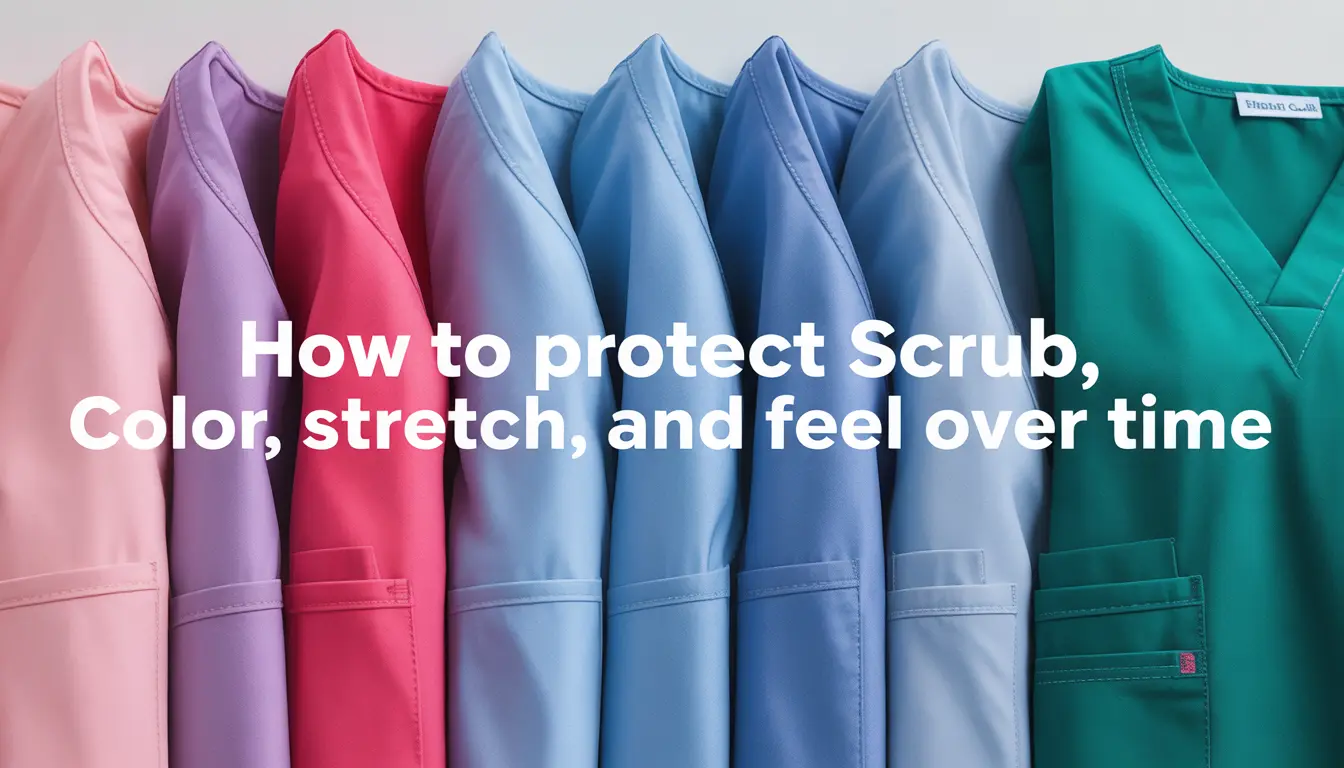
To keep scrubs in good shape, focus on their color, stretch, and feel. Proper care helps scrubs last longer, lowers replacement costs, and keeps staff looking professional and feeling comfortable.
Color Protection Habits
Consistent color helps staff be easily recognized. Wash dark and bright scrubs separately from light colors to avoid bleeding. Use cold water and gentle color-safe detergents. Stay away from chlorine bleach; use oxygen-based cleaners for stains, as they’re safer and won’t fade. Treat stains quickly to stop them from setting, and dry scrubs away from direct sunlight to keep colors bright. In hospital laundries, stick to the same wash cycles and sorting methods to maintain color consistency. Following care label instructions helps prevent fading, keeping scrubs vibrant after many washes.
Keeping Stretchy Scrubs Soft and Flexible
Stretch fabrics like polyester and spandex can be damaged by heat and strong chemicals. Wash them in cold water on a gentle cycle, and don’t use fabric softeners, as they can wear out the fabric’s stretch. Drying on low heat or air drying keeps the fabric from shrinking and helps it stay flexible. When folding or storing scrubs, don’t squeeze them tightly to keep the fibers from becoming weak. Taking care of scrubs helps them keep their fit and flexibility, which is important for staff comfort and performance during long hospital shifts.
On Shift Emergency Stain Hacks
Medical staff deal with stains during long shifts. Quick actions can stop permanent marks. Having a plan for emergencies helps reduce washing and keeps scrubs looking good.
Mini Stain Kit for Your Locker or Bag
Keep a small kit handy for quick stain fixes. Include travel-size alcohol wipes, an enzyme spot treatment pen, a small bar of mild soap, paper towels or microfiber cloths, and a plastic bag for damp scrubs. Store these items in a pouch or section of your locker. This kit helps nurses, doctors, and residents treat stains from ink, blood, coffee, or makeup right away, stopping them from setting until laundry time.
Fast Fixes for Common On-Shift Stains
Ink: Blot fresh marks with an alcohol wipe from the back of the fabric. Don’t rub.
Coffee or tea: Rinse under cold water and blot with paper towels. Mild soap can lift the stain.
Blood: Use cold water right away. For small amounts, an enzyme pen or wipe can help.
Deodorant or sweat marks: Rub gently with a damp cloth and mild soap to remove residue.
Acting quickly helps keep scrubs colorful and in good shape. Even if you can’t fully clean them until you get home, these tips keep scrubs looking professional during long shifts.
Biggest Mistakes That Make Scrub Stains Permanent
Preventable errors can turn small spills into permanent marks on scrubs. Knowing common mistakes helps healthcare teams look professional and keep uniforms longer.
Hot water on fresh stains: Heat can set stains, such as blood or sweat. Always start with cold water to treat stains.
Drying before removal: Putting stained scrubs in the dryer locks in stains from ink, coffee, or blood. Wait until the stain is completely gone before drying.
Over-scrubbing: Rubbing too hard can damage the fabric, especially polyester blends. Instead, blot or gently rub the stain.
Bleach misuse: Using strong bleach on dark scrubs can fade them. Use color-safe cleaners instead.
Over-soaking: Soaking scrubs too long can weaken the fabric and stretch the seams. Stick to the recommended soaking times.
By avoiding these mistakes, hospitals and clinics save money and keep scrubs clean and professional.
FAQ
How do I get ink out of premium scrubs?
For polyester-cotton or polyester-spandex scrubs, treat ink stains right away. Blot the extra ink, use rubbing alcohol or ink remover, then wash with cold water. If needed, repeat gently but don’t scrub too hard to protect the fabric.
Can I use bleach on dark scrubs?
No, don’t use chlorine bleach. It can fade and change color unevenly. Use color-safe bleach or oxygen-based detergents instead. Always test it on a hidden spot first.
What if a stain only shows after drying?
Some stains show up only after drying. Treat the stain again with a pre-wash stain remover, soak it in cold water for a short time, and wash it according to the fabric care instructions. Don’t use the dryer until the stain is gone.
Is dry cleaning worth it?
Dry cleaning is usually not needed for medical scrubs. Most polyester-cotton and polyester-spandex fabrics wash well at home or in a commercial washer. This is faster, safer, and more affordable for large orders.
How many times can I treat a stain?
You can treat a stain multiple times gently, but don’t scrub hard or use strong chemicals. Excessive use of harsh solvents can weaken the fabric or affect its stretch.
How do I prevent odor in scrubs after washing?
Use enzyme detergents to remove protein smells; wash your scrubs right after your shift, and let them air dry completely. For strong odors, a short soak with baking soda or an oxygen-based booster can help keep them fresh.
How This Guide Is Different From Others
This guide looks at medical scrubs as practical work clothes, not fashion. Unlike typical stain-removal tips, it gives specific advice for different fabrics, showing the difference between polyester-cotton and polyester-spandex scrubs and safe cleaning methods for each. It offers quick solutions for busy nurses, doctors, and residents who can’t wash their scrubs right away during shifts.
The guide discusses everyday stains healthcare workers encounter, such as ink, blood, coffee, disinfectants, and bodily fluids. Each section explains why stains react differently and which treatments work best without ruining the scrubs.
It also highlights common mistakes that can make stains hard to remove. These include using hot water first, drying before treating stains, or soaking too long. By providing practical techniques and considering hospital needs, this guide offers insights that many online stain-removal tips miss.
Final Tips to Keep Scrubs Clean, Professional, and Long-Lasting
To keep scrubs looking good and working well, follow these simple tips. Treat stains right away and use cold water to stop them from setting in. Pre-treat tough stains with the proper stain remover before washing.
Don’t use high heat when washing or drying, especially for polyester-spandex and performance scrubs. It helps them stay stretchy and prevents shrinking. Always check the care labels for specific washing instructions.
Rotate scrubs to minimize wear on each set. Use enzyme detergents or oxygen-based boosters for protein or dye stains. For emergencies at work, keep a mini stain kit in your locker or bag for ink, coffee, or blood.
Taking care of your scrubs helps them last longer and keeps you looking professional. It reduces the need for replacements, maintains color consistency across departments, and keeps staff comfortable and confident during long shifts.