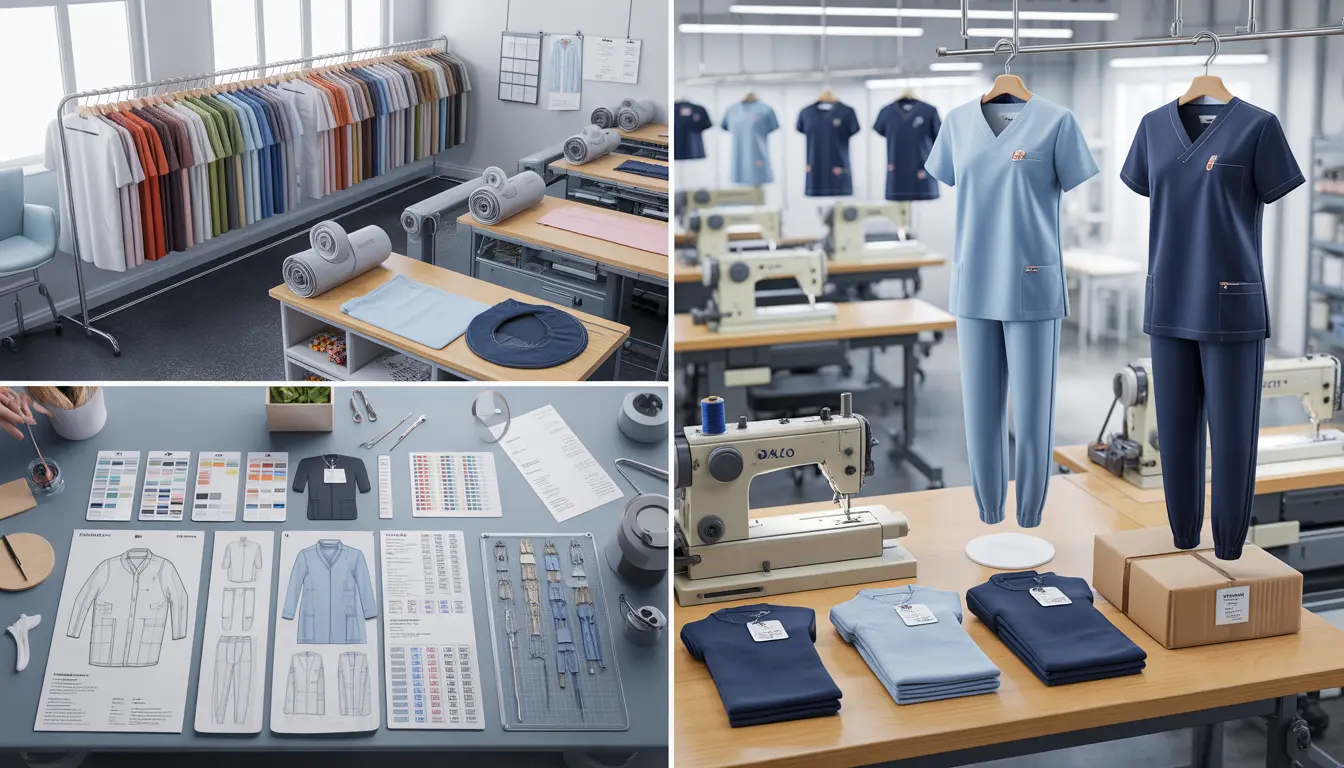

Medical scrubs are important for healthcare workers. They help with movement, keep infections in check, provide comfort during long shifts, and ensure safety at work. For hospitals and clinics, choosing private-label scrubs is a smart business choice, not just a branding effort.
This guide explains how private-label scrubs are made, from planning through production. It is meant for procurement teams, healthcare managers, and uniform suppliers who handle large orders. You will learn how to choose fabrics, understand sizing, control quality, and manage production to improve staff performance and reduce uniform costs over time.
What Are Private Label Medical Scrubs?
Private label medical scrubs are uniforms made for a specific healthcare organization or brand. The buyer decides on the design, fabric, sizing, colors, and branding, while the manufacturer handles pattern development, cutting, sewing, and quality control.
Unlike ready-made scrubs, private-label programs let hospitals and distributors set requirements for stretch, fabric weight, shrinkage, and color durability. This helps maintain uniformity between departments and for repeat orders. Ready-made scrubs come in standard sizes and fabrics, which can lead to fit problems, quicker wear, and more replacements.
Private label is not the same as white label. White-label products are already-made clothes that have a logo added later. In contrast, private-label scrubs are made from scratch to meet the buyer’s needs. OEM production goes further, offering help with technical development, samples, and bulk planning.
These medical scrubs are widely used by hospitals, clinics, nursing schools, and uniform distributors that need reliable supply, controlled sizing, and consistent performance. These programs give procurement teams better control over costs, quality, and long-term uniform planning.
Design and Specification Stage
In the design stage, we decide how medical scrubs will work in real clinics. This starts by gathering input from procurement teams, nursing supervisors, and infection control staff. Each group has different needs based on how they move, exposure risks, and how long their shifts are.
First, we outline how scrubs will be used. Emergency rooms need fabrics that allow easy movement and dry quickly. Operating rooms require materials that produce little lint and have set color standards. Outpatient clinics focus on comfort and ease of washing. These needs guide all design choices.
We choose styles for scrub tops, like V-neck or mock wrap, and pants, like straight leg or jogger. We also consider optional lab coats. Functional details such as pocket placement, badge loops, and waistband design are specified to improve work efficiency.
We document fabric requirements, including material type, weight, stretch, and cleaning instructions for industrial washing. We set size ranges using measurement charts so that sizes from XXS to larger sizes fit consistently. Many hospitals prefer gender-specific sizes for better comfort and fewer uniform swaps.
All decisions are documented in a technical specification file, known as a tech pack. This file guides pattern making, sampling, branding placement, and production standards. Clear specifications help reduce sampling changes, avoid production delays, and ensure procurement teams maintain consistent quality in bulk orders and future reorders.
Fabric Sourcing and Material Control
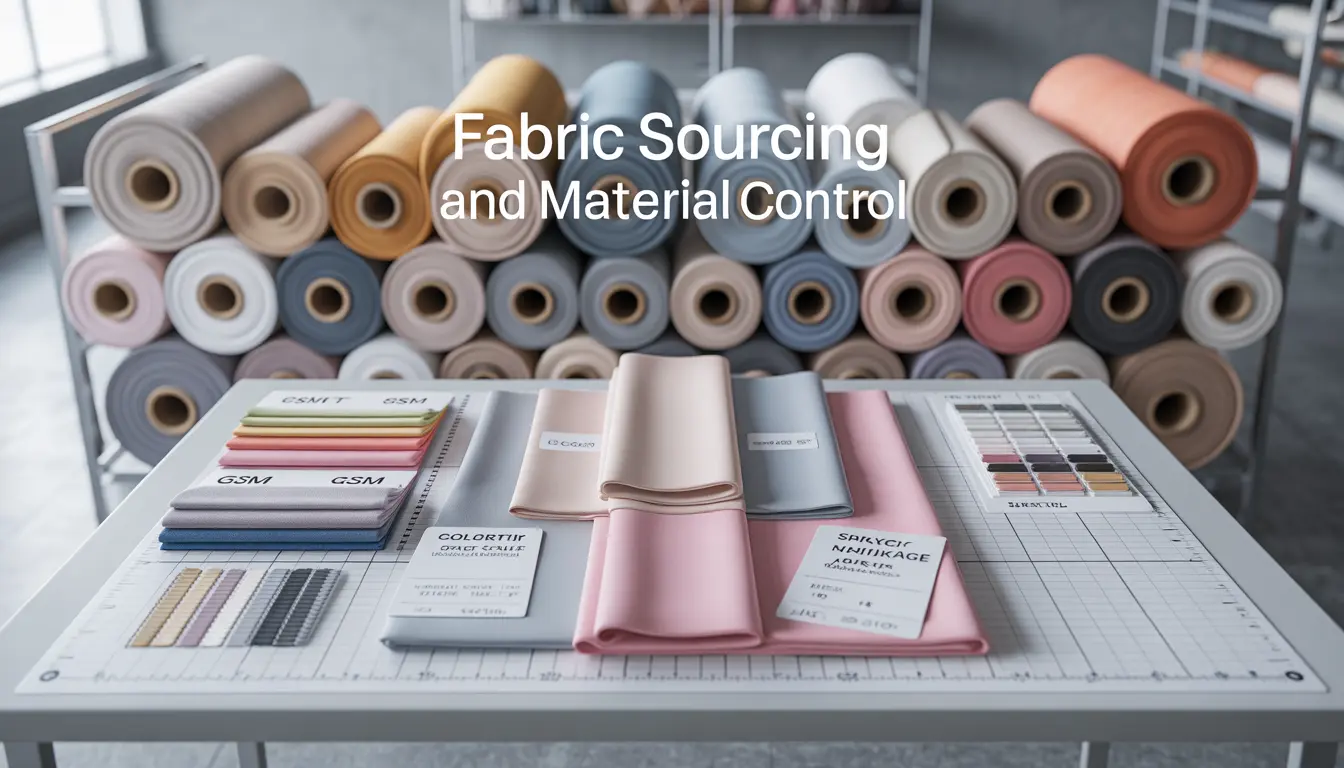
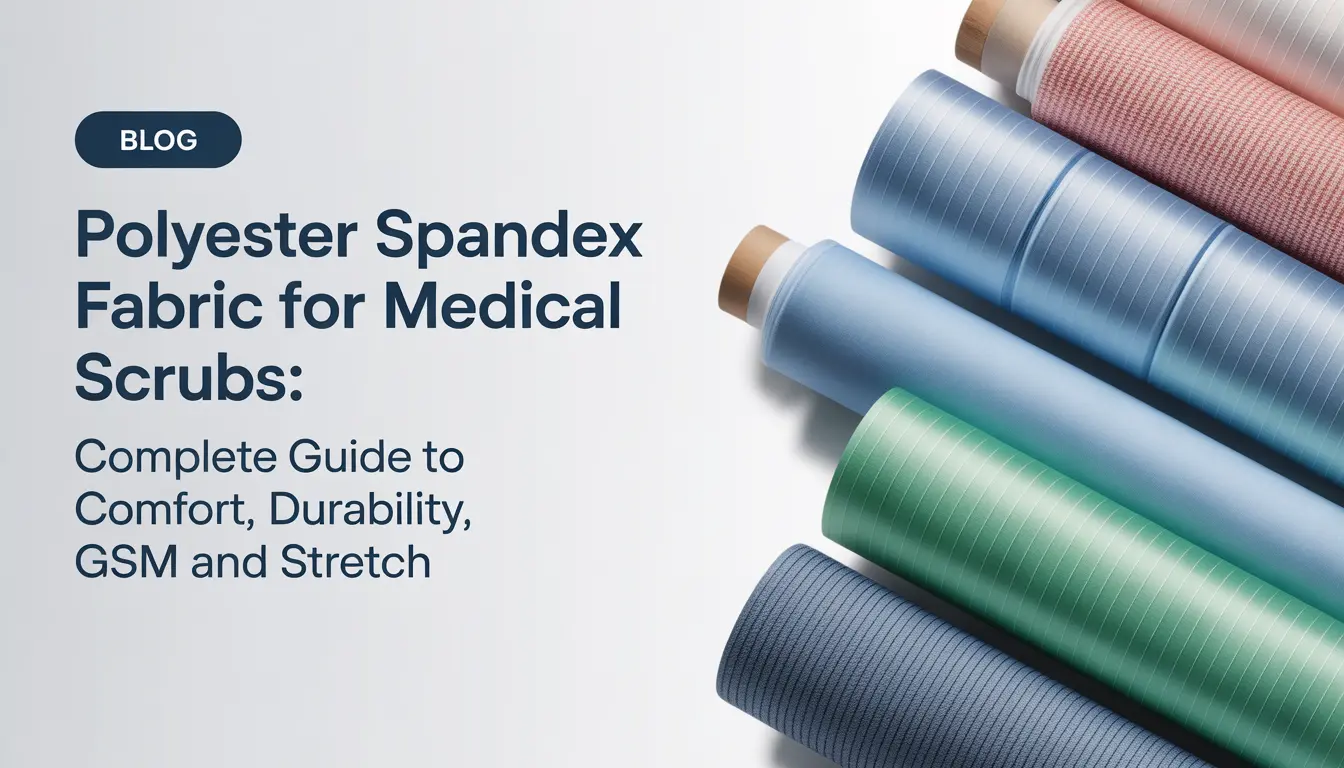
Choosing the right fabric affects how long scrubs last, how comfortable they are, and how well they hold up in hospital laundry. Most private-label scrubs mix polyester with cotton or spandex, or use stretchy, moisture-wicking fabrics. Each fabric type is selected based on the department’s needs, the required movement, and the frequency of washing.
Before making scrubs, manufacturers check the fabric’s makeup, weight, color, and any imperfections. They also test for shrinkage, color fading, and strength. These tests help ensure that the scrubs stay the right size after washing and that colors don’t vary between batches.
Suppliers are assessed for consistency. Lot numbers and color samples are kept so that future orders match earlier ones. This is important for hospitals that use specific colors for different departments, as mismatched colors can cause confusion among staff.
Material control includes tracking how well fabrics breathe, stretch, and resist wear. Procurement teams use this information to plan when uniforms will need to be replaced and to estimate long-term costs.
Consistently sourcing fabric consistently lowers production errors, reduces returns, and supports better inventory planning. Treating fabric selection as a controlled process rather than just a cost-saving measure helps healthcare organizations achieve better-fitting scrubs that last longer and minimize issues during uniform rollouts.
Pattern Making and Sampling
Pattern making turns designs into templates ready for production. Manufacturers start with a basic size and apply rules to create all sizes. They add extra room for bending and moving during long shifts. Accurate patterns are vital for maintaining consistent sizes in large orders.
Sampling starts with prototype scrubs, then moves on to fit samples and pre-production samples. Each stage checks measurements, how the fabric behaves, and the quality of construction. Procurement teams look at pocket placement, sleeve length, waist rise, and overall balance before approving the final pattern.
Fit testing often involves clinical staff, who give feedback on mobility, comfort during long wear, and practical use in patient care. Common changes include adjusting the waistband, leg openings, and armholes.
All changes are documented before mass production begins. This prevents size discrepancies and unexpected changes in the factory. A controlled sampling process speeds up approvals, avoids costly mistakes, and assures healthcare buyers that production garments will match approved samples in both fit and quality.
Manufacturing and Production
Manufacturing private-label medical scrubs starts with preparing the fabric. The fabric rolls are relaxed, aligned, and spread out evenly before cutting. This process helps reduce waste and allows for accurate cutting of each piece. Getting this step right is important for size consistency and overall quality.
Next, the cutting and sewing process begins. Tops, pants, and outer layers are assembled one step at a time. This includes stitching seams, adding topstitching, and strengthening points. Each step is checked for stitch count, seam strength, and alignment to reduce defects in the final garments.
Quality checks happen throughout production. Inspectors check measurements, seam strength, and fabric quality at every stage. This early checking helps catch problems before they lead to defective garments. Any faulty pieces are either repaired or discarded according to set rules.
Maintaining batch consistency is key. This is done with lot tracking, shade control, and reorder procedures. This ensures that hospitals and distributors receive scrubs with the same color, fit, and construction across different production runs. Advanced manufacturers often keep inspection reports for each batch for compliance or audits.
Following controlled processes ensures private label scrubs meet expectations. Hospitals receive garments that keep their fit after washing, maintain color, and allow staff to move easily. Meanwhile, procurement teams can plan restocks with confidence, knowing quality will be maintained and returns will be lower.
Branding and Customization
Branding in private-label medical scrubs helps identify staff and clarify departmental affiliations. Logos are placed in the same spots, usually on the chest, sleeve, or back neck. Embroidery is chosen for its durability in industrial washing, while printed logos are an option for short-term use. Personalizing names and departments can improve accountability and communication among clinical teams.
Labeling is standardized. Internal tags show size, care instructions, origin, and compliance details. These labels help procurement teams track inventory and comply with regulations.
Packaging is designed for efficiency in healthcare distribution. Each garment is packed in an individual polybag for protection during shipping. Cartons are labeled with SKU, color, size range, and quantity. Barcodes assist with scanning and inventory control. Good packing reduces sorting time, prevents damage, and ensures departments receive the right sizes and colors.
Custom features, such as pocket styles, loops, and trim, can be added without altering the fit or washing performance. When done right, branding and customization help maintain clarity, support staff safety, and ensure consistent garment performance in all departments.
Quality Control, Inspection, and Documentation
Quality control ensures that private-label medical scrubs are strong and function well before they reach clinical staff. Final inspections check measurements, seam strength, and look for defects like fabric pulls, loose threads, or stitching mistakes. Each scrub is compared to approved samples to ensure consistency.
Records of compliance testing are kept for fabric certifications, shrinkage, color fastness, and strength. These reports help procurement teams confirm that scrubs meet laundry and hospital standards. Keeping accurate records also supports audits and tracking, which are important for large healthcare organizations and uniform suppliers.
Traceability enables tracking batches and lot numbers, making it easy to identify production runs if quality issues arise. Inspection checklists and logs note any problems and their solutions. This organized process reduces returns, prevents ill-fitting garments, and ensures uniforms perform reliably.
A strong quality control system connects fabric sourcing, pattern accuracy, and production. By managing each step, manufacturers provide a consistent fit, stable color, and durable fabric. Procurement teams enjoy fewer disruptions, predictable restocking, and long-term savings thanks to reduced replacements and defects.
Lead Times, Capacity, and Bulk Order Planning
Understanding lead times and production capacity is vital for healthcare procurement teams. New orders require finalizing the design, sourcing fabric, obtaining pattern approval, and sampling before bulk production. These steps can take weeks, depending on fabric availability and the complexity of customization.
Repeat orders usually process faster since patterns and approved fabrics are ready. Lead times depend on fabric type, batch size, and washing requirements. Procurement teams need to plan production and shipping to align with staffing cycles and uniform replacement schedules.
Minimum order quantities are set per style, color, and size. Moving from pilot runs to full orders requires coordination to maintain consistent sizes and fabrics. Bulk planning also considers seasonal hiring, department growth, and safety stock. Good forecasting ensures a steady, uniform supply without overstocking or shortages.
By aligning order schedules with capacity and lead times, hospitals and distributors can reduce delays, manage costs, and maintain a consistent appearance for staff and safety in departments.
Common Mistakes to Avoid in Private Label Scrub Programs
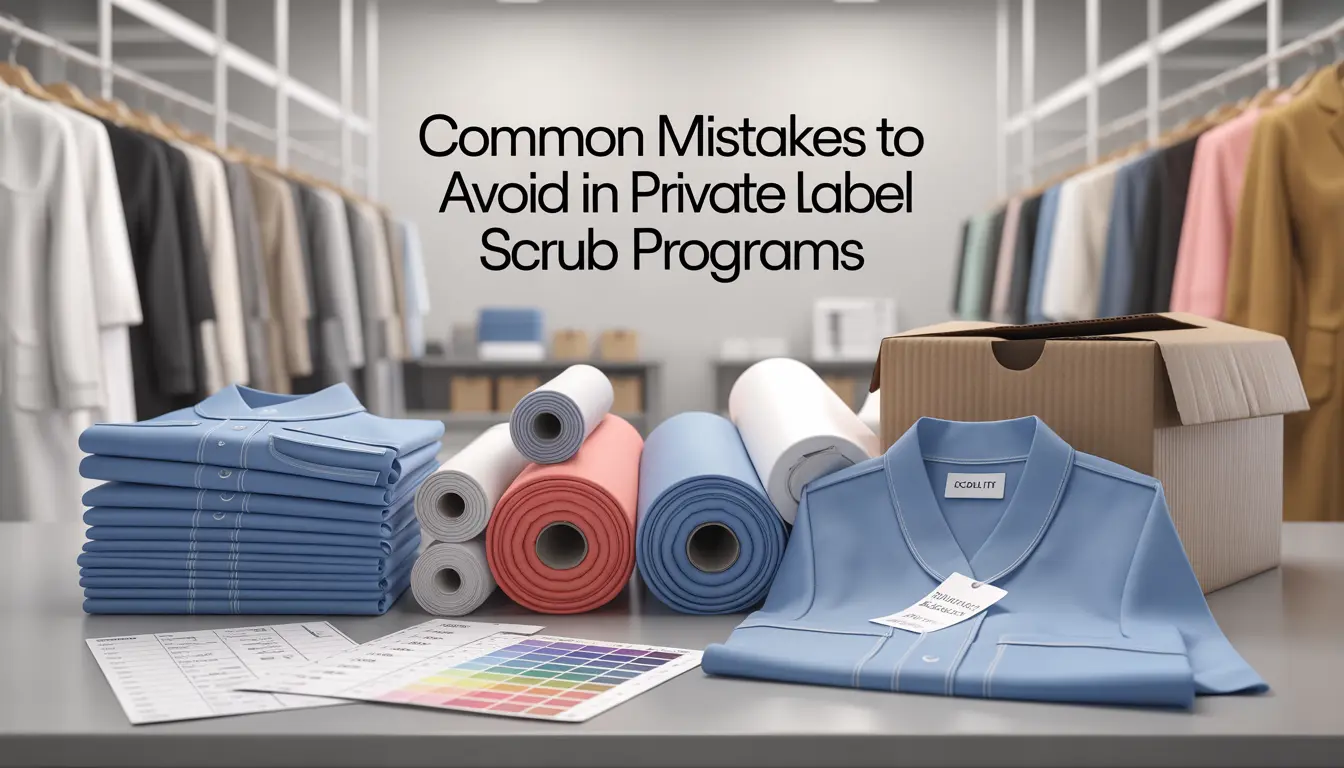
Unclear specifications cause delays and mistakes. Missing size charts, fabric details, or logo placement instructions can lead to repeated samples and ill-fitting clothes.
Ignoring how fabrics perform can lead to rapid wear or shrinkage. Choosing materials solely on price or feel can compromise movement, durability, and washing performance. Procurement teams must check stretch, shrinkage, breathability, and color fastness before bulk orders.
Poor communication with suppliers increases risk. Late feedback, uncontrolled changes, or unclear updates can disrupt production schedules and consistency. Setting clear approval processes, updating timelines, and escalation steps helps reduce mistakes.
Other common issues include overcomplicating customization, neglecting departmental differences, and misjudging reorder timing. Addressing these areas can help healthcare buyers keep operations running smoothly, ensure staff comfort, and maintain consistent uniform quality across all departments.
How to Choose a Private Label Scrub Manufacturer
Choosing the right manufacturer is key to steady performance and a reliable supply. Procurement teams should assess a manufacturer’s skills in areas such as private-label work, pattern-making, fabric control, laundry processes, and inspections. A manufacturer with healthcare experience can accurately turn technical specs into production.
During vendor evaluation, ask about lead times, minimum order sizes, production capacity, and quality control methods. Confirm how they verify fabric, track batches, and ensure lot consistency. Inquire about their sampling processes, approval steps, and compliance and traceability paperwork.
Long-term partnerships thrive on clear agreements. Service level agreements and key performance indicators help maintain standards during production. Regular communication and feedback reduce mistakes and keep orders on track.
Manufacturers with clear production methods, reliable fabric sources, and strong quality control cut down operational risks. By selecting a partner focused on fit, color stability, and durability, procurement teams can confidently plan uniform cycles, lower replacement costs, and ensure staff performance and safety in clinical areas.
Getting Started with a Private Label Scrub Program
Starting a private label scrub program begins with a call to discuss needs. Procurement teams share details about the department’s needs, staff numbers, fabric choices, color standards, and uniform rules. Sharing clear requirements helps avoid changes later during sampling and production.
Next, the design and sampling steps are carried out. Prototype and pre-production samples are checked for fit, movement, and fabric quality. Clinical staff provide feedback to ensure the final designs support daily tasks and withstand industrial washing.
Pilot runs allow a small batch to be made and tested before full production. During this time, manufacturers check size consistency, color matching, and brand placement.
Finally, procurement teams create documents such as brand guidelines, color choices, and departmental feedback. These guides help with bulk production, reduce mistakes, and ensure timely restocking. This step-by-step process ensures private-label scrubs meet staff needs and long-term uniform goals.