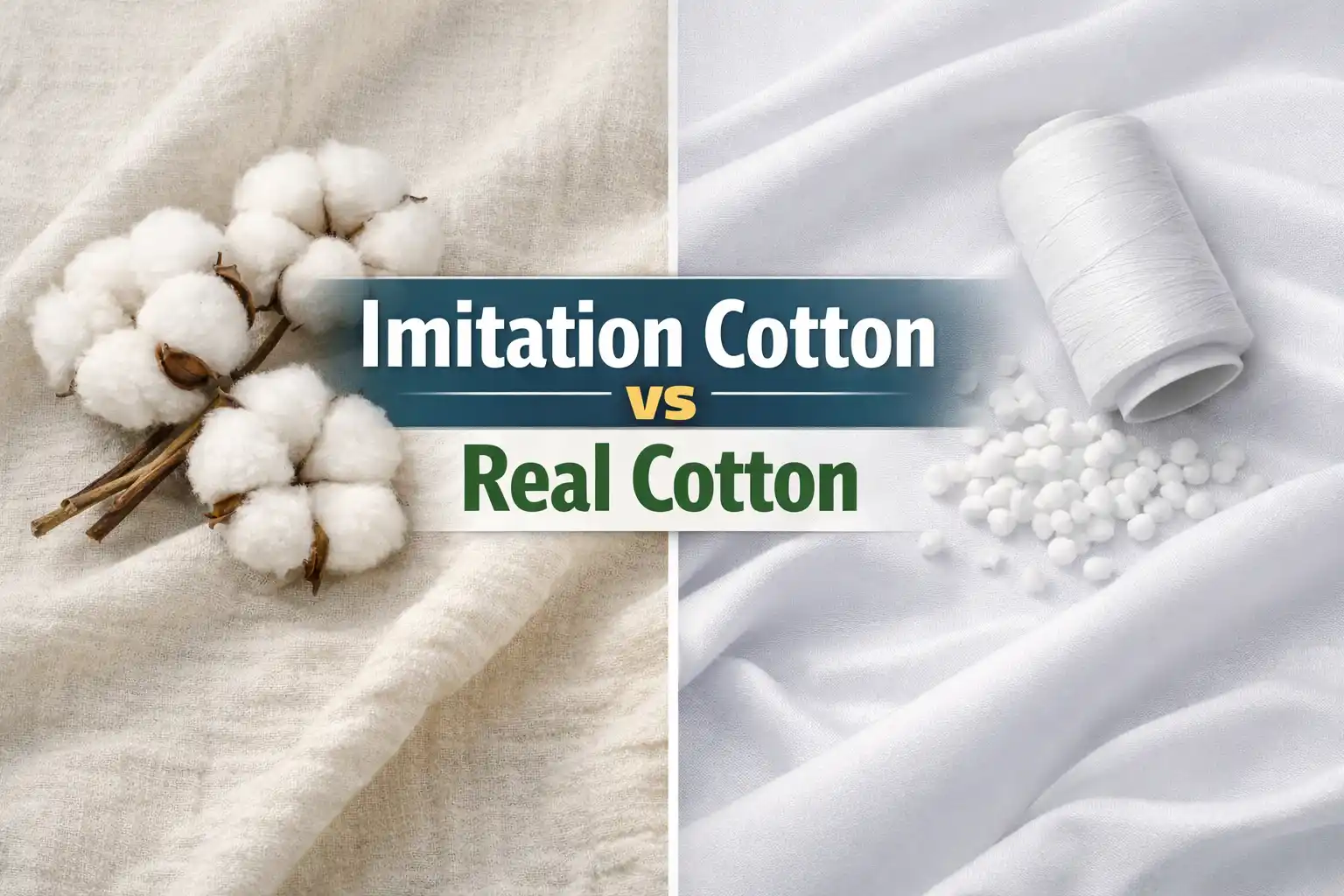

Imitation cotton looks and feels like real cotton but is made from synthetic materials like polyester or viscose. Many people think it works the same as real cotton because it looks similar. However, the type of fibers used affects how the fabric feels, breathes, lasts, and how to care for it.
Confusion often arises from unclear labels and similar terms, such as artificial cotton, synthetic cotton, faux cotton, or cotton-feel fabric. Some items may feel soft initially, but may pill after washing. Others may keep their color but trap heat. This guide explains what imitation cotton is made of, how it compares to real cotton, how it feels on the skin, how breathable it is, how to care for it, and how to make smart buying choices.
What Is Imitation Cotton
Imitation cotton is a fabric that looks and feels like natural cotton but is made from synthetic or man-made fibers. Manufacturers change the thickness, weave, and finishing to make it cheaper or more durable. It is also known as artificial cotton, synthetic cotton, or faux cotton. These terms are similar but not the same. Artificial cotton usually refers to fibers made from cellulose, such as viscose or rayon. Synthetic cotton often refers to polyester fabrics designed to look like cotton. Faux cotton is a general retail term that can include either type.
Imitation cotton can be made from polyester, viscose, rayon, or blends of these materials. Polyester is strong, wrinkle-resistant, and color-retentive. Viscose comes from wood pulp and feels soft, but it is less durable when wet. Blends use a mix of polyester and viscose or a little cotton for comfort and strength. Natural cotton comes from plants. It absorbs moisture, feels breathable, and wrinkles easily. Synthetic fibers are made in factories. They resist shrinking and wrinkling but may trap heat and hold odor, depending on how they are made.
Imitation Cotton vs Real Cotton: Key Differences That Matter
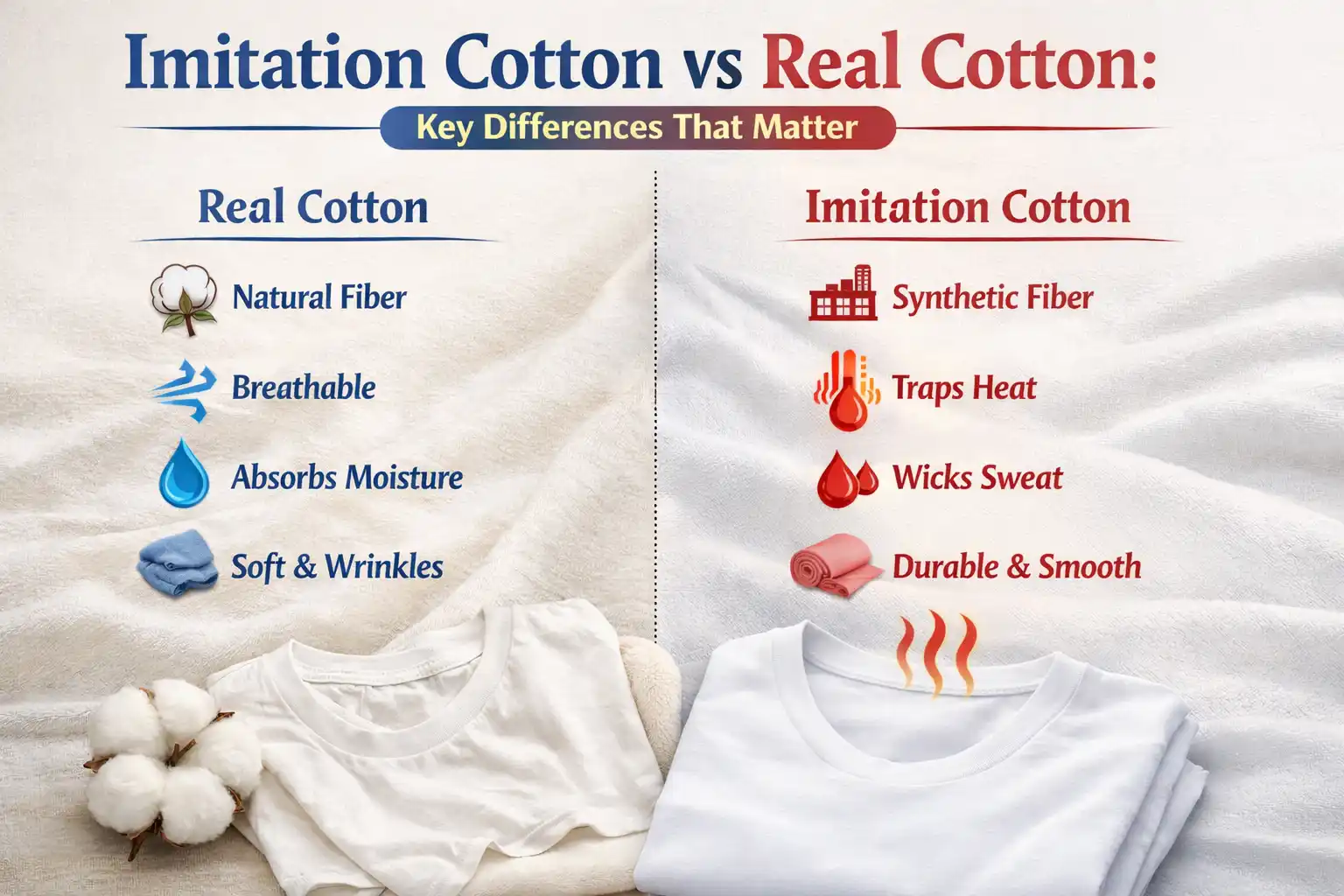
Imitation cotton may look like real cotton, but its fiber structure affects how it works in everyday use.
| Feature | Real Cotton | Imitation Cotton |
|---|---|---|
| Fiber structure | Natural plant fiber | Engineered synthetic or regenerated fiber |
| Breathability | High airflow | Moderate to low depending on fiber |
| Moisture behavior | Absorbs sweat | Wicks surface moisture but absorbs less |
| Odor retention | Lower buildup | Can retain odor in polyester |
| Softness | Naturally soft | Varies by fiber and finish |
| Durability | Moderate | High for polyester blends |
| Pilling | Less common | More common in lower quality fabrics |
| Color fading | Gradual over time | Polyester retains color well |
| Price | Higher raw material cost | Generally lower cost |
In daily wear, real cotton feels cooler and more breathable, especially in hot weather. Polyester imitation cotton may dry quicker, but can hold in heat and smells. Viscose blends are softer than polyester but need more careful washing.
What Does Imitation Cotton Feel Like on Skin
Imitation cotton feels smooth and light at first. But comfort depends on the fiber type and the weave tightness. Fabrics made from viscose are softer and feel more like real cotton. Polyester fabrics can feel slick and trap heat. Tight weaves make the fabric strong but reduce airflow. Surface treatments can make fabric feel softer at first, but this effect may fade after repeated washings.
Many people notice that synthetic fabrics attract lint and create static. Polyester doesn’t absorb moisture well, which can lead to static cling in dry weather. Lower-quality blends may form fuzz balls in high-friction areas, such as underarms or waistbands. For sensitive skin, breathability is key. Thick polyester fabrics can trap sweat, which can irritate the skin. Viscose blends are usually softer, but the quality of dye and finishing chemicals can also affect comfort.
Is Imitation Cotton Breathable and Comfortable
Breathability depends on the fiber blend and the fabric weight. Cotton soaks up moisture and slowly releases it, helping keep your body cool. Polyester imitation cotton moves moisture to the surface but doesn’t absorb deeply, which can feel dry at first but becomes humid over time.
In hot, humid weather, natural cotton usually feels cooler. Dense polyester can trap heat. Viscose blends work better in warm weather than pure polyester but might lose strength when wet. For daily wear, imitation cotton is practical and easy to care for. It resists wrinkles and keeps its shape after washing. However, polyester can hold onto odors during active use.
Imitation cotton is great for affordable T-shirts, uniforms, and bedding where durability and color are important. For underwear and clothing worn close to the skin for long periods, a higher cotton content or breathable blends may feel more comfortable.
Pros and Cons of Imitation Cotton
Benefits: It’s cheaper, resists wrinkles, keeps colors bright, and is easy to print on. Polyester holds dye well and stays bright.
Drawbacks: Heavy polyester fabrics don’t breathe well, can pill, hold odors, and raise environmental concerns due to microplastics shedding during washing.
When choosing imitation cotton, think about how you’ll use it. If you want durability, low maintenance, and a good price, it’s a good choice. If you prefer breathability and comfort, real cotton might be a better choice.
How to Tell If Fabric Is Cotton or Imitation Cotton
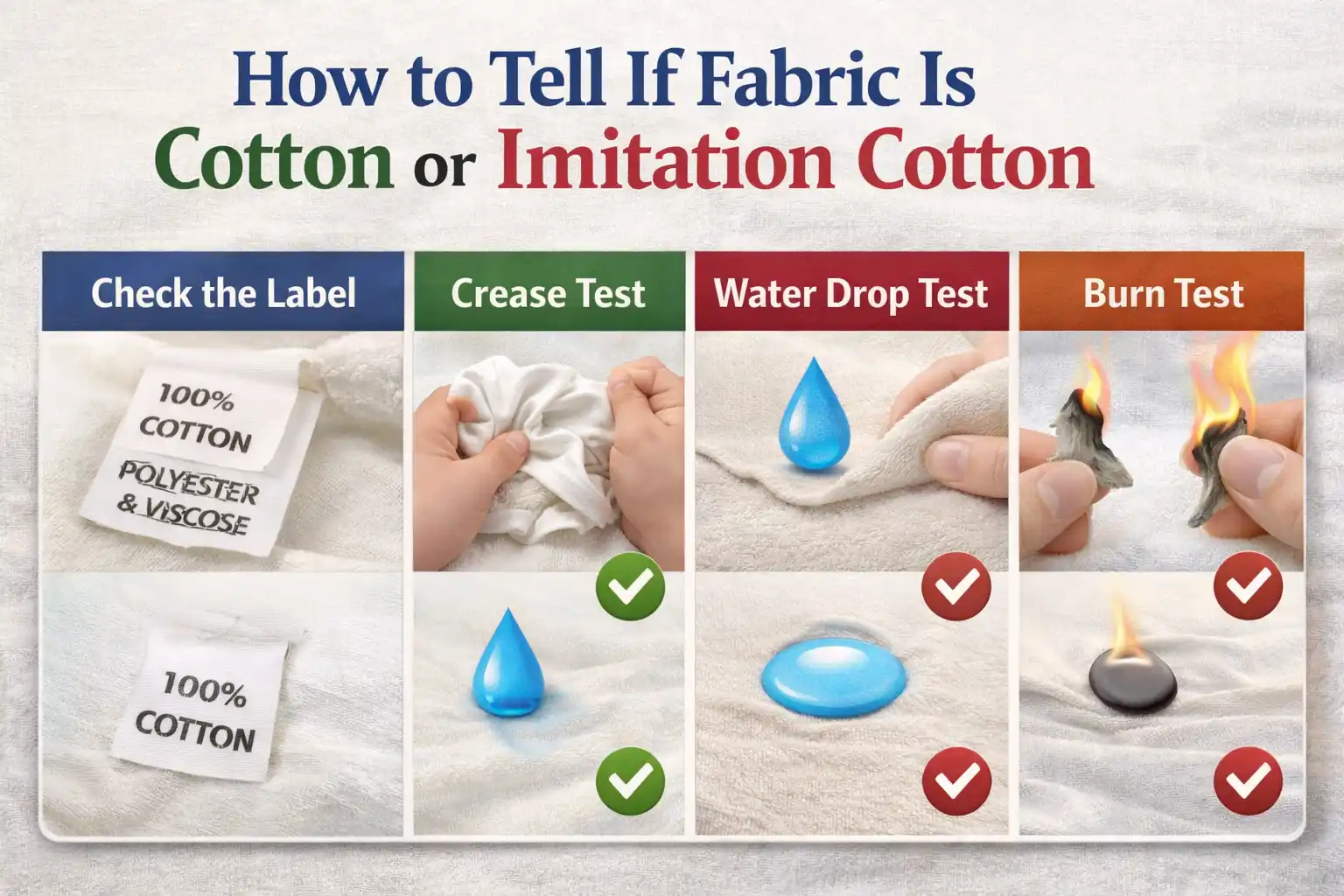
Check the fabric label first. It will say the fiber content. A label that reads 100% cotton means it is natural. Labels with polyester, viscose, or blends show imitation or mixed materials.
Do simple tests: Squeeze the fabric. Cotton wrinkles easily, while polyester resists creasing. Hang the fabric: cotton drapes naturally; synthetics may feel stiffer.
Use a water drop test. Cotton absorbs water quickly. Polyester resists absorption and may let water bead up.
For a final test, check a loose thread in a safe spot. Cotton burns steadily and turns to soft gray ash. Polyester melts and forms a hard bead. Be careful and have water nearby when testing.
Care Instructions for Imitation Cotton vs Real Cotton
Cotton can handle warm water, but it may shrink with high heat. Wash polyester and viscose blends in cold or lukewarm water to keep the fibers strong. High dryer temperatures can cause shiny spots or stiffness in synthetic fabrics. Air drying or using low heat reduces damage. Turn clothes inside out before washing to reduce wear and pilling. If clothes feel scratchy after washing, it may be due to detergent buildup or too much heat in the dryer, not the fabric quality. Using gentle detergent and avoiding over-drying helps keep clothes feeling good over time.
Imitation cotton fabrics are made from polyester, viscose, rayon, or blends chosen for cost, softness, and durability. How fabric is made affects its performance. Jersey knit is flexible and comfortable, great for T-shirts and scrubs. Poplin is smooth and structured, good for uniforms. Twill is strong and wrinkle-resistant, ideal for work clothes.
Fabric weight is measured in grams per square meter (GSM), which shows thickness and durability. Lightweight fabrics with a GSM of under 150 are best for summer clothes. Medium-weight fabrics between 150 and 250 GSM are common for shirts and uniforms. Heavier fabrics with a GSM of 250 or more are used for workwear and when greater durability is needed. How well fabrics hold dye depends on their chemistry. Polyester keeps its color well, while viscose needs gentler washing to stay bright. Clear labels on fiber content and care instructions help customers.
Environmental Impact: Cotton vs Synthetic Cotton
Conventional cotton uses a lot of water and chemicals, such as pesticides. Although it breaks down naturally, large-scale cotton farming harms soil and water. Synthetic fibers use fossil fuels and take a lot of energy to make. Polyester sheds tiny plastic pieces when washed, adding to pollution.
Neither cotton nor synthetic fibers is completely sustainable. Cotton is natural, but it uses many resources. Synthetics last a long time but come from oil. Blends and recycled fibers, like viscose, Modal, and Lyocell, offer better options. They combine good performance with better resource use.
Frequently Asked Questions
What is imitation cotton made of?
Imitation cotton is made of polyester, viscose, rayon, or mixed fibers.
Is imitation cotton natural or synthetic?
It is synthetic, meaning it is not pure natural cotton.
Is imitation cotton breathable?
Breathability depends on the fibers used. Polyester is less breathable than cotton.
Does imitation cotton shrink?
Polyester shrinks little. Viscose blends can shrink if heated.
Does it imitate cotton pills?
Cheaper fabrics may pill over time.
Is imitation cotton safe for sensitive skin?
Some polyester fabrics might irritate the skin, but viscose blends are generally softer.
Why do synthetic sheets feel scratchy after washing?
High heat or leftover detergent can make fibers stiff.
Are blends better than pure imitation cotton?
Blends often combine softness, durability, and breathability better than pure imitation cotton.
Conclusion
Imitation cotton is great for durable clothes that keep their color and don’t wrinkle. It’s ideal for uniforms and everyday wear where easy maintenance is important. Real cotton is worth the price if you want breathability, softness, and comfort in hot weather. By understanding the fiber type, how it performs, and how to care for it, buyers can choose the right fabrics for their needs rather than just looking at labels.