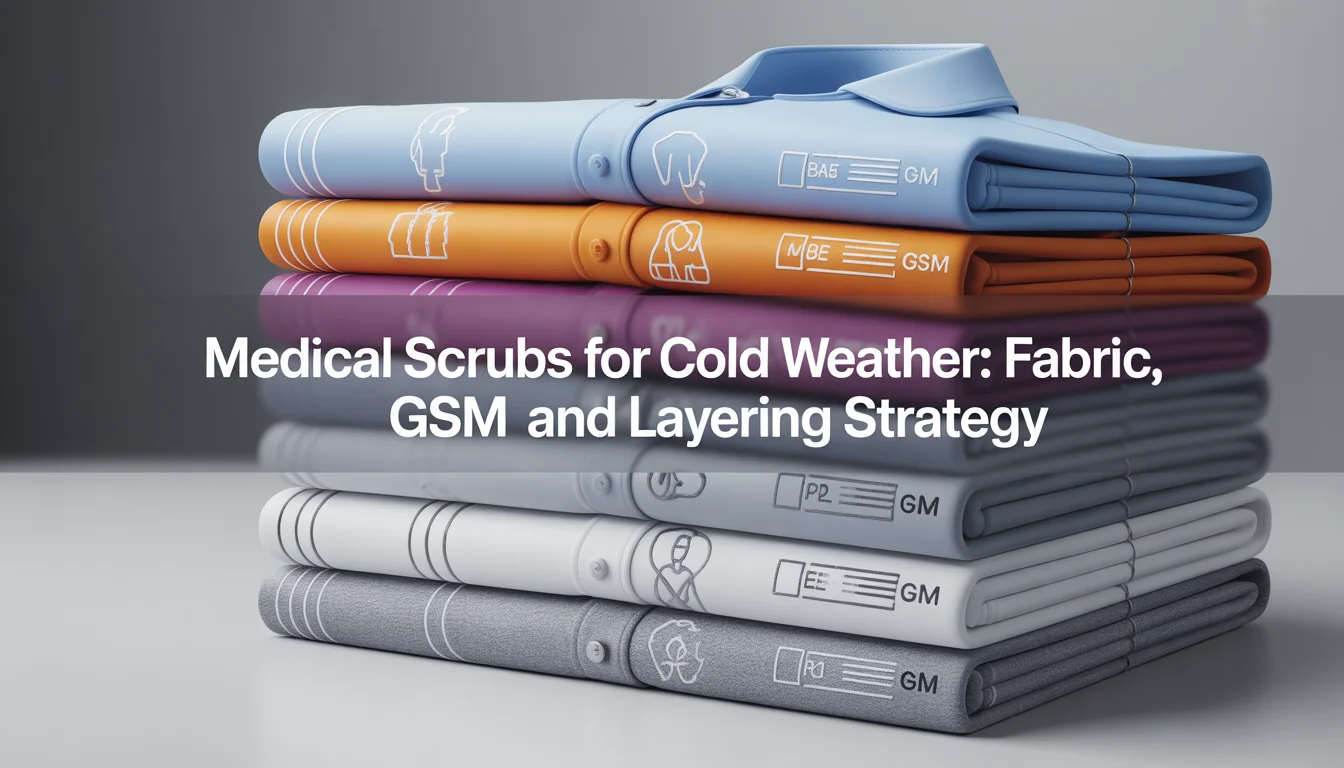

Cold environments can harm healthcare staff by making movement more difficult, slowing reactions, and causing fatigue, thereby affecting patient safety and efficiency. Medical scrubs are more than just uniforms; they are designed to maintain warmth, mobility, and comfort during long shifts. Choosing the right materials and layering helps prevent cold stress, supports staff performance, and lowers mistakes. This guide is for hospital teams and administrators focused on providing staff clothing, offering tips on fabric choices and layering to ensure safety and efficiency.
Challenges of Cold Environments for Medical Staff
Healthcare workers in cold places face challenges that can harm safety and efficiency. Low temperatures cause cold stress, making the body shiver and restrict blood flow to keep warm. These reactions can reduce movement and slow response times, making tasks harder. Studies show that when temperatures drop to 11°C, manual performance can decrease by up to 55%, affecting precision tasks like inserting IVs or suturing.
Cold discomfort can also affect thinking. It distracts workers from their tasks, slows down decision-making, and raises the risk of mistakes. Being cold for a long time can increase fatigue and lower alertness during shifts. For hospital leaders and procurement teams, this shows the need for medical scrubs that keep staff warm without restricting movement. Choosing technical scrubs with the right weight, stretch, and layering options can help maintain performance, reduce risks, and support patient care.
Understanding Fabric Weight and GSM
Fabric weight, measured in grams per square meter (GSM), affects how warm and durable medical scrubs are. GSM indicates how much fabric is in a given area, which affects its thickness and its ability to retain air for warmth. Fabrics with higher GSM keep you warmer but may be stiffer, while lower GSM fabrics are more breathable but provide less warmth. In cold places, it’s important to choose the right GSM to ensure comfort, ease of movement, and good washing performance.
| Fabric Weight Category | GSM Range | Ideal Clinical Use | Key Considerations |
|---|---|---|---|
| Low | 120–150 | Standard or summer scrubs | Highly breathable, insufficient for cold zones |
| Mid | 150–200 | All-season or mild winter | Moderate warmth, may require layering |
| High | 200–300 | Winter-specific or layered sets | Excellent insulation, bulk risk without stretch |
| Very High | 300+ | Outer layers or specialized jackets | Maximum warmth, reduced flexibility |
Procurement teams should focus on warmth and mobility. Fabrics with stretch fibers let heavier garments move freely. Durability is also important, as industrial washing can alter the fabric’s thickness and insulation. Mid-weight fabrics, with a GSM range of 180–220, usually strike a good balance for winter scrubs, providing warmth, flexibility, and long-lasting wear. Learn more about GSM for medical scrubs.
Fiber Options for Cold Weather Scrubs
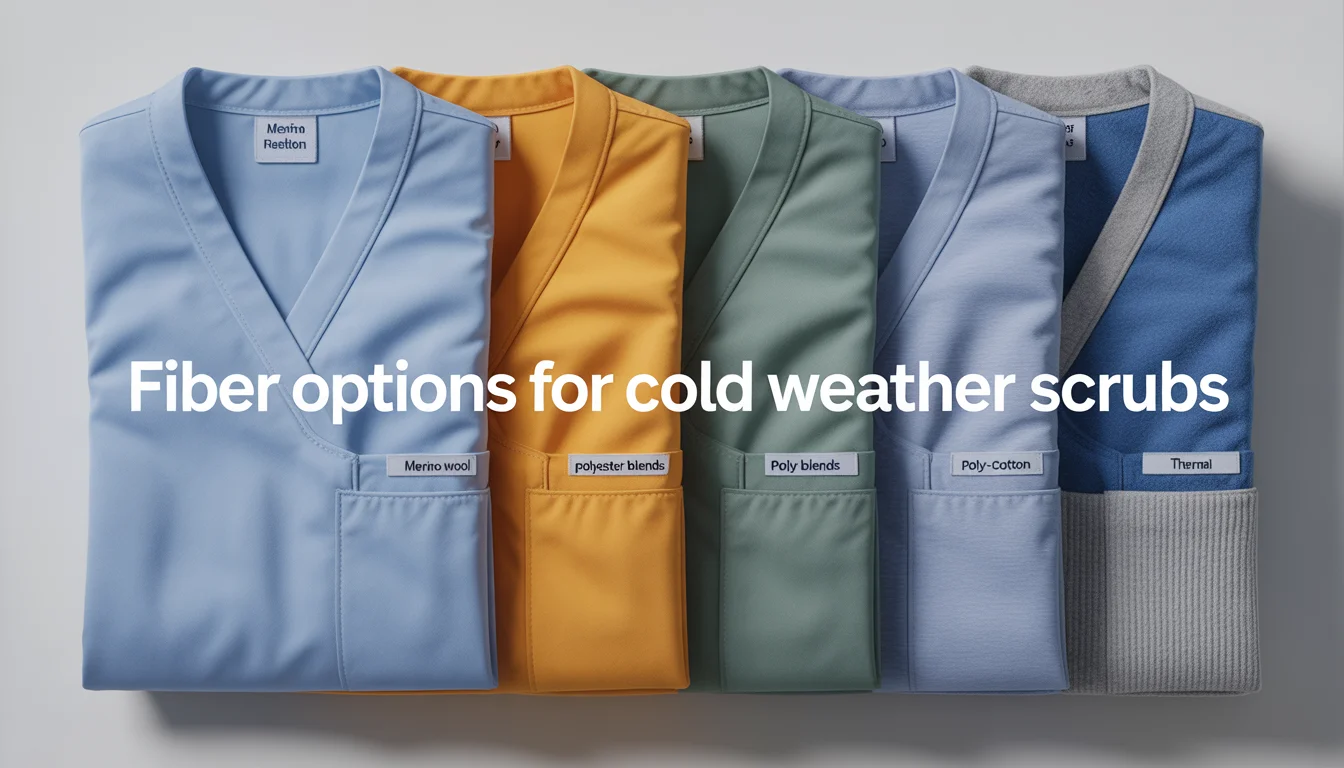
Choosing the right fiber for medical scrubs in cold environments is crucial. Each material has its own benefits for warmth, durability, and comfort. Merino wool offers natural insulation and wicks away moisture, keeping staff dry and warm during long shifts. Its fine fibers are soft and hypoallergenic. Merino wool also releases heat when it absorbs moisture, helping keep body temperature steady as workers move between cold and warm areas.
Polyester blends and thermal synthetics are made to be strong and stretchy. Brushed or fleece-backed designs add warmth without being heavy. Their four-way stretch allows easy movement, making these fabrics great for mid-weight scrubs and outer layers in indoor or mixed environments. Poly-cotton blends offer moderate warmth and are very flexible for indoor winter shifts. While they don’t keep you as warm as wool or thermal synthetics, poly-cotton fabrics are durable and easy to wash, making them ideal for busy hospitals.
| Fiber Type | Warmth | Breathability | Laundering Ease | Odor Control |
|---|---|---|---|---|
| Merino Wool | High | Excellent | Moderate | Natural antimicrobial |
| Polyester Fleece | Moderate | Low | Very easy | Poor |
| Poly-Cotton Blend | Low | Moderate | Easy | Neutral |
| Thermal Synthetics | High | Moderate | Easy | Chemical treatments |
Understanding fiber performance helps teams choose the right scrubs for each department. This balances warmth, movement, and ease of cleaning.
Layering Strategies for Cold Weather
A good layering system keeps healthcare workers comfortable in cold places. Using three layers lets staff adjust their clothing and stay at the right temperature during long shifts.
Base Layer: The underscrub is the first layer. It pulls moisture away from the skin. Materials like Merino wool or special synthetics keep workers dry and prevent heat loss from sweat. Base layers should fit snugly, allowing easy movement without being bulky.
Mid Layer: Winter scrubs are the main insulating layer. Fabrics between 180 and 220 GSM offer warmth while staying breathable. Mid layers should fit loosely to accommodate the base layer and allow a full range of motion. Soft interiors or special designs provide extra warmth for staff in drafty areas or when moving between indoor and outdoor spaces.
Outer Layer: Jackets, lab coats, or softshell garments are the outer layer. They keep the core warm, block wind and moisture, and often have antimicrobial finishes for hygiene. Features like zip closures or adjustable hems help staff quickly control their temperature while working. This system helps staff stay agile, comfortable, and safe, reducing fatigue and supporting good performance in cold hospital areas.
Ergonomics and Movement in Winter Scrubs
To keep staff mobile in winter scrubs made from thicker fabrics, we use four-way stretch materials. This lets the clothes move with the body in all directions, making bending, lifting, and reaching easier. This flexibility helps prevent wear and tear on the fabric, allowing staff to do their jobs safely and effectively. We also include special design features to improve movement. Gussets under the arms and in the crotch help provide full motion without straining seams. Side slits and vented hems let the tops move freely over the hips, preventing bunching while sitting or leaning.
Articulated elbows and knees match the natural bend of arms and legs, making it easier to move repeatedly. Adjustable waistbands with elastic and drawcords help fit different body sizes and keep staff comfortable during long shifts. These ergonomic features help staff look professional while keeping them safe and efficient. High-GSM winter scrubs offer warmth without losing comfort, flexibility, or effectiveness.
Laundering, Durability, and Lifecycle

Medical scrubs for cold environments need to withstand industrial washing while still performing well. The washing process uses time, heat, chemicals, and movement to clean and disinfect clothes, often at temperatures over 70°C. Washing clothes many times can change how the fabric performs. High-GSM materials may lose their fluffiness and insulation over time. If not designed for industrial use, fibers can shrink or fade. Polyester blends and Superwash-treated wool keep their warmth, shape, and color even after many washes.
Brushed or fleece interiors should stay fluffy for warmth. Durable, industrial-grade fabrics are essential for businesses. They lower the need for replacements, reduce interruptions, and keep staff safe and comfortable during long shifts. Choosing materials that can handle many washes ensures they last longer, protects the hospital’s investment, and helps staff perform well.
Department-Specific Recommendations
Different hospital departments have specific clothing needs, so choosing the right scrubs is important.
MRI Suites: Staff must wear non-magnetic clothing to prevent interference with imaging equipment. Merino wool base layers keep them warm and dry, while outer jackets or lab coats should have secure closures, such as plastic snaps or zippers.
Emergency Departments and Night Shifts: Staff experience varying activity levels, so they need a flexible layering system. Mid-weight scrubs (180 to 220 GSM) made from brushed polyester or wool blends, paired with moisture-wicking undershirts and adjustable jackets, help staff stay comfortable and mobile.
Outdoor Triage and Transport Roles: Staff working outside need windproof and waterproof jackets. Insulated hats help retain body heat, and their clothing must meet OSHA visibility standards for safety. Layered systems in these roles keep staff warm, comfortable, and effective without hindering their work.
Procurement and Bulk Production Considerations
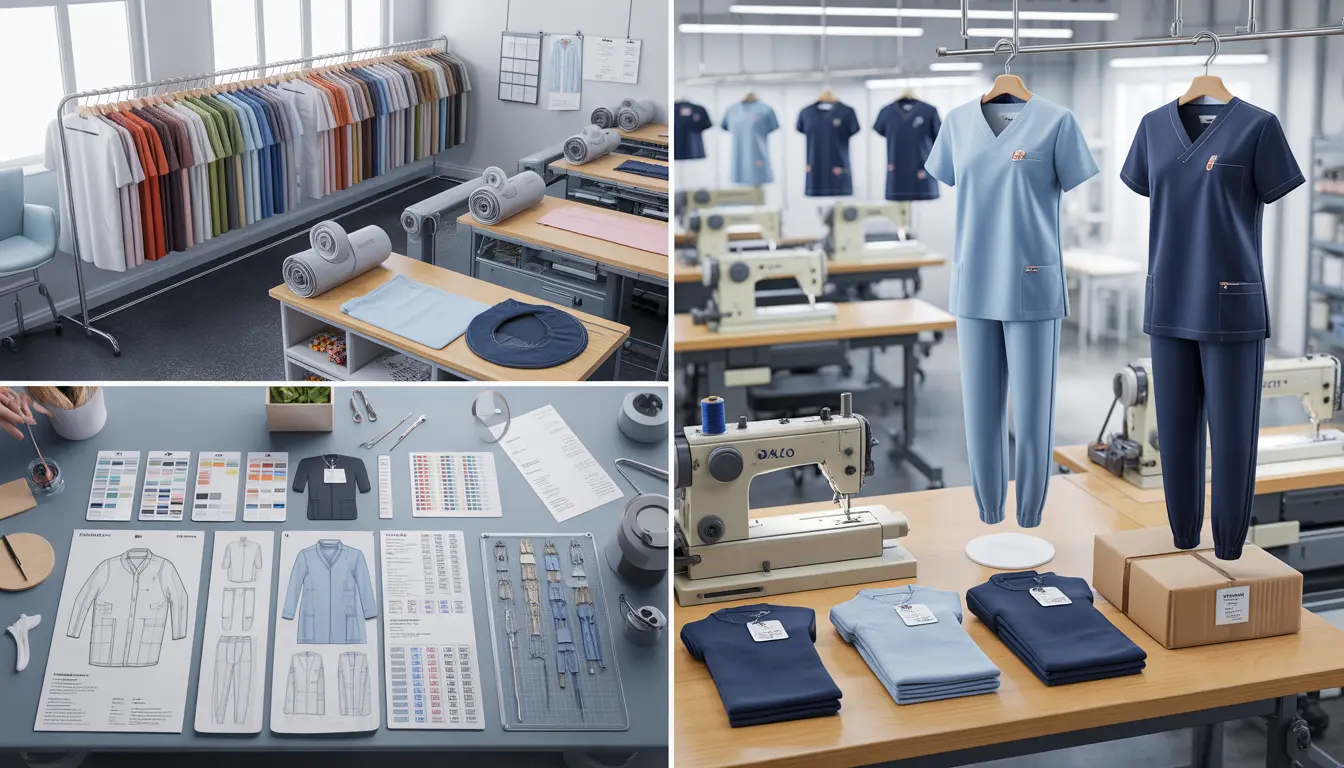
Planning a cold-weather scrub program needs careful timing and bulk production. Custom winter scrubs go through several steps: design and approval, sourcing high-quality materials, cutting and sewing, quality checks, and delivery. For orders over 200 pieces, this process can take four to ten weeks after approval. Procurement teams should start early to make sure staff have what they need before winter.
Bulk ordering has some extra challenges. It’s important to keep the fabric weight (GSM) the same across all garments to ensure warmth and flexibility. Adding logos to thicker fabrics requires specialized methods, such as 3D stitching or patch embroidery, so they look good and don’t affect how the fabric stretches.
Buying high-quality scrubs is a smart choice for long-term efficiency. Good winter scrubs keep staff comfortable and help reduce tiredness, while strong fabrics mean replacements are needed less often. When considering the total cost, including washing, replacements, and efficiency, investing in quality cold-weather scrubs can provide a good return on investment for hospitals and healthcare organizations with large teams.
Conclusion and Strategic Recommendations
Hospital procurement teams can improve staff performance and safety by treating medical scrubs as essential gear rather than just uniforms. Performing thermal audits can help identify cold areas, such as MRI rooms, ER bays, and night shifts. Using standard fabric types, like mid-weight scrubs of 180–250 GSM, Merino wool, and strong synthetics, makes sure scrubs are warm, flexible, and durable. A layering system with a base, mid, and outer layer allows staff to adjust to different temperatures while working. By adding technical scrubs to their plans, hospitals enhance patient safety, boost staff comfort, and keep a professional look across all departments.