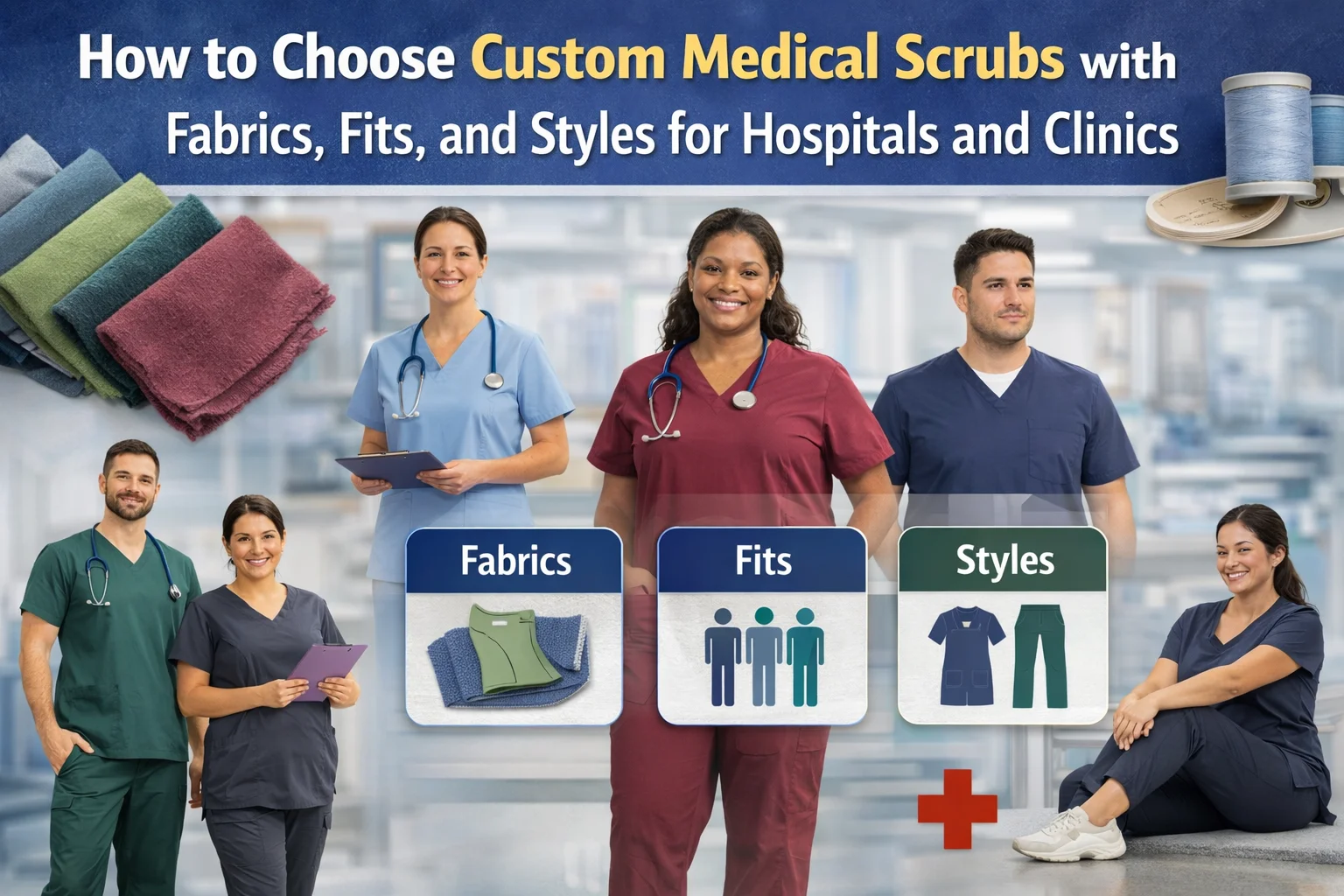

In every hospital and clinic, scrubs are essential for healthcare staff. They help workers perform efficiently, comfortably, and safely during long shifts. Although scrubs may look alike, choosing the right ones requires attention to fabric, fit, and style. The right scrubs let staff move freely, look professional, and withstand frequent washing without losing shape or color. This guide will help healthcare facilities and professionals select custom medical scrubs for comfort, durability, and a polished appearance in every role and department.
Fabric Types Used in Medical Scrubs
Fabric is the foundation of every scrub. It affects comfort, lifespan, appearance, and performance throughout long workdays and repeated laundry cycles.
Cotton and Polyester Blend Scrubs
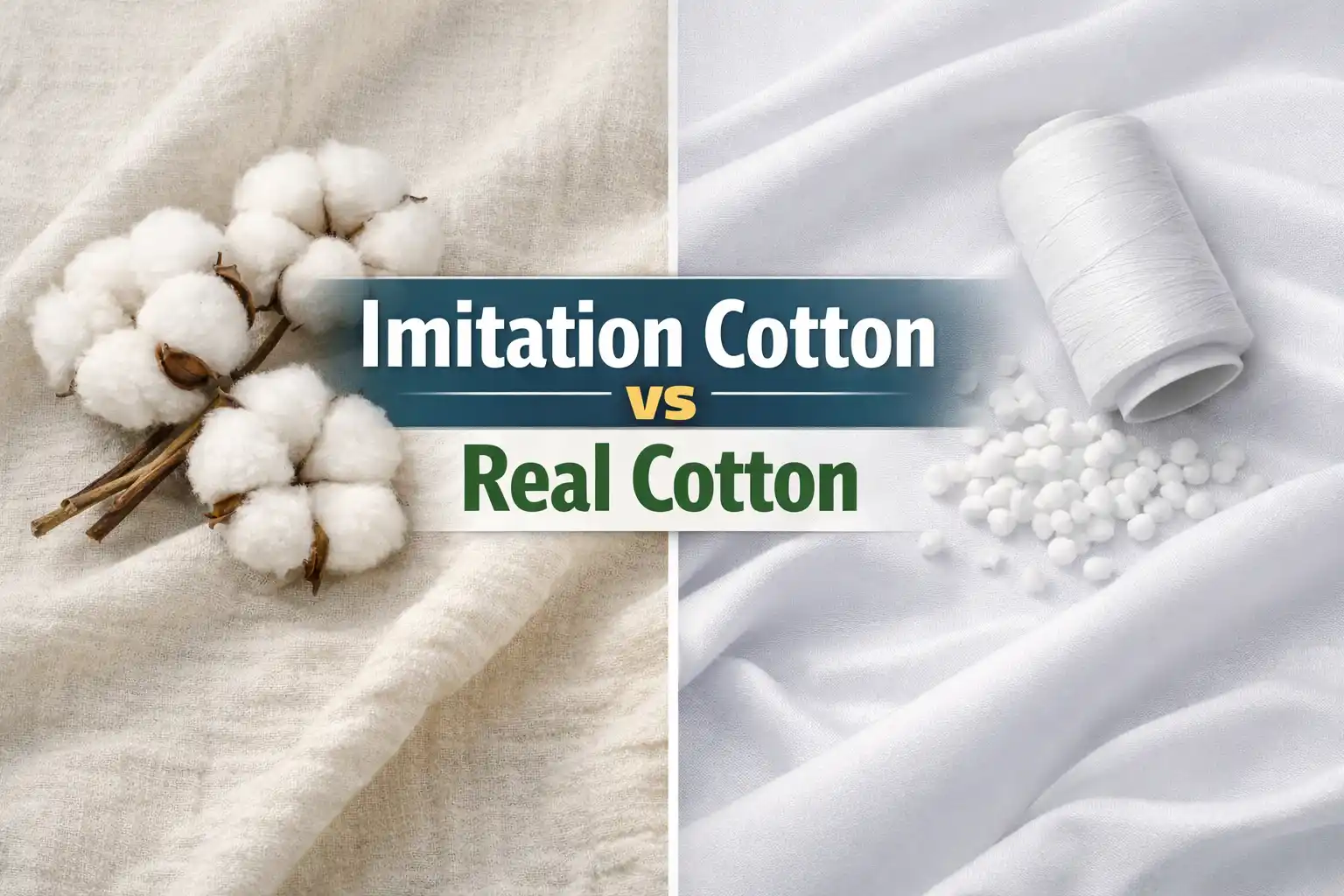
Cotton-polyester blend scrubs mix cotton’s softness with polyester’s strength. Cotton keeps the fabric soft and breathable. Polyester makes the fabric firm, wrinkle-free, and colorful after many washes.
These scrubs help regulate body temperature better than pure polyester. They are easier to care for than pure cotton. The blend reduces shrinkage, dries faster, and looks good after several washes. Hospitals, clinics, and offices often use cotton-polyester scrubs. However, these blends have limited stretch. In active environments, they may feel tight. They work best in roles needing comfort and durability, not extreme movement.
Key Attributes:
Fiber composition: Cotton + Polyester
Comfort level: Moderate to high
Stretch: Low
Durability: Medium
Best use: Clinics, general care, outpatient services
Polyester and Spandex Blend Scrubs
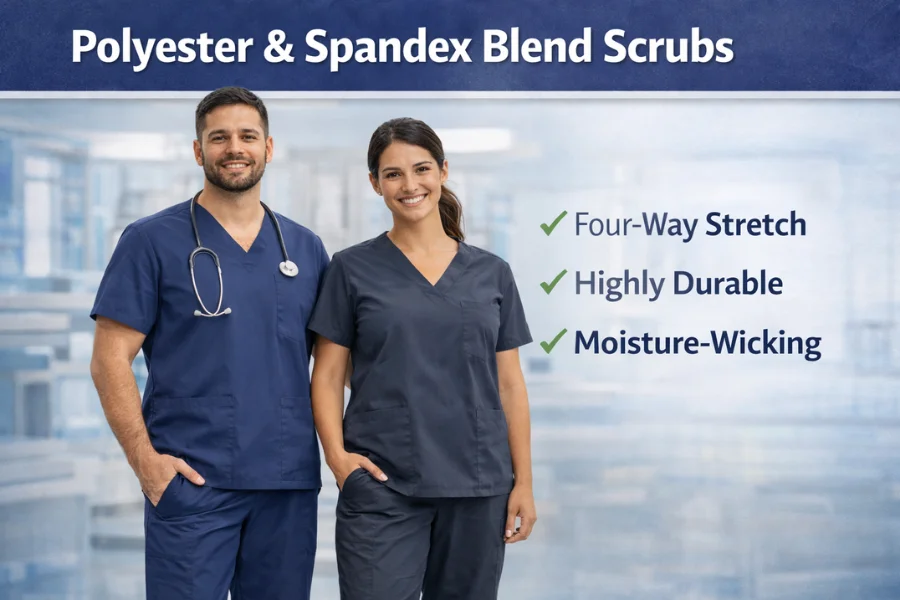
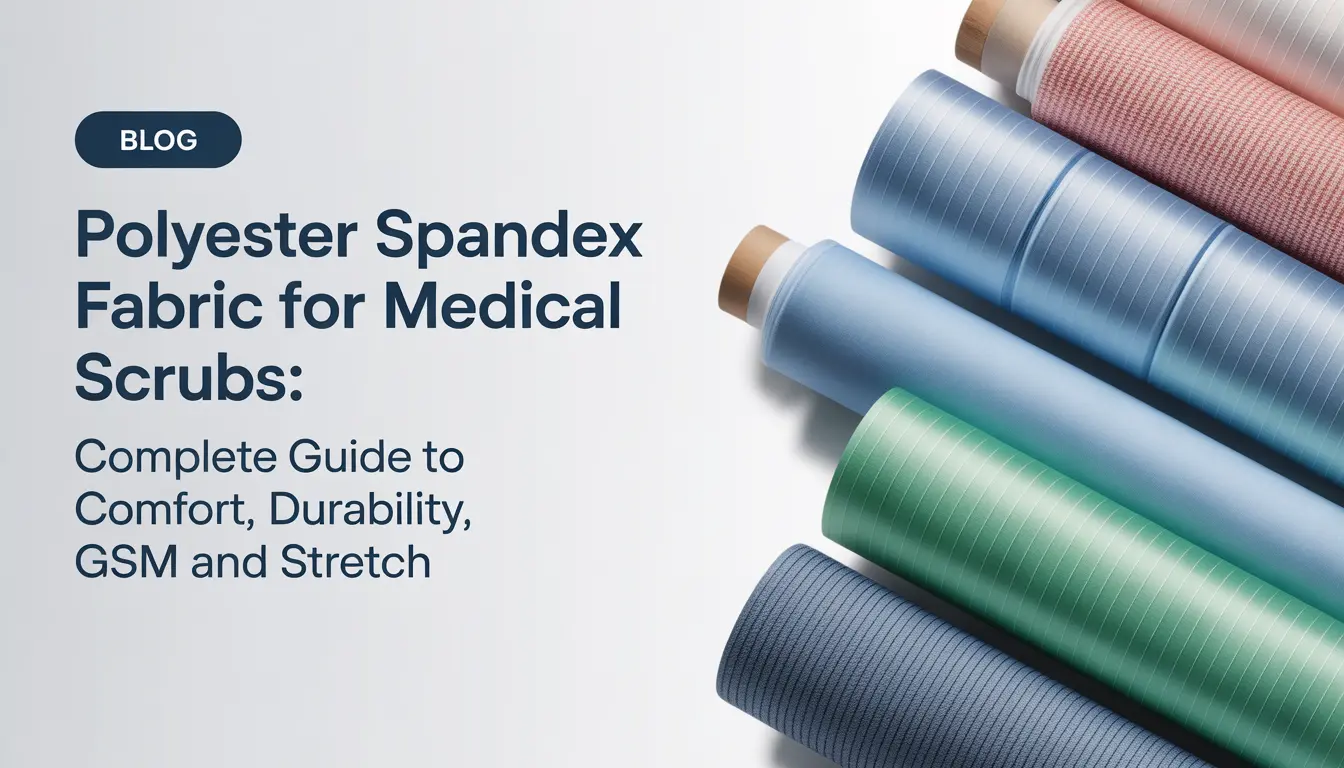
Polyester scrubs are harsh, resist moisture, and keep their shape well. They do not wrinkle, dry quickly, and hold color well. It makes them great for washing often in hospitals.
When mixed with Spandex, polyester scrubs gain stretch. It allows ease of movement. The blend helps reduce strain at stress points and improves comfort during long shifts. It boosts mobility and endurance, especially in demanding jobs.
These scrubs are used every day in hospitals, emergency rooms, and surgical recovery areas. They also work with moisture-wicking and antimicrobial treatments for better hygiene.
Key attributes:
Fiber composition: Polyester + Spandex
Comfort level: High
Stretch: High (2-way or 4-way)
Durability: High
Best use: Hospitals, ER, ICU, high-movement departments
Rayon and Viscose Blends
Rayon and viscose blends feel smooth and lightweight with a clean drape. They provide a polished appearance and good comfort during regular movement.
These fabrics are less durable under heavy use. They are best suited for outpatient clinics and light-duty roles where appearance is a priority.
Stretch and Performance Scrubs
Stretch scrubs include spandex or elastane to support bending, lifting, and walking. This reduces restriction and fatigue during long shifts.
Four-way stretch and performance fabrics offer movement in all directions, moisture control, and breathability. These are widely preferred in emergency, ICU, and fast-paced departments.
Protective and Specialty Fabrics
Antimicrobial scrubs help control odor-causing bacteria, but still require proper laundering. Fluid-resistant scrubs repel light splashes and provide added protection during routine tasks.
Sustainable fabrics such as organic cotton, bamboo, and recycled polyester support environmental goals while meeting professional uniform needs.
Scrubs Based on Fit
Proper fit improves comfort, safety, and confidence during daily work. Offering multiple fit options helps healthcare staff perform better, move freely, and feel supported throughout long shifts.
Medical Scrub Fit Types and Their Purpose
| Scrub Fit Type | Design Characteristics | Key Benefits | Best Suited For |
|---|---|---|---|
| Unisex Fit Scrubs | Broad sizing, straight cuts, neutral shaping | Simplifies bulk ordering, flexible sizing | Large hospitals, uniform programs, mixed teams |
| Women’s Fit Scrubs | Shaped waist, contoured hips, narrower shoulders | Improved comfort, better fit, professional appearance | Female healthcare staff |
| Men’s Fit Scrubs | Broader shoulders, straight waist, longer rise | Better upper-body fit, reduced fabric strain | Male healthcare professionals |
| Petite Scrubs | Shorter inseams, adjusted proportions | Improved safety, proper length, no excess fabric | Shorter staff members |
| Tall Scrubs | Extended sleeve and pant lengths | Full coverage, balanced proportions | Taller healthcare workers |
| Plus-Size Scrubs | Extra room with structured support | Comfort without restriction, improved mobility | Plus-size medical staff |
| Maternity Scrubs | Stretch panels, adjustable waist features | Comfort throughout pregnancy, flexibility | Pregnant healthcare professionals |
Unisex scrubs fit many sizes and make bulk orders easy. Some may feel loose. Women’s and men’s fits shape key areas like the waist and shoulders. It boosts comfort and looks.
Petite scrubs have shorter inseams. It also helps with safety and fit. Tall scrubs add length to sleeves and pants for taller staff. Plus-size scrubs give enough room and support. They let you move freely. Maternity scrubs have stretch panels and adjust to support comfort during pregnancy.
Scrub Styles and Design Options
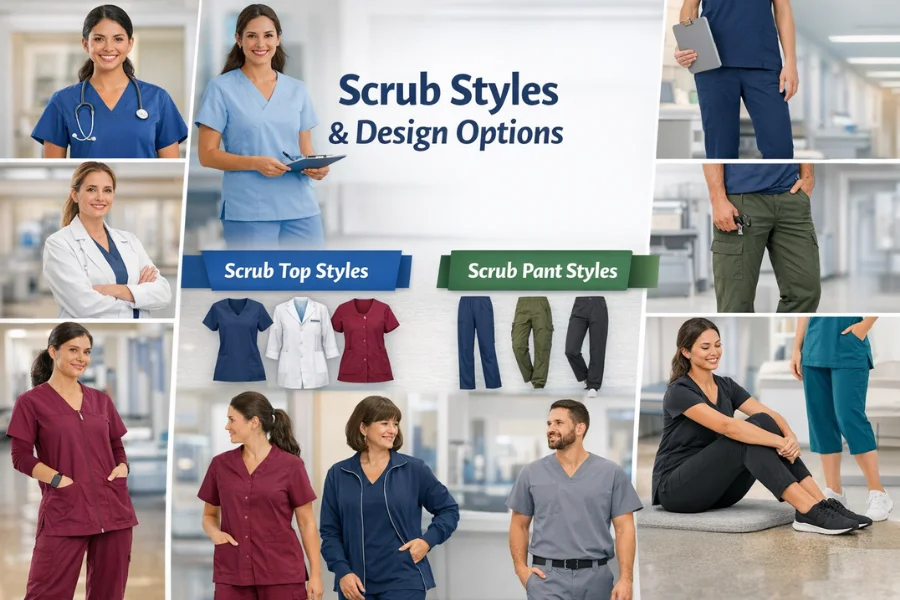
Scrub design affects both function and appearance, helping healthcare staff stay comfortable, efficient, and professional during long shifts. Different styles are tailored to specific tasks, departments, and work environments.
Scrub Top Styles
Scrub tops keep workers comfortable and mobile. They also help staff look professional. Choosing the right top boosts airflow and eases dressing.
- V-Neck Tops – Allow better airflow and freedom of movement
- Round-Neck Tops – Classic design for general care roles
- Mock Wrap Tops – Contoured fit for flexibility and modest coverage
- Zip-Front Tops – Quick on-and-off wear for busy shifts
- Snap-Front Tops – Convenient access during caregiving tasks
- Warm-Up Jackets – Light insulation for cooler or controlled areas
- Lab Coats – Extra coverage and professional appearance
Scrub Pant Styles
Scrub pants support long hours of movement. They also offer storage and comfort. Picking the right pants helps staff work better.
- Straight-Leg Pants – Traditional fit with a clean, professional look
- Jogger Pants – Tapered legs with elastic cuffs for mobility and modern style
- Cargo Pants – Multiple pockets for tools, devices, and essentials
- Yoga-Waist Pants – Flexible waistband for all-day comfort
- Capri Pants – Shorter length, ideal for clinics or warmer environments
By understanding the different top and pant styles, healthcare facilities can select scrubs that match department needs, staff mobility, and comfort requirements, helping staff work effectively while maintaining a professional appearance.
Scrubs by Job Role and Department
Every job in healthcare needs its own kind of scrubs. Nurses need scrubs that stretch, have pockets, and keep them dry during long shifts. In the operating room, scrubs are simple, resistant to fluids, and easy to wash. ICU and emergency room scrubs need breathable fabrics, strong seams, and materials that dry fast.
For kids, scrubs often feature soft colors and friendly designs to make young patients feel at ease. Dental, lab, veterinary, and medical assistant scrubs look clean and feel comfortable. EMT and paramedic scrubs are tough and have extra pockets for tools and supplies. Choose the right scrubs for your job. Feel comfortable and confident while you care for others.
Color-Based Scrub Choices
Color helps identify staff roles and supports organization within facilities. Blue and green are common in surgical areas, while navy is widely used for nursing teams. Specialty areas might use burgundy or gray, and labs often choose lighter shades. In pediatric wards, brighter colors or fun patterns can brighten the mood. Always check your facility’s rules when picking scrub colors.
Choosing the Right Fabric for Your Scrubs
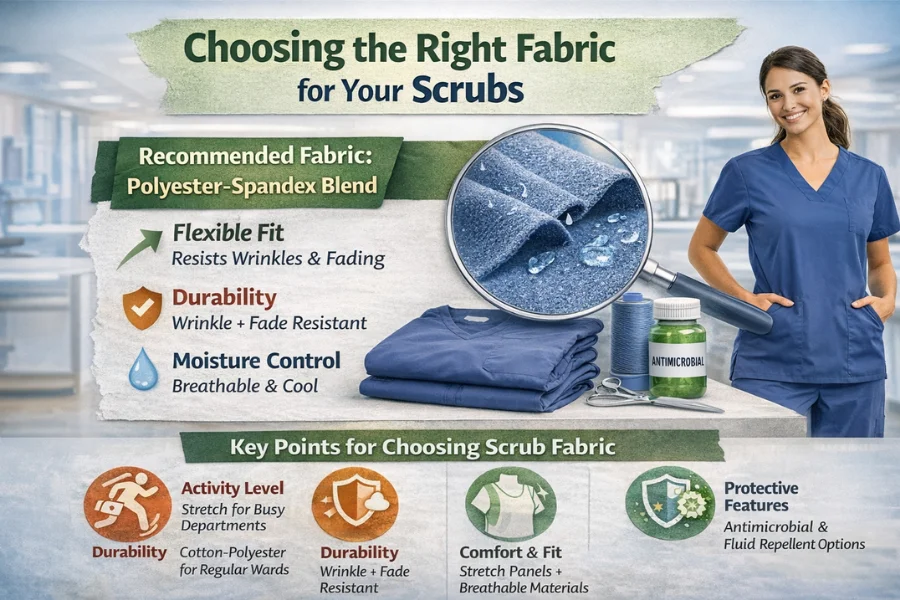
Finding the right fabric for your scrubs is crucial. It impacts your comfort, durability, and everyday performance at work. The best material helps you move freely, keeps you at the right temperature, and looks sharp all shift long.
Key Points for Choosing Scrub Fabric
Activity Level: If you work in busy places like the ER or ICU, you need stretchy, high-performance fabrics. For general wards, cotton-polyester blends work well.
Durability: Look for fabrics that won’t shrink, wrinkle, or fade. This saves money and makes laundry easier. Polyester blends and performance fabrics handle frequent washing like champions.
Comfort and Fit: Choose scrubs with stretchy panels, breathable materials, and brilliant cuts. These features help you move easily and stay comfortable during extended hours.
Protective Features: If you deal with fluids or high-contact surfaces, consider fabrics with antimicrobial or fluid-resistant finishes for added safety.
Sustainability and Customization: Custom fabrics allow hospitals to match their brand colors and maintain quality. It helps create a strong, professional identity.
Recommended Fabric: Polyester-Spandex Blend
For healthcare workers, the right scrubs can make a big difference. I recommend polyester-spandex blend scrubs. They are rigid yet flexible, offering comfort during long shifts.
Why Pick Polyester-Spandex?
- Four-way Stretch: Move freely while bending, lifting, or walking.
- Durability: These scrubs resist shrinking, wrinkling, and fading — even through many washes.
- Moisture Control: Stay cool and dry as they wick away sweat.
- Shape Holding: Look sharp with little effort.
- Extra Protection: They work well with special finishes for added safety in busy areas.
These scrubs shine in nursing, ER, ICU, and surgical settings. They blend comfort with style, making them the go-to choice for hospitals and clinics. Choose scrubs that support your hard work and help you look your best.
Common Mistakes When Choosing Scrub Fabrics
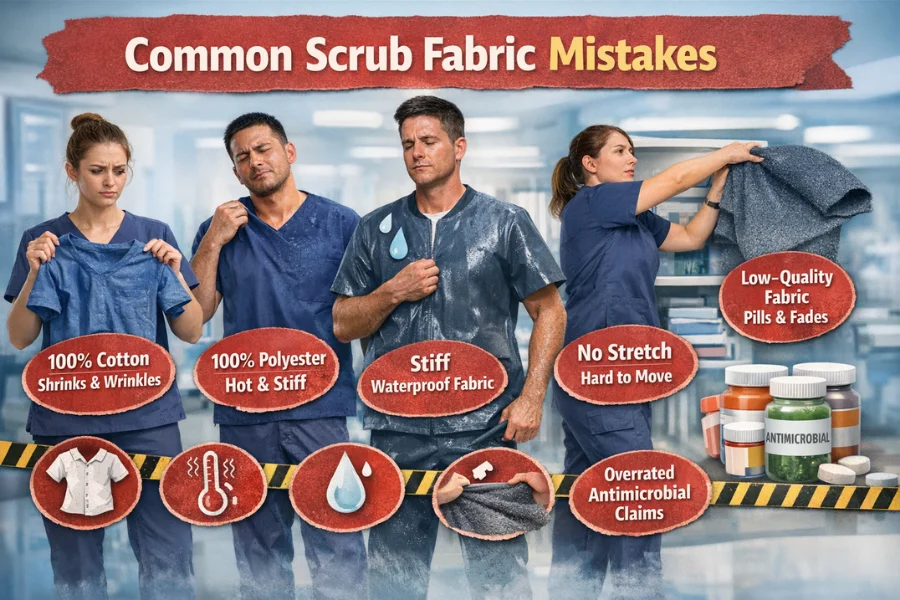
When picking scrubs, the fabric you choose makes a huge difference in comfort, performance, and durability. Let’s talk about some common mistakes and what to watch out for:
- 100% Cotton: Cotton feels soft and breathable at first, but it shrinks, wrinkles easily, and wears out faster. For busy areas like the ER, ICU, or surgical units, it just doesn’t hold up well.
- 100% Polyester: Pure polyester is strong and easy to care for, but it doesn’t breathe well and has no stretch, so that it can feel hot and tight during long shifts. It works okay for light-duty or office staff, but not for active healthcare roles.
- Waterproof or coated fabrics: These might sound protective, but most of the time, they are stiff, uncomfortable, and more expensive than needed. Only choose them if your staff really needs extra fluid protection.
- Fabrics without stretch: If your scrubs don’t stretch, it’s harder to move around. Bending, lifting, or walking long shifts can become tiring quickly.
- Low-quality blends: Cheap fabrics can fade, pill, or lose shape after a few washes, meaning you’ll replace them more often and staff won’t feel confident in their uniform.
- Overvaluing antimicrobial treatments: While they help reduce odor, they can’t replace good washing habits. Don’t pick a scrub just because it says “antimicrobial.”
So, what should you choose? For most healthcare roles, I recommend polyester-spandex blends. These fabrics are durable, stretchy, breathable, and easy to maintain, making them perfect for long, active shifts. They keep staff comfortable, looking professional, and ready to move all day.
Practical Buying Tips for Custom Scrubs
When picking custom scrubs, think about your staff’s daily tasks, department needs, and body shapes.
Match fabrics to activity level: Use polyester-spandex blends for active areas like the ER and ICU; cotton-polyester is suitable for lighter roles.
Offer fit options: Provide unisex, women’s, men’s, petite, tall, plus-size, and maternity styles so staff feel comfortable.
Plan for rotation and durability: Make sure you have enough sets for weekly use, and choose fabrics that resist shrinking, wrinkling, and fading.
Choose colors wisely: Stick to department color codes for easy identification and a professional look.
By following these tips, your custom scrubs will be comfortable, practical, and professional for all staff.
Caring for Your Custom Medical Scrubs
Proper care helps your scrubs last longer and maintain their appearance:
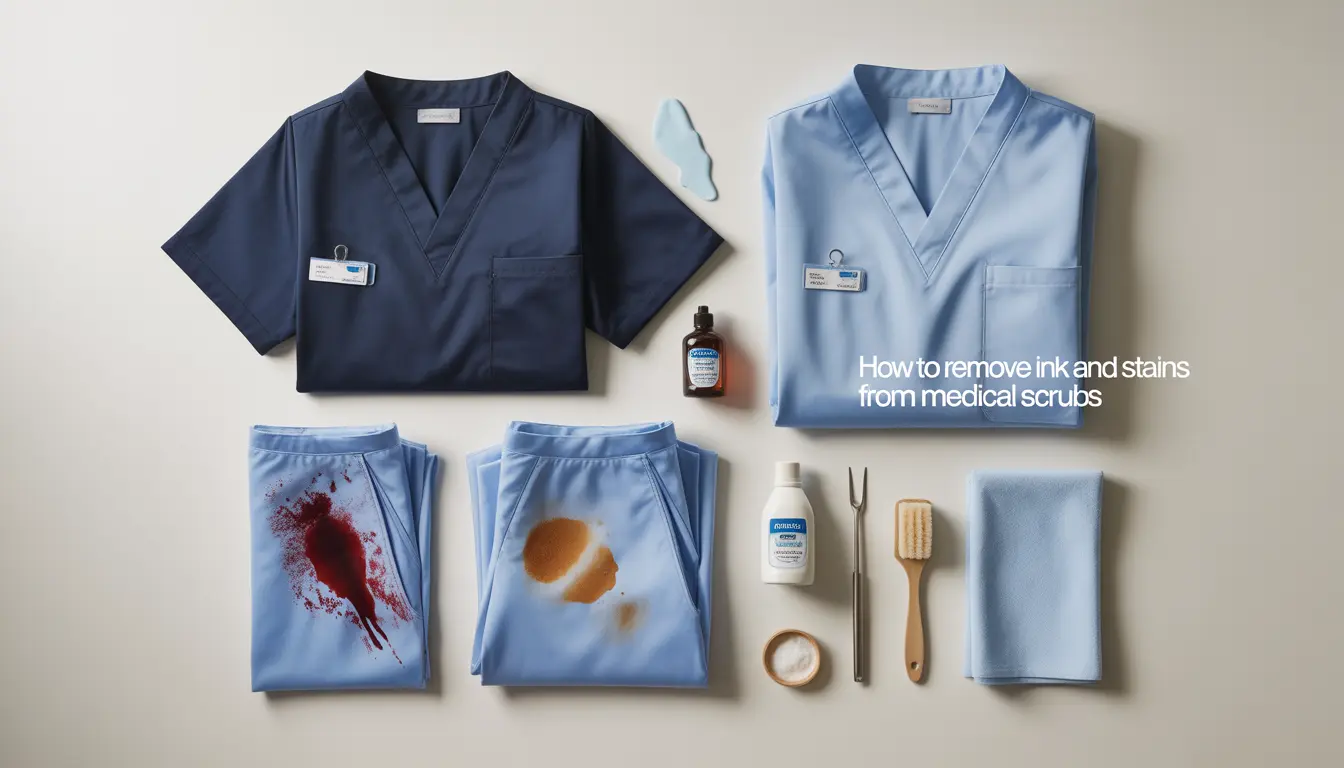
- Washing: Use cold water and low heat to keep the fabric strong and the colors bright.
- Chemicals: Stay away from harsh chemicals that can weaken fibers or damage special features like antimicrobial or fluid-resistant treatments.
- Blends: Follow care instructions for polyester-spandex blends to keep them stretchy, comfortable, and in shape.
Properly cared-for scrubs help staff look professional and protect your uniform investment.
Frequently Asked Questions
What are the main types of medical scrubs?
Medical scrubs vary by fabric, fit, style, function, and job role within healthcare facilities.
Which fabrics last the longest
Polyester blends and performance fabrics offer the best durability for frequent washing.
Which scrubs are best for long shifts
Stretch and four-way stretch scrubs provide the most comfort and movement support.
Which scrubs suit plus-size staff
Plus-size scrubs with flexible cuts and proper proportions offer the best comfort.
Are jogger scrubs allowed
Jogger scrubs are allowed if facility dress policies permit them.
Do all departments use the same colors
Color rules vary by facility and department.
What should maternity scrubs include
Maternity scrubs should include stretch panels and adjustability.
How many scrub sets are needed
Most professionals need three to five scrub sets per week.
Closing Summary
Choosing the right custom medical scrubs means carefully considering fabrics, fits, styles, colors, and department needs. The right choice improves comfort, performance, and professional appearance for healthcare teams. Clinics and hospitals that plan uniform programs thoughtfully create a better working environment, boost staff confidence, and simplify daily operations. For custom or branded scrubs, Steek Apparel supports private label, OEM, and specialty scrub production, helping healthcare teams stay comfortable, confident, and professional.