

Choosing the right custom medical scrubs is essential for healthcare staff who work long hours. They spend long hours on their feet. Comfortable, well-fitted scrubs improve mobility, reduce fatigue, and last through daily wear. Custom scrubs offer a variety of fabrics, colors, sizes, and functional features like pockets, pant styles, and necklines.
They also allow for personalization with embroidery, logos, and color coding, helping teams look professional and organized. This guide covers fabrics, fit and sizing, functional design, customization, branding, bulk orders, care, and sustainability. Use this guide to get scrubs that work well and look good.
What Are Custom Medical Scrubs?
Custom medical scrubs serve healthcare workers. They fit the specific needs of hospitals and clinics (importance of scrubs) You can select fabrics, colours, and sizes for each team member. These scrubs stretch in all directions. They have different pocket styles and allow for name embroidery and logos. They are comfortable and practical.
Standard vs. Custom Scrubs
Standard scrubs come in bulk. They have generic sizes and limited colours. They aim to fit everyone, but that often leads to discomfort. Custom scrubs adapt to your staff’s needs and brand.
You can adjust measurements, match colours to dress codes, and choose features like pocket placement. This leads to better comfort, more effortless movement, and a unified look. Custom scrubs help staff feel good and appear professional.
| Feature | Standard Scrubs | Custom Scrubs |
|---|---|---|
| Fit | Generic | Made to order, tailored |
| Colors | Limited | Department or brand-specific |
| Branding | None | Embroidery, logos, labels |
| Pockets | Standard | Flexible layouts for tools |
| Fabric Options | Few | Cotton, blends, stretch, antimicrobial |
Who needs custom scrubs
Custom scrubs are great for healthcare workers like nurses, doctors, lab staff, and phlebotomists who want better fits and valuable features. Hospital teams need matching colours and strong fabrics for long shifts. Veterinary and speciality clinics need moisture-wicking and durable fabrics. Private label brands can design unique uniforms to sell.
Fabrics and Materials
Cotton and polyster blends
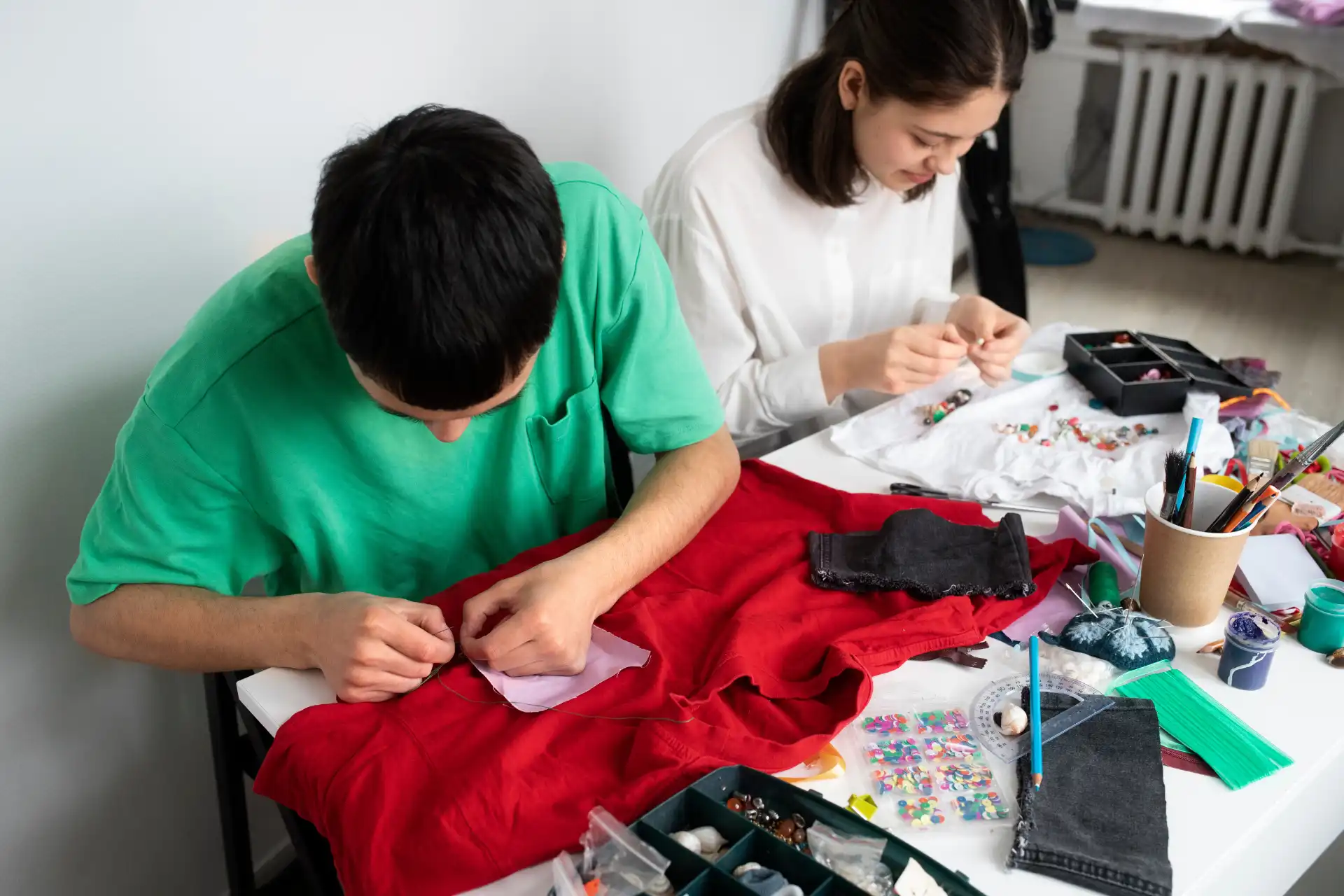
Cotton is soft and breathable, making it comfortable for daily wear. Poly-cotton blends are durable and wrinkle-resistant. Cotton-spandex blends add stretch for comfort.
| Fabric | Pros | Cons |
|---|---|---|
| Cotton | Soft, breathable | Wrinkles, shrinks |
| Poly-cotton | Durable, easy care | Less natural feel |
| Cotton-spandex | Stretch + comfort | Slightly pricier |
Stretch and performance fabrics
Stretch fabrics help with bending and lifting. Two-way stretch is suitable for general tasks, while four-way stretch offers more mobility for active areas like ERs. Polyester, rayon, and spandex blends provide stretch without losing shape.
Antimicrobial and moisture-wicking options
These fabrics stop bacteria and sweat. They are ideal for ICU or ER staff, keeping them dry and cool. Pair them with cotton blends for extra comfort.
Fit, Sizing, and Comfort

Proper fit plays a significant role in comfort, mobility, and fatigue reduction during long shifts.
Unisex vs gender-specific fits
Unisex scrubs are loose and straight, while women’s fits are shaped at the waist, and men’s fits offer more room in the chest and shoulders. The proper cut prevents discomfort while moving.
| Measurement | Unisex | Women | Men |
|---|---|---|---|
| Shoulders | Standard | Narrower | Wider |
| Chest | Loose | Contoured | Standard |
| Waist | Straight | Fitted | Standard |
Tall, petite, plus size, and maternity options
Tall, petite, plus-size, and maternity styles ensure every team member can wear scrubs that fit correctly. Longer inseams, adjusted proportions, and flexible waist designs improve comfort and confidence across the team.
How to measure for a reliable fit
Accurate measurements help avoid sizing problems, especially for bulk orders. For a reliable fit:
– Chest: measure around the fullest part
– Waist: measure at the natural waistline
– Hips: measure at the widest point
– Inseam: measure from crotch to ankle
– Sleeve: measure from the shoulder to the wrist
Stretch fabrics may allow for a slightly smaller size. For teams ordering in bulk, choosing the right fabric is just as important as accurate measurements. Explore our stretch, cotton, and performance fabric collection to ensure the best fit and comfort for long shifts.
Functional Design: Pockets, Necklines, and Pants
Pocket layouts that actually work
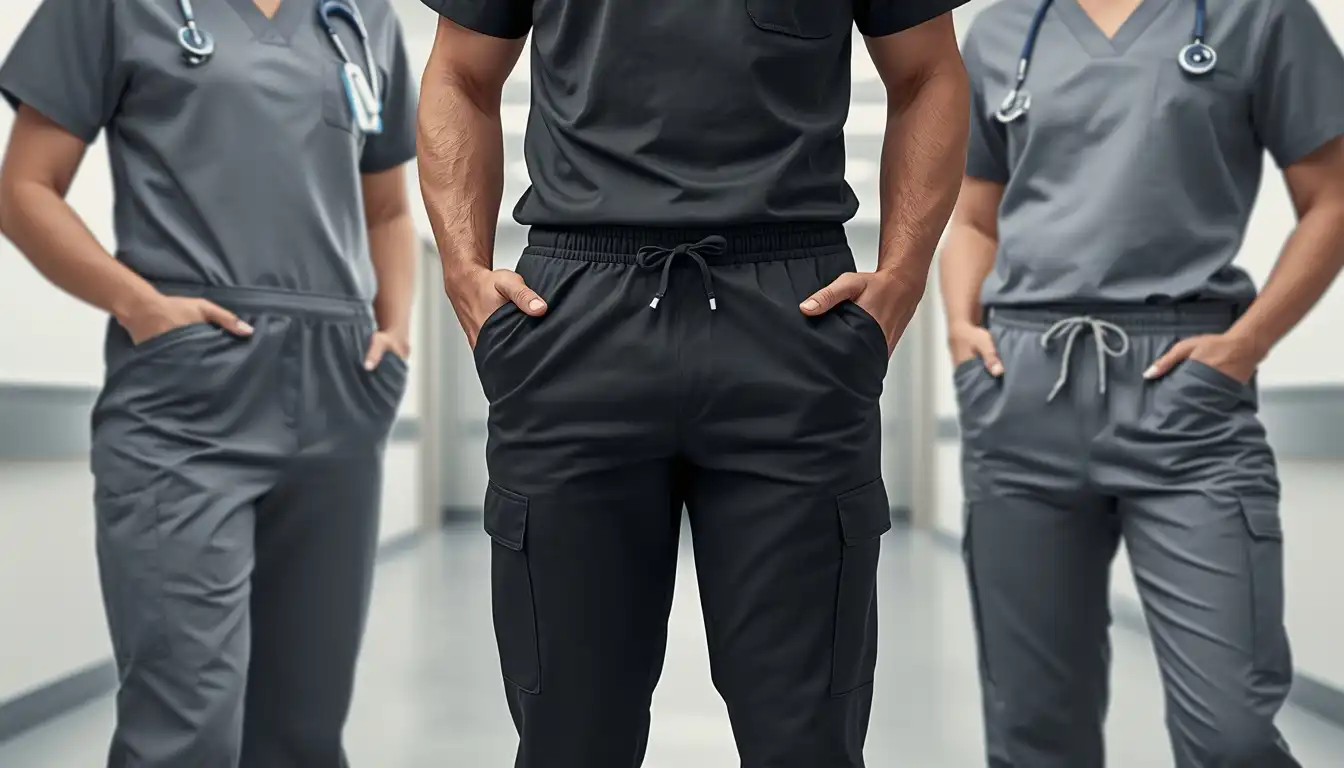
Pocket placement affects how easily staff can carry tools and personal items. Chest pockets work well for badges, hip pockets for phones or pens, cargo pockets for instruments, and hidden pockets for personal belongings.
| Pocket Type | Recommended Items |
|---|---|
| Chest | ID badge, small tools |
| Hip | Pens, phone |
| Cargo | Scissors, instruments |
| Hidden | Personal items |
Necklines, closures, and pant styles
Choosing the right neckline, closure, and pant style helps staff stay comfortable and professional during long shifts. These options let healthcare workers pick what works best for their role and personal comfort.
Necklines such as V-neck, round neck, or mock wrap allow staff to choose comfort and coverage preferences. Pant styles range from straight and tapered to jogger designs, with elastic or drawstring waists. Ankle finishes vary based on comfort and role requirements.
Customization and Branding
Customization allows scrubs to reflect team identity while remaining practical. Custom embroidery is commonly used for names, titles, and logos, often placed on the chest, sleeve, or back. Printing methods offer more design flexibility for logos or graphics, depending on fabric type and durability needs. Color coding is widely used to identify roles within a facility. Using consistent colors helps patients recognize staff roles quickly and supports smoother internal workflow.
Branding, Bulk Orders, and Production Planning
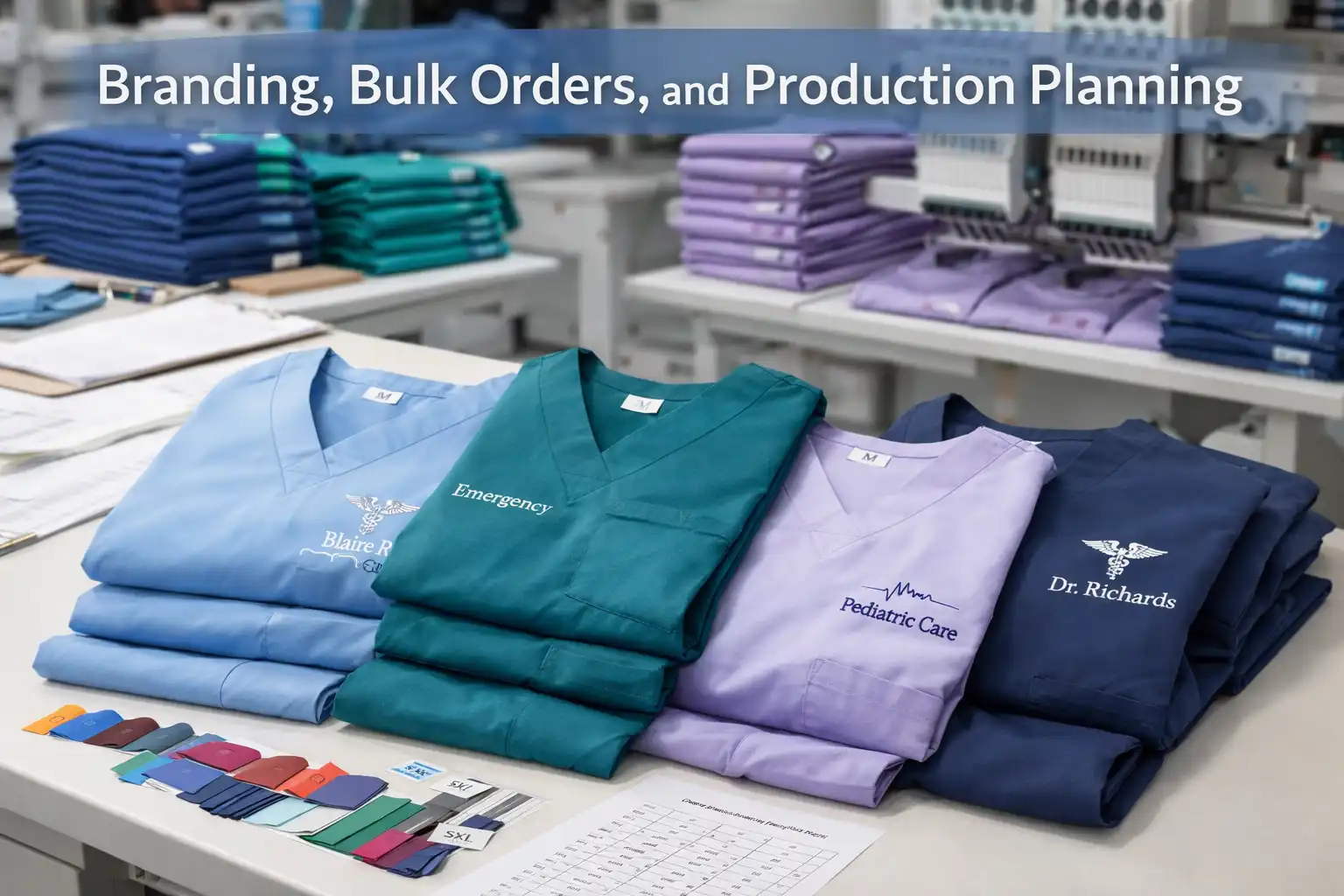
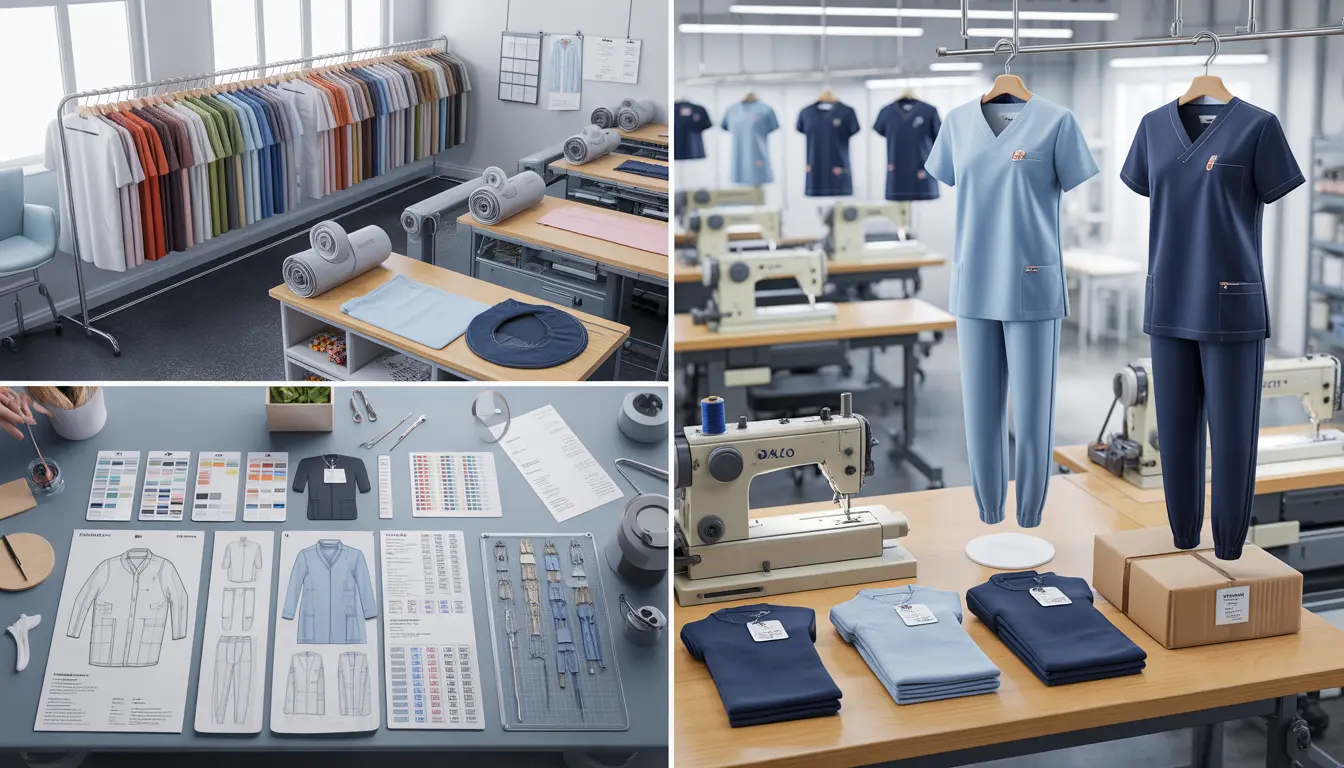
Effective branding and ordering go hand-in-hand. Start with department colours, sizing, and customisation. Approving samples helps avoid issues. For private labels, consider custom labels and packaging. Exact specifications maintain quality as orders increase. Smaller orders are quicker, while larger orders take longer for production.
Care, Washing, and Long-Term Wear
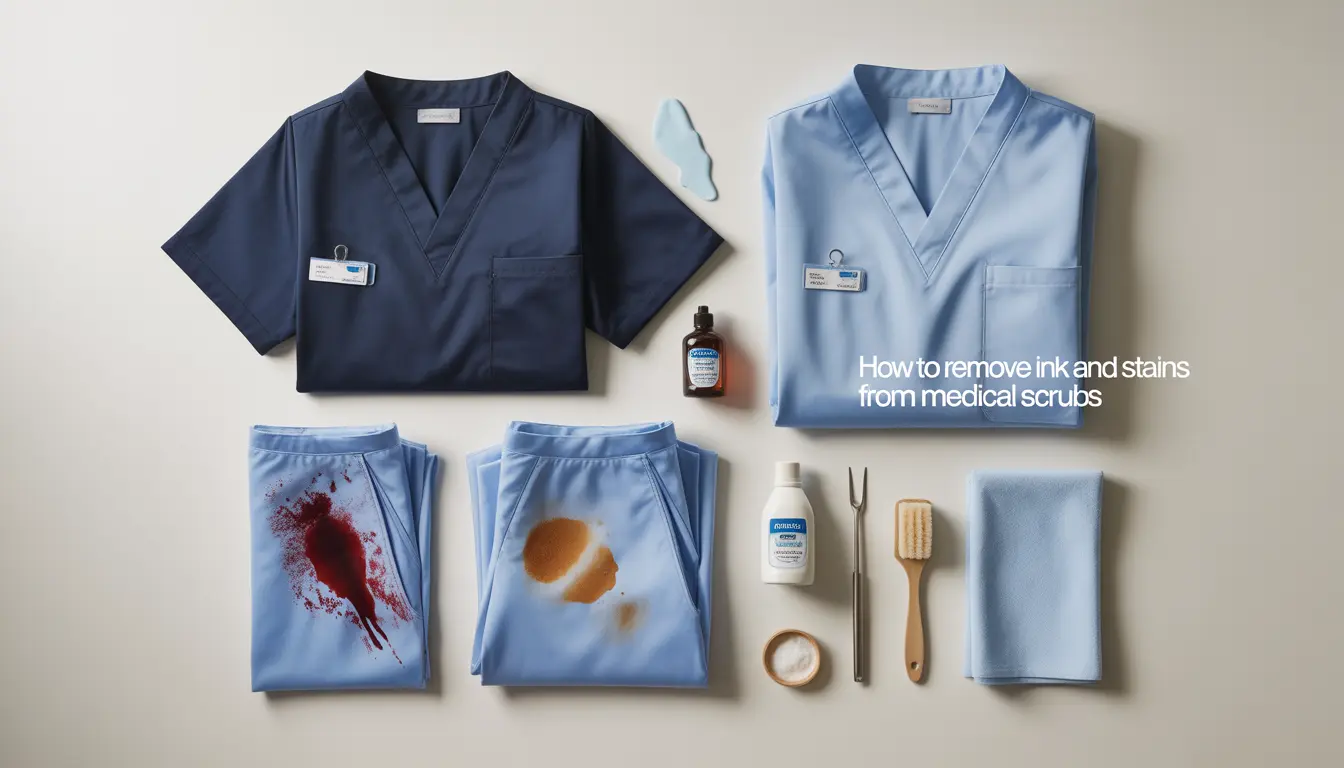
Proper care extends scrub life. Wash in cold or warm water, turn inside out, and use gentle cycles. Avoid fabric softeners on moisture-wicking materials. Regularly check for wear and follow care instructions to keep scrubs looking good.
Choosing the Right Manufacturer
A reliable manufacturer ensures consistent quality and smooth ordering. Look for experience working with clinics and hospitals, transparent fabric sourcing, and strong stitching standards. Sample approval processes and flexible minimums help meet the needs of both small clinics and large institutions. Ethical production is equally important. Transparent labor practices, material traceability, and responsive support indicate a trustworthy long-term partner.
Sustainability and Ethical Production
Sustainable scrubs use materials such as recycled polyester or organic cotton to reduce environmental impact. Ethical production supports fair labor and responsible sourcing while maintaining durability and performance.
Common Mistakes to Avoid
Buyers often focus only on colour and overlook fit and fabric performance. Always review dress codes and pocket needs before ordering, and confirm return policies for custom items.
Frequently Asked Questions
What is a good minimum order for a small clinic?
Small clinics can start with as few as 10–50 pieces, depending on the supplier. Collecting accurate staff measurements ensures the order meets your needs.
How long do custom embroidered scrubs take to ship?
Production and shipping times vary with order size and customization level. Small orders typically take 1–2 weeks, while larger orders may require 4–6 weeks for embroidery and delivery.
Which fabrics work best for 12-hour shifts?
Fabrics with stretch, moisture-wicking, or cotton blends provide comfort during long shifts. Four-way stretch fabrics allow full mobility without restricting movement.
Are custom scrubs machine washable, and how should they be cared for?
Yes, they are machine washable. Turn garments inside out, use gentle cycles, cold or warm water, and avoid bleach. Rotating sets and following care instructions extends garment life.
How long do custom scrubs usually last?
With proper care, high-quality scrubs typically last 1–3 years, depending on fabric choice, frequency of wear, and washing methods.
Closing Thoughts
Choosing the right custom scrubs may feel overwhelming at first. Start by measuring accurately and testing sample sets to ensure proper fit and comfort. Consider pockets, pant styles, and necklines for your staff’s daily tasks to maintain efficiency during long shifts.
Branding and color selection affect patient perception and team identity. Coordinated uniforms help staff appear professional, approachable, and organized, while supporting smooth workflow.
Next steps:
- Healthcare workers: Select the right fabrics and fits, starting with a small set.
- Clinics and hospitals: Gather staff measurements and test samples before bulk orders.
- Private label brands: Work with manufacturers on quantities and quality.
Taking time for planning and selection ensures scrubs that perform well and create a professional image.