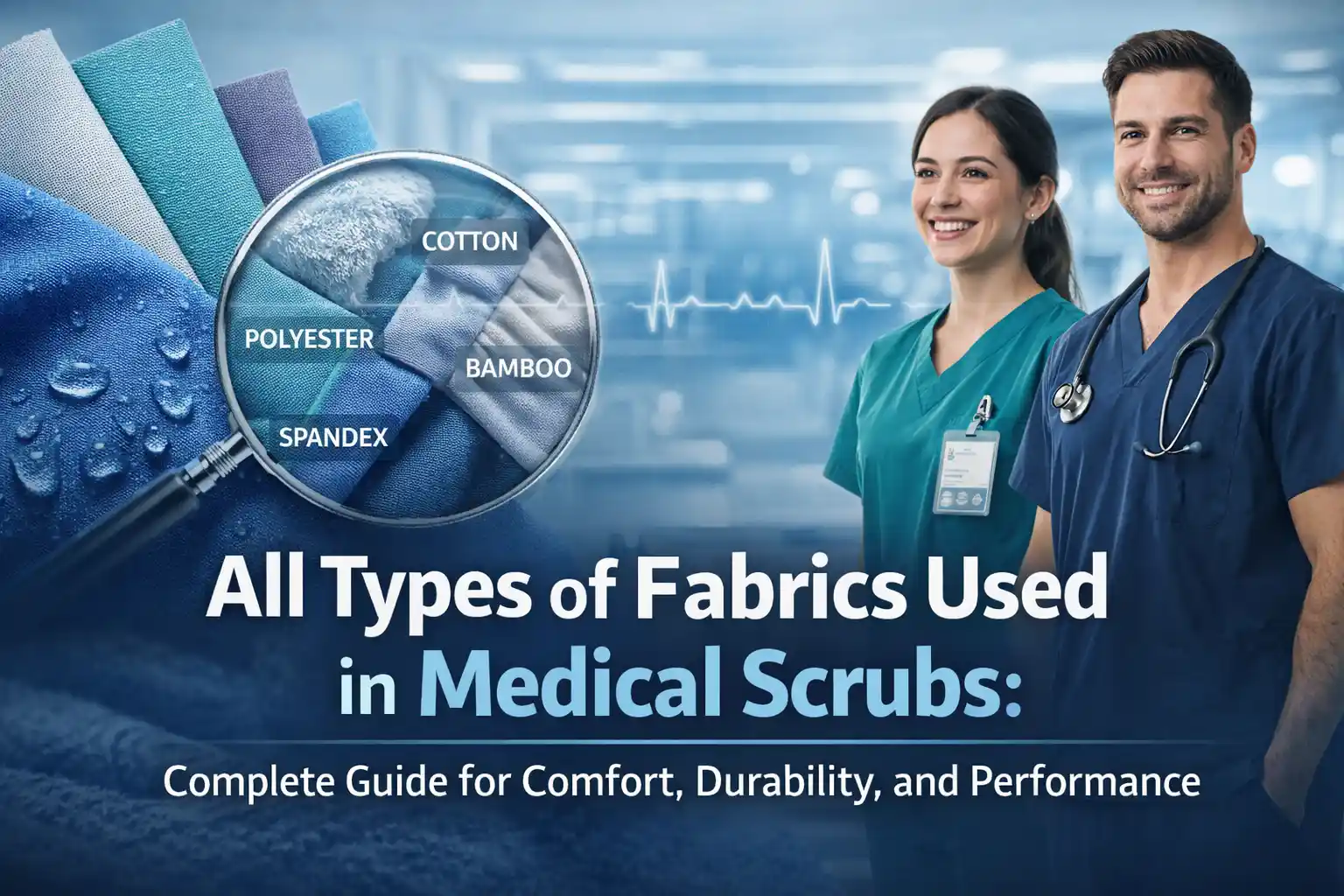
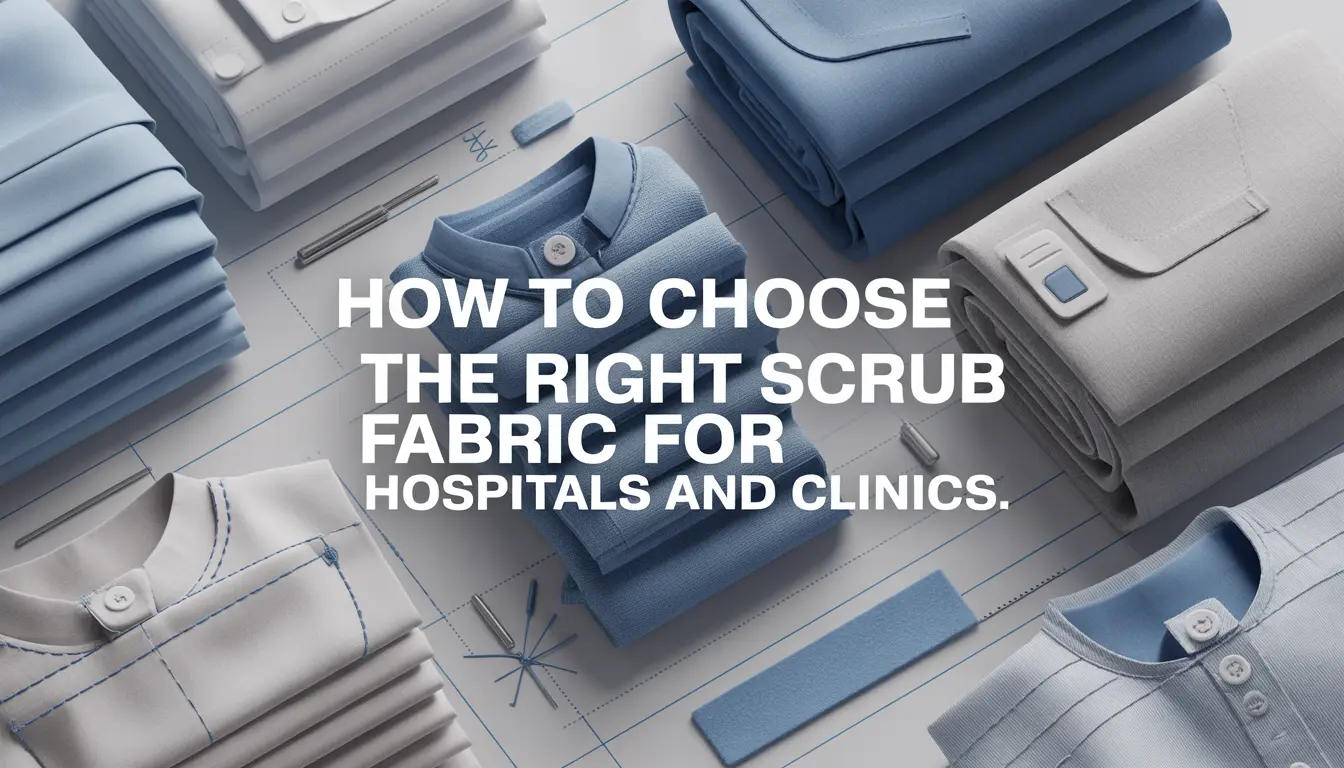

Medical scrubs are more than just uniforms. They protect staff, support hygiene, and help hospitals and clinics run smoothly. The right fabric affects how well staff can move, feel comfortable during long shifts, and maintain infection control. Breathable and durable materials reduce tiredness, stop germs from growing, and hold up through frequent washing, ensuring scrubs last a long time.
This guide helps healthcare teams choose the right scrub fabrics. It covers important factors like how easy the fabric is to move in, how long it lasts, and how well it manages moisture. It also explains different fabric types and care instructions, discusses sizing and color choices, and provides tips for specific department needs and buying in bulk. By following these guidelines, procurement managers can make better choices that improve staff safety, comfort, and efficiency.
Why Fabric Choice Matters in Healthcare
Medical scrubs are practical clothing made for healthcare settings, not fashion. Unlike regular clothes, scrubs focus on protection, comfort, and durability while meeting hygiene standards. The choice of fabric affects how well scrubs work.
Scrub fabrics need to resist fluids, limit the spread of germs, and withstand intensive cleaning processes, such as hot washing and chemical disinfection. Materials that retain their shape and antibacterial properties after many washes help prevent infections and keep staff safe.
Comfort is also vital. Breathable fabrics that wick away moisture help staff stay cool during long shifts. Soft, stretchy materials reduce irritation and allow easy movement for bending, lifting, and standing. Well-chosen fabrics reduce fatigue and boost performance, which benefits patient care and operations.
From an institutional viewpoint, fabric choice impacts purchasing decisions. Strong materials mean less frequent replacements, consistent sizes, and the same colors across departments, making bulk orders easier. By assessing fabric performance, procurement teams can balance hygiene, comfort, and costs to ensure scrubs meet clinical needs.
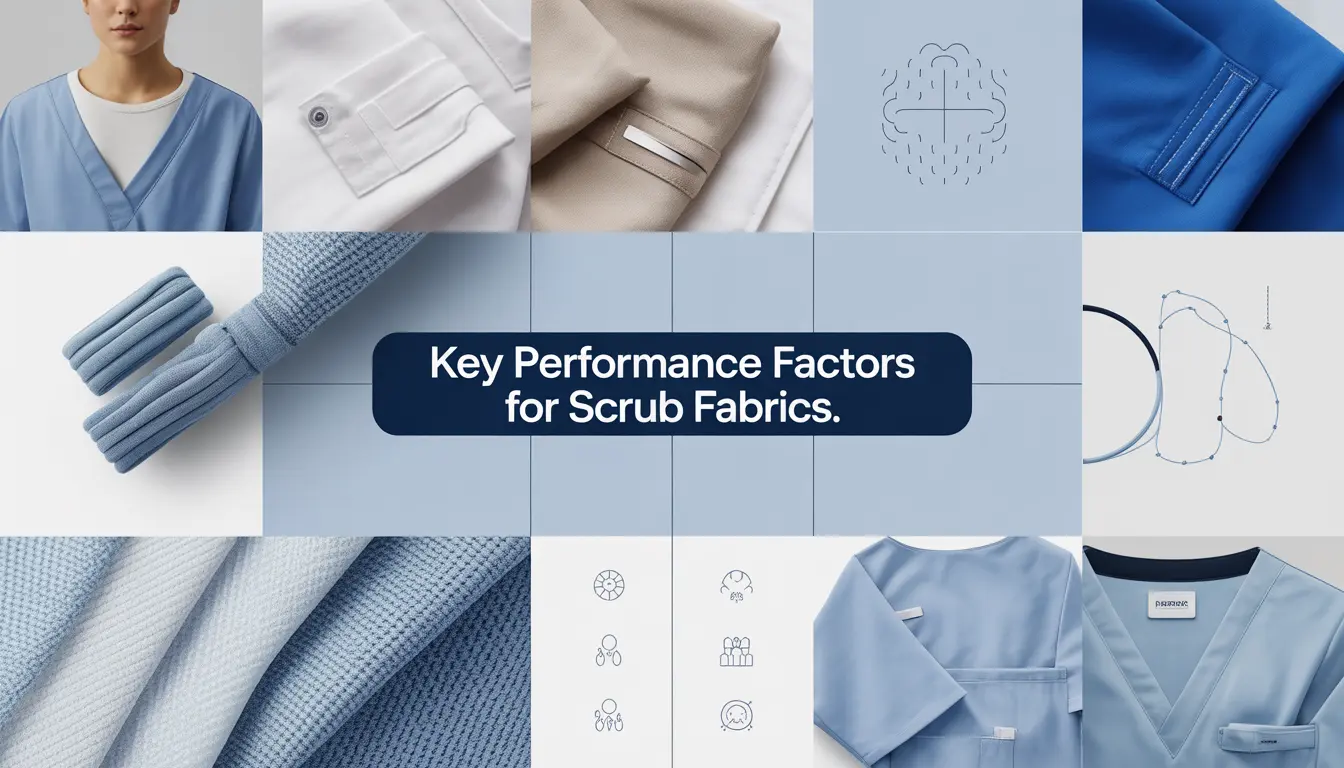
Key Performance Factors for Scrub Fabrics
Breathability and Moisture Management
Scrub fabrics should allow air and moisture to pass through, keeping staff cool and dry during long shifts. Breathable materials help reduce heat, and moisture-wicking fabrics move sweat away from the skin. This keeps staff comfortable and performing well, especially in busy hospital areas.
Weight and Density (GSM)
Fabric weight, measured in grams per square meter (GSM), affects both strength and comfort. Lightweight fabrics (120-180 GSM) are best for hot weather. Mid-weight fabrics (180-250 GSM) work well for everyday use, while heavyweight fabrics (250+ GSM) offer warmth and support for surgeries or colder settings. Choosing the right GSM ensures scrubs are effective for the job and climate. For a detailed guide on fabric weight and GSM for medical scrubs, see our GSM for Medical Scrubs page.
Stretch and Mobility
Adding spandex or elastane makes fabrics more flexible. Two-way stretch fabrics offer ease for lighter tasks, while four-way stretch fabrics allow movement in all directions. This is crucial for roles like nursing or emergency care. Good stretch provides comfort without sacrificing fit or strength.
Durability and Appearance
Fabrics should resist tears, pilling, and fading to look professional and last longer. Strong materials mean fewer replacements, easier bulk buying, and consistent department colors.
Hygiene and Care
Scrubs need to endure heavy washing and strong disinfectants. Fabrics that can withstand these conditions help maintain hygiene and ensure reliable performance in daily use.
Common Scrub Fabric Types
| Fabric Type | Pros | Cons | Best For | Not Suitable For |
|---|---|---|---|---|
| Cotton | Soft, breathable, hypoallergenic | Shrinks, wrinkles, slower drying | Hot climates, sensitive skin | High-volume hospitals |
| Polyester | Durable, wrinkle-resistant, colorfast | Less breathable, can trap heat | Cold climates, bulk orders | Hot climates |
| Poly-Cotton Blend | Balanced comfort and durability, moderate stretch | Moderate stretch unless spandex added | General clinical use | Extreme climates |
| Rayon / Tencel | Soft, absorbent, smooth drape | Less durable | Comfort-focused roles | Heavy-duty work |
| Spandex Blends | Stretchy, flexible, supports mobility | Can trap heat | High-mobility roles | Cold environments |
| Linen | Highly breathable, natural, antimicrobial | Wrinkles easily | Warm clinics | Frequent laundering |
| Merino Wool | Warm, odor-resistant, shape retention | Expensive | Cold climates | Budget-conscious buyers |
Durability and Lifecycle Considerations
Scrub fabrics must handle daily wear while looking professional. They need to be strong and resist friction to avoid tearing and shifting seams when bending, lifting, and carrying tools. Industrial washing uses high heat, harsh chemicals, and heavy agitation. Fabrics need to retain their shape, stretch, and moisture-wicking ability after many washes to meet hospital cleanliness standards.
Color stability and pilling are essential for a professional appearance and consistent uniforms. Faded or pilled scrubs can erode staff confidence and make uniform replacements more difficult. Evaluating these traits helps teams find a balance between looks and durability. Cost-per-wear is crucial for bulk purchases. Higher-quality fabrics with greater strength and washability result in fewer replacements and lower overall costs.
| Fabric Blend | Initial Performance | After 50 Wash Cycles | Tensile Strength Retention |
|---|---|---|---|
| Polyester | 99% | 98% | 90% |
| Poly-Cotton Blend | 98% | 95% | 85% |
| Performance Knit (Poly-Spandex) | 98% | 96% | 92% |
Hygiene, Infection Control, and Barrier Standards
Scrub fabrics protect against infections. Their design affects safety for staff and patients. These fabrics need to stop fluids and germs while lasting through heavy washing and cleaning.
The AAMI PB70 standard grades fabrics based on liquid protection. Level 1 and 2 fabrics are for low-risk areas and resist some water. Level 3 is for moderate fluid exposure, like during surgery, and Level 4 offers strong protection against viruses in high-risk situations.
Bacterial Filtration Efficiency (BFE) measures how many bacteria a fabric can filter, typically using Staphylococcus aureus. Healthcare fabrics often achieve a BFE of 98% or higher to reduce the spread of germs.
Antimicrobial finishes, tested by ISO 20743, help kill germs on fabric surfaces, offering extra safety during long shifts. When combined with effective cleaning practices, these features help prevent infections in healthcare settings and keep operations running smoothly.
Climate and Work Environment Considerations
Choose fabrics based on the climate and work environment to keep staff comfortable and safe. In hot weather, use lightweight fabrics that breathe and wick away moisture, helping staff stay cool and reducing fatigue. Cotton, rayon blends, or lightweight poly-cotton are best for regulating temperature.
In cold environments or air-conditioned hospitals, use heavier fabrics that keep staff warm while allowing movement. Mid-weight to heavyweight polyester blends or merino wool keep body heat in while letting staff move freely. Adding layered scrubs or jackets is helpful for jobs with lower activity levels.
Indoor clinical environments need fabrics that manage moisture, breathe well, and are quiet to avoid disrupting patients. For roles that mix indoor and outdoor work, like community nursing or emergency transport, choose fabrics that protect against wind, UV rays, and changing temperatures.
Adjusting uniforms by season helps keep operations smooth and staff happy. Hospitals can switch to lightweight scrubs in summer and warmer layers in winter, ensuring cleanliness, comfort, and mobility for all staff while supporting bulk purchasing plans.
Fabric Selection for Bulk and Custom Orders
When ordering medical scrubs in bulk, consistency is important. Different dye lots can cause color differences between departments, affecting staff recognition and appearance. Procurement teams should choose manufacturers that ensure exact color matching, often using Pantone references, to maintain consistent colors across all units and future orders.
Customization is also key. Hospital branding, department labels, and staff roles often need embroidery or screen printing on scrub tops and pants. The type of fabric used can affect how well these methods work. Sturdy poly-cotton twill or poplin can hold detailed embroidery and keep the design looking good after many washes. Fabrics with a lot of stretch, such as spandex blends, require careful placement to avoid distortion. Screen printing works well with synthetic blends but may require special inks to prevent peeling or fading from heat and chemicals.
| Fabric Type | Embroidery Suitability | Screen Printing Suitability | Best Use |
|---|---|---|---|
| Poplin (Poly-Cotton) | Excellent | High | Logos, names, structured tops |
| Twill (Poly-Cotton) | Excellent | Moderate | Pants, structured tops |
| Poly-Spandex | Moderate (requires backing) | High (specialized ink) | Athletic-fit scrubs |
| Rayon Blends | Moderate (fragile) | Low | High-end, soft sets |
Evaluating Fabric Suppliers
Choosing a trustworthy fabric supplier is important for keeping scrubs effective, clean, and running smoothly. Procurement teams should focus on suppliers with confirmed certifications. OEKO-TEX Standard 100 ensures fabrics are free of harmful chemicals and safe for the skin. ISO 9001 and ISO 13485 show that suppliers follow strict quality standards for medical clothing, and REACH compliance means there are no banned substances in the fabric.
Quality control is vital for large orders. The Acceptable Quality Level (AQL) system sets limits on defects in a batch. There should be no tolerance for critical defects, like contamination or unsafe fibers. Major defects, such as broken seams or poor closures, are allowed at a rate of 2.5%, while minor defects, such as slight color changes or loose threads, are limited to 4%. These rules help maintain consistent quality and reduce operational issues.
Clear Technical Data Sheets and independent test reports let procurement teams assess fabric qualities such as strength, colorfastness, and antibacterial effectiveness. A supplier that shares this information acts as a partner in infection control, helping ensure hospital safety, staff comfort, and reliable operations in the long run.
Conclusion and Recommendations
Choosing the right scrub fabric is about finding comfort, durability, cleanliness, and good performance. Poly-cotton blends are great for regular clinical staff, while polyester-rayon-spandex blends offer stretch and moisture control for demanding jobs. Procurement teams should check barrier standards, antimicrobial qualities, and whether the fabric can handle industrial washing to keep staff safe and ensure the clothes last. Consistent sizing and color that stay bright, along with customization options, help ensure smooth operations. For specific needs and fabric choices, healthcare organizations can visit Steek Apparel’s Pick by Fabric page and ask for bulk order quotes.