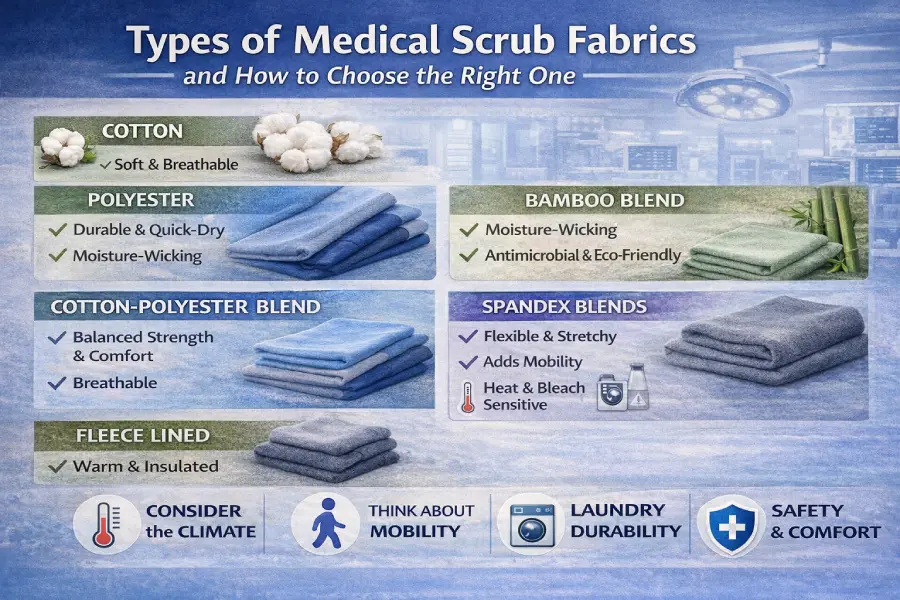

Choosing the right fabric for medical scrubs is crucial for healthcare businesses. The fabric affects how long the scrubs last, how comfortable the staff feel, and even costs. High-quality scrubs handle washing well and keep their color. Bad fabric leads to more replacements and staff dissatisfaction. This guide skims through standard fabrics, their strengths, costs, and recommendations for different facilities. It helps hospitals, clinics, and private practices make wise choices that ensure comfort and last long.
Overview of Common Medical Scrub Fabrics
Medical scrubs are made from various fabrics that suit different healthcare environments. Each material has specific benefits, such as breathability, durability, moisture control, or stretch. Knowing these features helps teams choose the right uniforms for staff and departments.
Quick Comparison Table
| Fabric | Breathability | Durability | Stretch | Moisture Control | Laundering Tolerance | Cost | Compliance |
|---|---|---|---|---|---|---|---|
| Cotton | High | Low | Low | Medium | Poor (industrial) | Low | Low |
| Organic Cotton | High | Low | Low | Medium | Poor | Medium | Medium |
| Linen | Very High | Low | Low | Medium | Poor | Medium | Low |
| Bamboo | High | Medium | Medium | High | Good | High | Medium |
| Cotton-Poly Blend | Medium | High | Low | Medium | Very Good | Medium | Medium |
| Polyester-Spandex | Medium | High | High | High | Good (cold wash) | High | Medium |
| Nylon-Spandex | Medium | Very High | High | Medium | Good | Very High | Medium |
| Wool/Merino Wool | Medium | Medium | Low | Medium | Limited | High | Medium |
| Fleece/Insulated | Medium | Medium | Low | Medium | Limited | High | Medium |
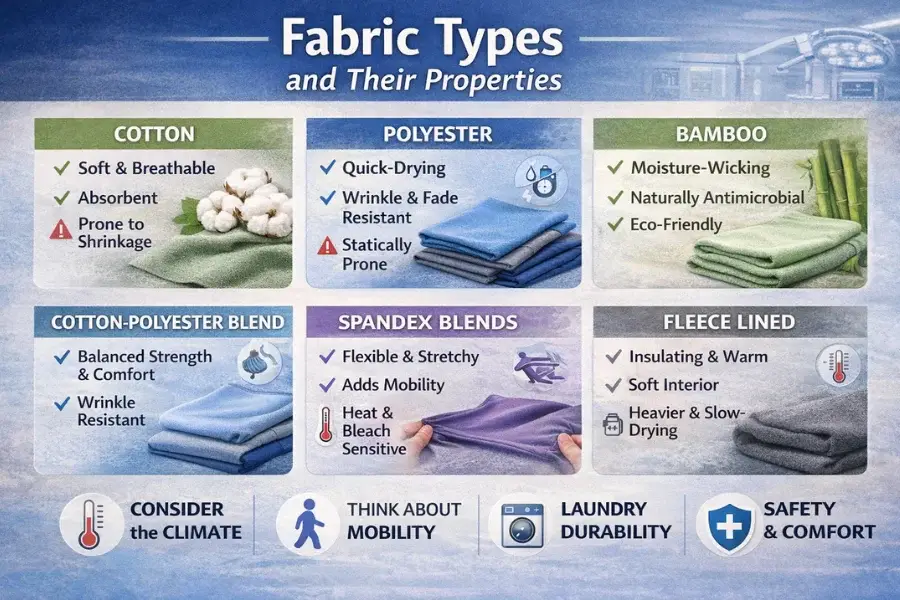
Fabric Types and Their Properties
Cotton (100%)
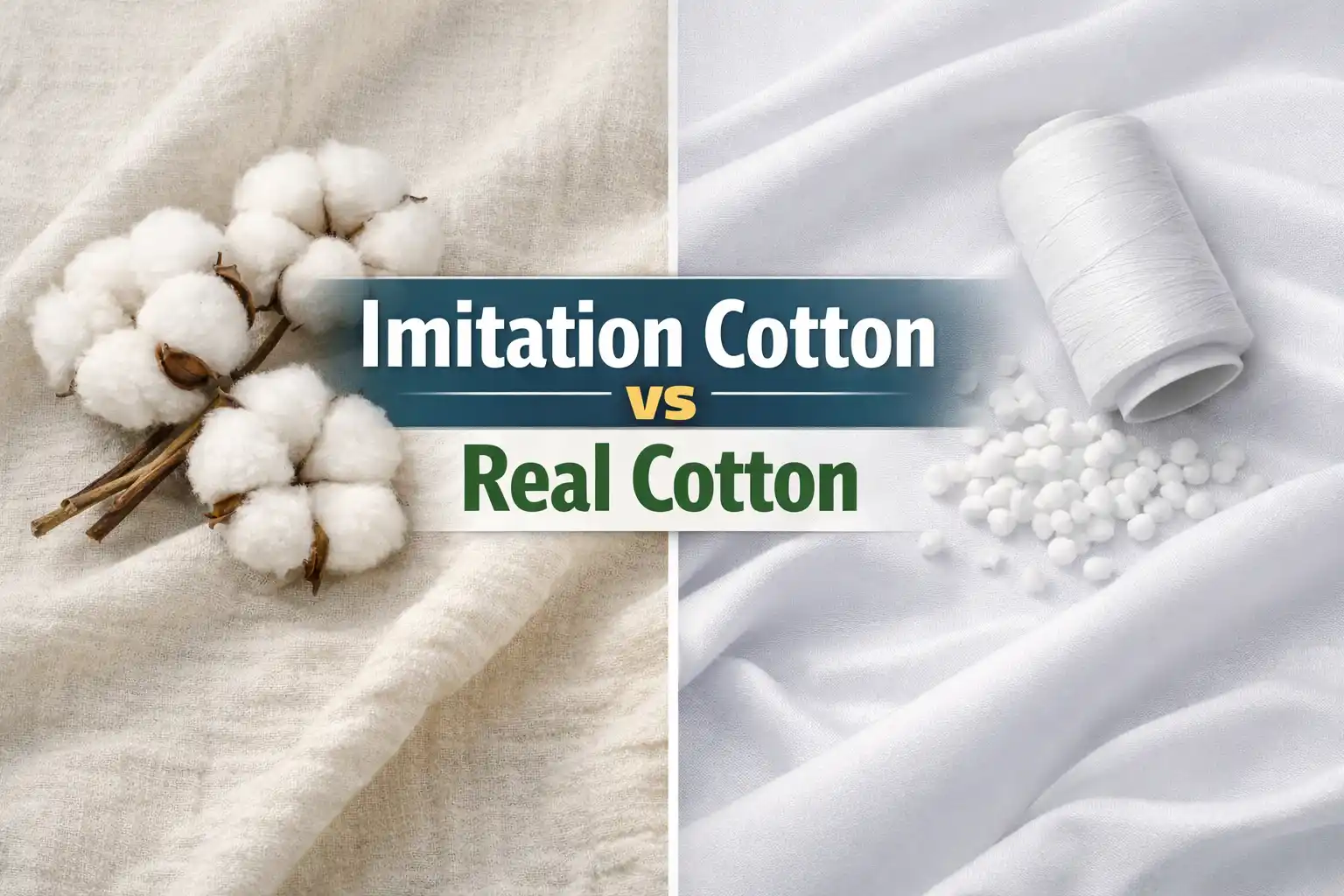
Cotton is breathable and hypoallergenic on sensitive skin, making it comfortable for staff. However, it doesn’t hold up well in industrial washing and isn’t suitable for operating rooms because it can produce lint and catch fire. It is best for outpatient clinics or places where comfort is more important than durability.
Organic Cotton Scrubs Uniforms
Organic cotton offers the same comfort and skin-friendly features as regular cotton, but it has lower chemical exposure and comes from pesticide-free sources. Hospitals focused on sustainability prefer these fabrics, even though they cost 15–25% more. They work well for clinics that value eco-friendly practices over extreme durability.
Linen Scrubs (100% Linen and Linen Scrubs for Women)
Linen scrubs breathe well and help manage temperature. They look textured but don’t stretch much and wrinkle easily. They are hard to clean in industrial settings, so they work best in boutique clinics or wellness centers, not in busy or surgical environments.
Bamboo Fabric
Bamboo fabrics are soft and wick moisture away. They are naturally antimicrobial due to bamboo kun. When mixed with other materials, they last longer and resist fading. They cost more but are worth it for high-activity areas like ERs, ICUs, and ORs. Plus, they are eco-friendly if made using closed-loop processing.
Cotton-Polyester Blends (55/45)
The industry standard for hospitals combines comfort, durability, and affordability. These blends resist wrinkles and fading, hold up well in industrial washing, and are suitable for general hospital use, ORs, ERs, and ICUs.
Polyester-Spandex Blends
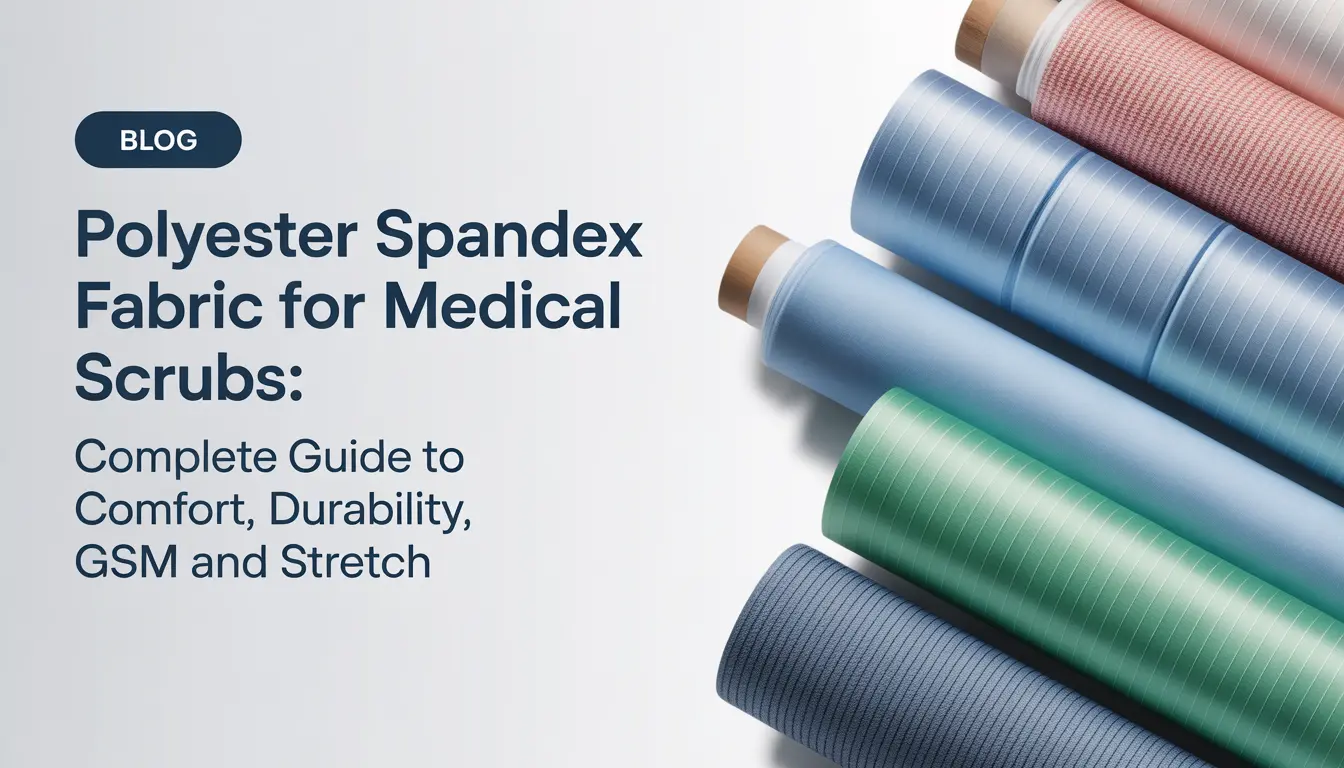
Spandex scrubs provide four-way stretch, making it easier to move and reducing fatigue in demanding jobs. They should be washed in cold water to keep their shape, and they are sensitive to heat and bleach. These medical scrubs are great for surgical teams, ER staff, and ICU workers, but they come at a higher price.
Nylon-Spandex Blends
Durable fabric blends feel soft and resist pilling. They stand up to frequent washing and wear, making them ideal for specialty clinics or private hospitals. However, their high cost can be a problem for budget-sensitive facilities.
Wool and Merino Wool Scrubs
Wool scrubs tops help regulate temperature, control moisture, and resist odors. They are not compatible with industrial laundering and are more expensive, making them best for specific settings or cold climates.
Fleece-Lined and Insulated Scrubs
Designed for cold-weather or outdoor environments, fleece-lined and insulated scrubs offer added warmth. Reduced breathability limits all-year use, making them ideal for transport teams, outdoor clinics, or winter conditions, but not for ORs or high-heat environments.
Comparative Fabric Performance
| Comparison | Key Metrics |
|---|---|
| Bamboo vs Cotton | Bamboo wicks moisture better, resists odors, higher durability and cost |
| Organic vs Regular Cotton | Eco-friendly vs cost efficiency and lifespan |
| Spandex vs Non-Stretch | Mobility gains vs industrial laundering constraints |
| General Metrics | Wash-cycle tolerance, tensile strength retention, colorfastness |
Fabric Selection by Healthcare Facility Type
In healthcare, the right fabric can make a big difference. Choosing the right materials helps create a safer and more comfortable environment. In operating rooms, we need fabrics that are tough and limit lint, like polyester-cotton blends. These fabrics resist flames and reduce static, cutting down on risks during procedures.
For emergency departments, we want strong, color-fast fabrics that can handle lots of movement and frequent washing. Bamboo blends are great here, providing stretch and comfort for busy healthcare workers. In outpatient and pediatric clinics, comfort is key. Cotton fabrics are perfect for staff who may have sensitive skin.
Infection control units need heavy-duty materials that are antimicrobial and water-resistant. (For official infection control guidelines, see CDC Infection Control for Healthcare Professionals). These added features help protect against germs in high-risk areas. Choose the right fabric to enhance safety, comfort, and care in every clinical setting. If you need fabrics selected to meet your exact requirements, learn more about custom medical scrub fabric.
GSM Weight and Fabric Thickness Guidelines
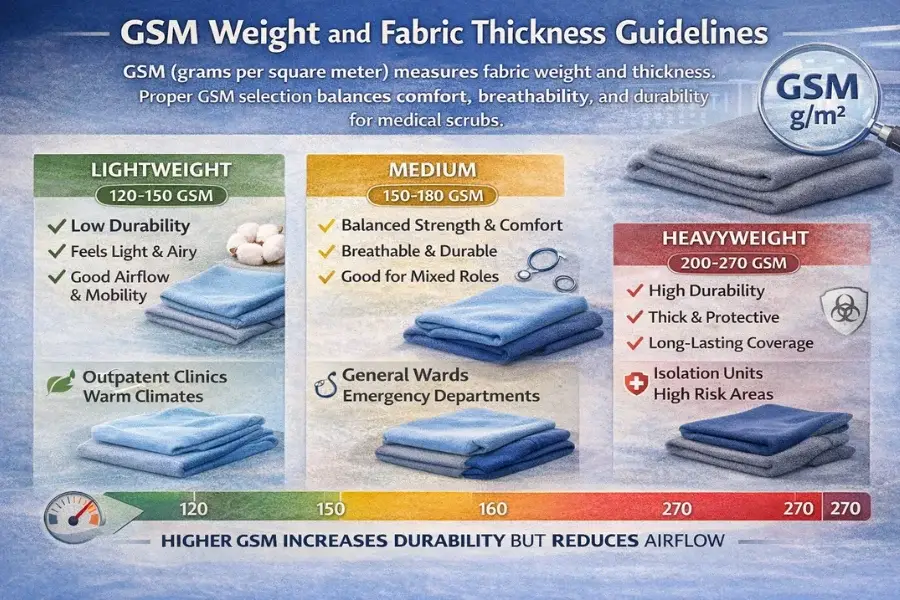 Choosing the right fabric weight matters. It affects comfort, durability, and breathable of the material. Selecting the wrong range often leads to discomfort, early wear, or higher replacement rates.
Lightweight Fabrics (120-150 GSM)
These fabrics promote airflow and freedom of movement. They’re perfect for busy clinics and warm places where staff are active. They feel light but may wear out faster with regular washing.
Medium Weight Fabrics (150-180 GSM)
This range strikes a balance between comfort and strength. It’s commonly used in hospitals because it withstands frequent washing while staying breathable. It’s ideal for roles where staff move around and also need to stay put.
Heavyweight Fabrics (200-270 GSM)
These fabrics focus on protection and durability. They’re used in isolation units or areas where added coverage is crucial. While they last longer, they may reduce airflow, so choosing the right blend is key. Higher GSM increases fabric lifespan but can reduce ventilation, so proper fabric composition is important.
Laundry Durability, Skin Safety, and Long Term Cost Considerations
Medical scrubs in hospitals face repeated heat, strong detergents, chlorine, and mechanical washing. Choosing fabrics that resist shrinking, pilling, and keep their shape lasts longer and cuts down on replacements. Stretch fibers need careful heat and chemical handling to avoid damage. Fabric finishes also affect comfort; harsh wrinkle-resistant treatments can irritate the skin, while safer antimicrobial options are better for children and long shifts. When buying scrubs, focusing only on initial costs can be misleading. Fabrics that keep their color, fit, and comfort for three to five years often save money by reducing reorders and improving staff satisfaction. If you want step‑by‑step guidance on choosing and customizing scrubs, see our Custom Medical Scrubs Guide.
Practical Recommendations for Manufacturers
Standard Range:
Use 55/45 cotton-polyester blends (150–180 GSM). This mix provides comfort and durability, making it great for everyday medical scrubs that need breathability and can handle frequent washing.
Premium Range:
Choose bamboo-polyester or nylon-spandex fabrics with antimicrobial finishes. These materials are soft, stretchy, moisture-wicking, and hygienic, making them perfect for top hospitals, clinics, and private healthcare brands.
Budget Range:
Select at least 50/50 cotton-polyester blends (140–160 GSM). This choice helps keep costs low while still providing decent comfort and durability for bulk orders or budget-conscious buyers.
Additional B2B Essentials:
Always include clear care labels and laundry instructions to extend fabric life and meet hospital washing standards. Offering optional private labeling (custom tags, size labels, and logos) makes your products more appealing to B2B buyers and institutions.
Key Takeaways for B2B Fabric Selection
Choosing the right fabric for medical scrubs is important for staff comfort and efficiency. Cotton and organic cotton are best for outpatient use, while bamboo and cotton-polyester blends work well in busy areas. Spandex or nylon blends improve movement in critical care environments. For cold or outdoor environments, fleece-lined or insulated scrubs are ideal. Procurement teams should match fabric choices with department needs, fabric weight (GSM), washing requirements, and compliance standards to reduce returns and lower costs.