
Medical scrubs are not just uniforms. They are important tools for healthcare workers. They impact comfort, movement, infection control, and costs. Hospitals and clinics need to consider fabric, fit, and color when ordering in bulk. Scrubs with spandex and stretch, along with uniform sizes and colors, help staff work better during long shifts. This guide shows how choosing the right fabric, having consistent sizes, and standardizing colors can improve workflow, cut down on mistakes, and enhance patient care in a healthcare environment.
Why Fabric Matters for Performance
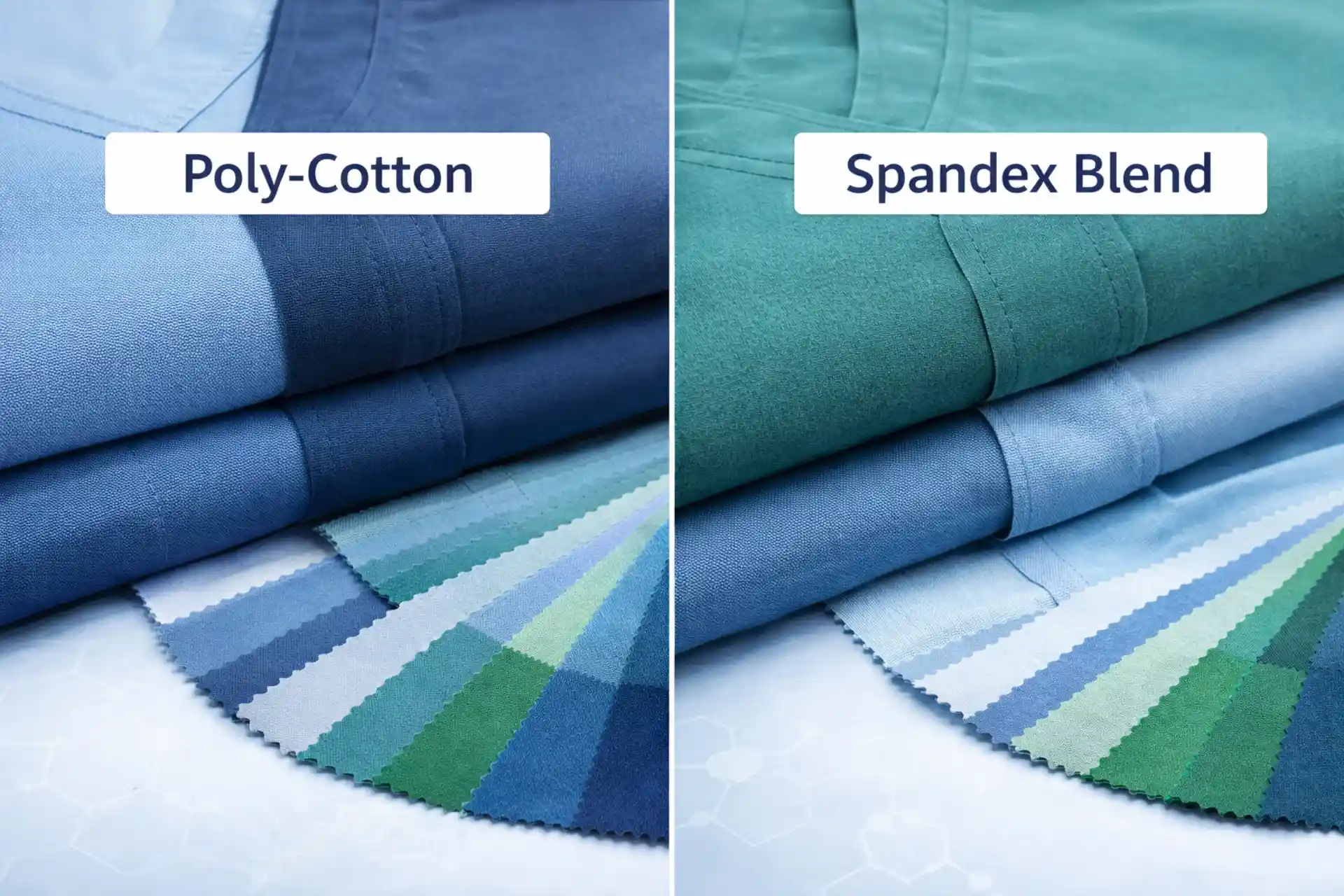
The choice of fabric affects how well medical scrubs perform in daily clinical stress. Traditional poly-cotton blends are standard because they can handle industrial laundry, resist pilling, keep their color, and hold their shape even after repeated washes. These materials are ideal for hospitals, emergency departments, and intensive care units, where uniforms often face heat, detergents, and disinfectants.
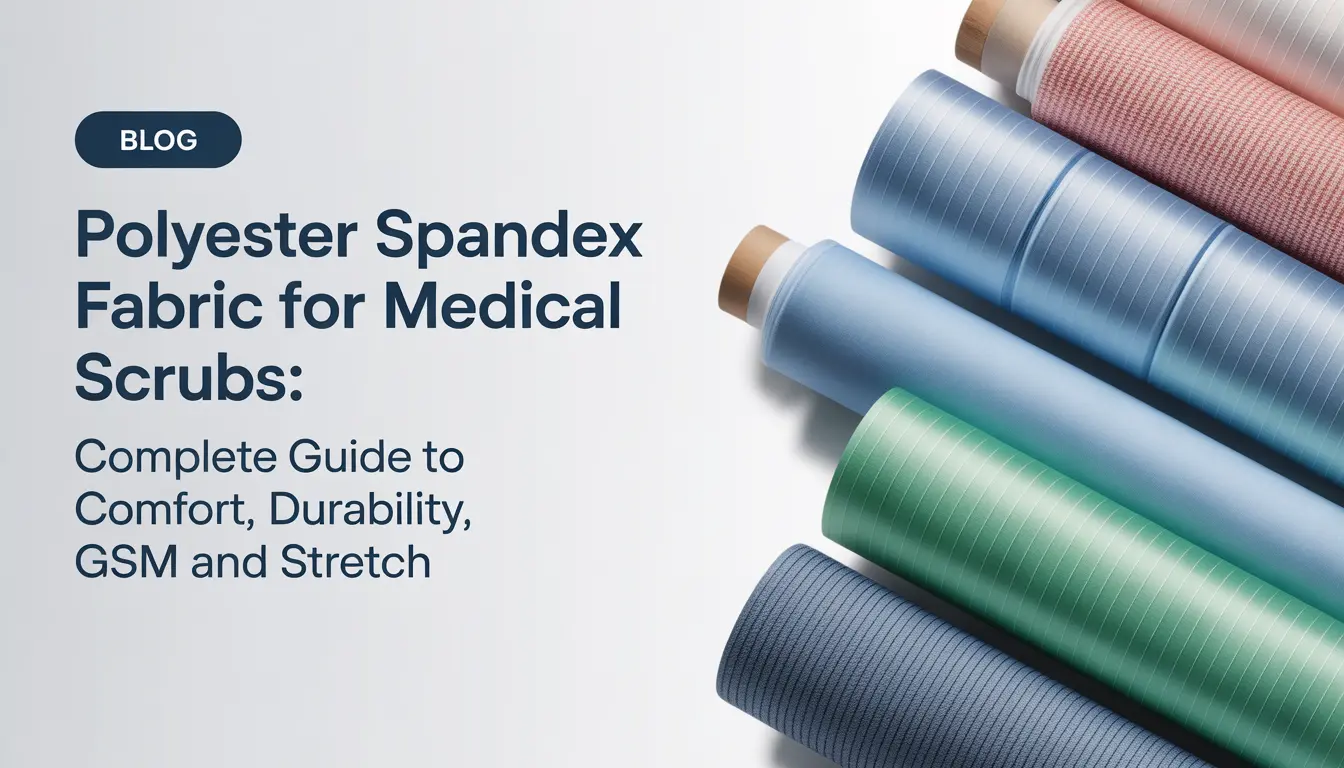
For jobs that require frequent movement, stretch scrubs and medical scrubs with spandex offer extra flexibility. Spandex lets the fabric stretch in all directions, which improves comfort and helps reduce physical fatigue during long shifts. However, these stretch fabrics can be sensitive to chlorine bleach and high-temperature washing. Poor care can cause them to lose elasticity, turn yellow, or break down early.
It’s important to balance durability and mobility. Poly-cotton fabrics last long under heavy laundering, while spandex blends perform better in controlled washing conditions. Choosing the right fabric based on how it will be washed and job requirements enhances staff satisfaction, reduces the need for replacements, and maintains professional standards.
Achieving the Right Fit in Bulk Orders
Consistent sizing is crucial for bulk scrub orders. Poorly fitting scrubs restrict movement, increase discomfort, and lead to higher return rates. Procurement teams must decide between unisex and gender specific cuts. Unisex styles are easier to manage but may not fit all body types accurately. Gender-specific styles fit better, enhancing mobility and reducing discomfort for staff.
Using a bell curve sizing model helps predict demand accurately. A common distribution is XS and S at 15 percent, M at 30 percent, L at 30 percent, XL at 15 percent, and 2XL and above at 10 percent. Include specialty sizes like Tall and Petite for core colors to avoid expanding inventory unnecessarily. View our medical scrubs size chart for accurate sizing.
To reduce returns, provide precise garment specifications, maintain consistent sizing across production, conduct wear tests, and keep extra stock for popular sizes. Specialty sizes, such as Tall and Petite, should be included for core colors and high volume sizes to maintain coverage without expanding inventory unnecessarily. Learn more about our custom medical scrub fabrics to ensure durability and comfort.
The Role of Color in Staff Efficiency and Safety
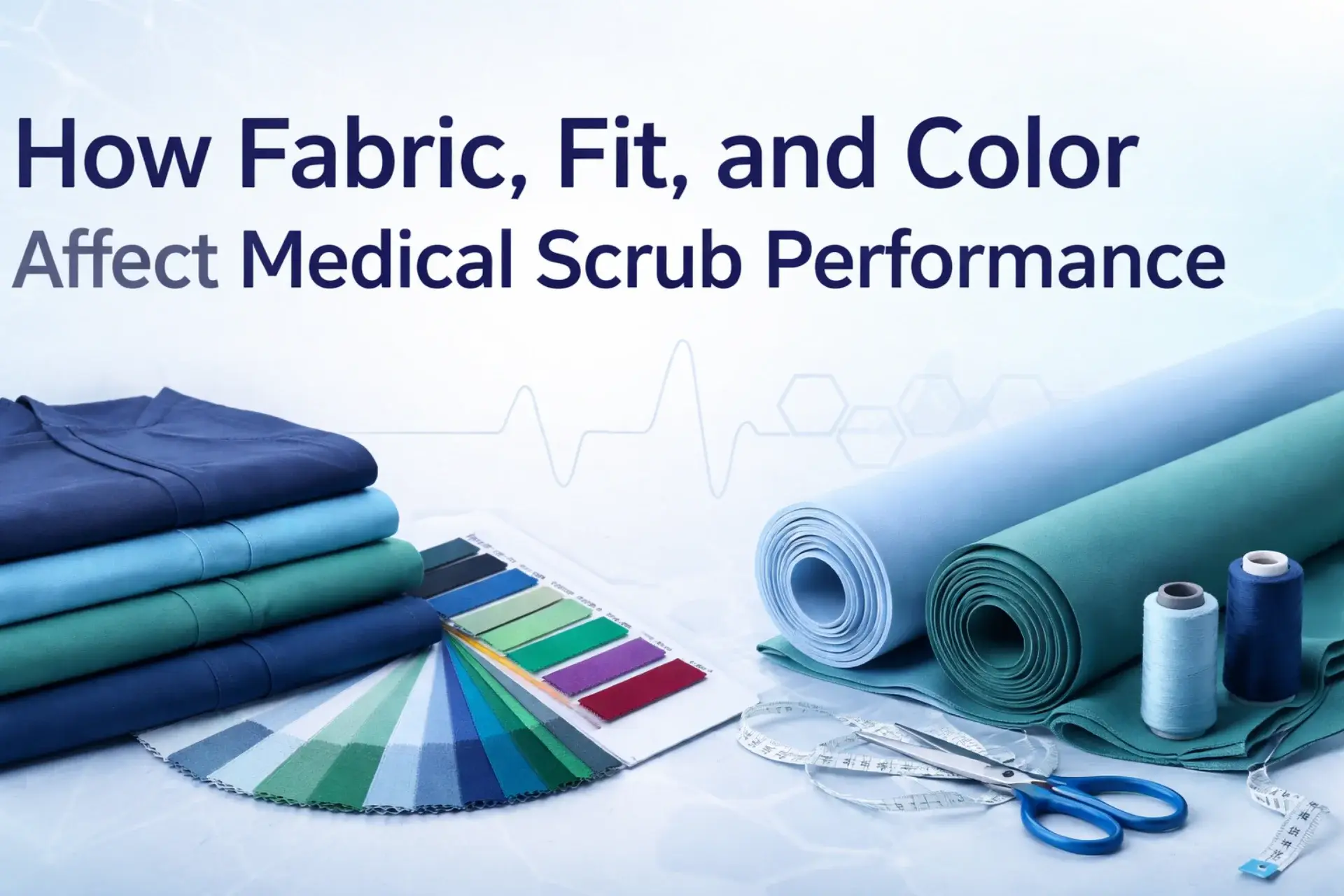
Scrub colors help identify staff and improve work efficiency. Many healthcare facilities use color codes such as green or blue for operating room staff, navy for nurses, red for trauma teams, and black or grey for admin roles. Using consistent colors reduces confusion, boosts patient confidence, and streamlines workflows.
Color accuracy is as important as color choice. Approving fabric samples, measuring color accuracy, and testing against fading help ensure new batches match existing uniforms. This prevents color differences from washing or lighting. Keeping colors consistent in bulk orders helps organize staff visually and minimizes errors in busy medical grounds.
Department Specific Fabric and Color Requirements
Each hospital department has different needs for safety and performance. Operating rooms need lint-free, antistatic, and fire-resistant fabrics to keep the area sterile and protect equipment. Emergency and trauma units need durable, fluid-repellent fabrics that support high mobility during intense clinical activity. MRI and radiology departments must use metal-free fasteners to avoid safety risks. Psychiatry and behavioral units benefit from designs that reduce hazards for both patients and staff. Choosing the right fabric and scrub colors based on department needs ensures safety, compliance, and comfort across the facility.
Managing Bulk Orders and Reducing Returns
To manage bulk orders effectively, start with quality control. Test batches to ensure shrinkage stays below 3% and seams remain stable after washing. Keep 5 to 10% extra stock for core sizes to handle onboarding, turnover, and garment damage without interrupting operations.
Pilot testing garments before large production runs helps spot fit or fabric issues early. Standardizing fabric types, size, and scrub colors across departments makes it easier to buy and dramatically cuts down on returns, waste, and replacement costs.
Key Takeaways for B2B Scrub Procurement
Selecting medical scrubs requires balancing durability, mobility, and comfort. Poly-cotton blends hold up well in harsh washing, while stretch scrubs with spandex support roles that demand greater movement. Keeping size consistent with specific cuts reduces returns and increases staff satisfaction. Using standardized scrub colors aids in role recognition and improves efficiency.
Procurement teams benefit from pilot testing, safety stock planning, and matching fabric to washing needs. By managing fabric, fit, and color together, healthcare organizations enhance staff performance, control costs, and maintain a safe and professional environment.