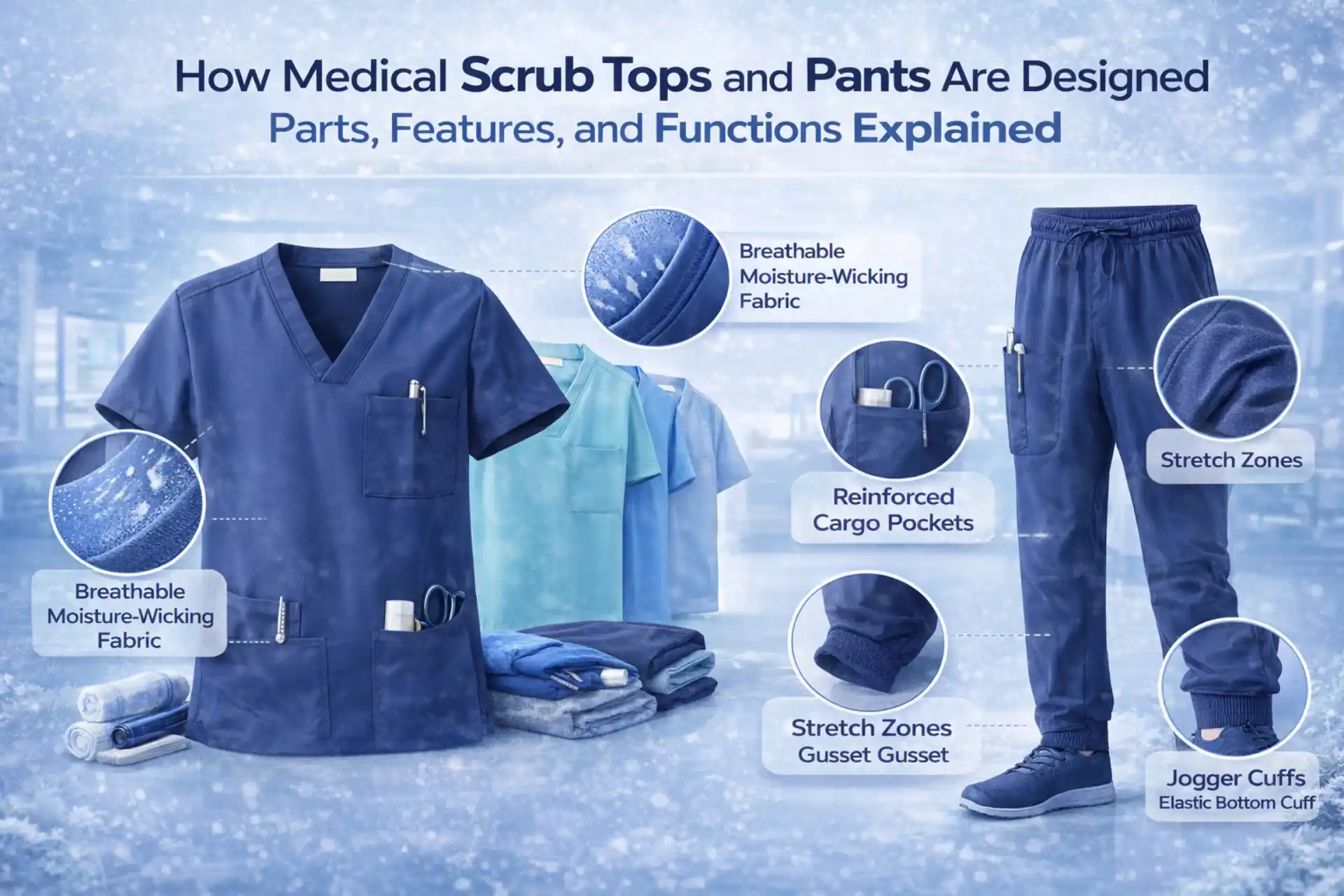

Medical scrubs are more than just uniforms—they help healthcare teams work comfortably, safely, and efficiently. Understanding how scrub tops and pants are designed can guide hospitals, clinics, and nursing schools in choosing durable, functional uniforms that suit their staff’s roles. Steek Apparel’s USA-based manufacturing ensures high-quality fabrics, reinforced construction, and B2B-friendly production, making it easier for healthcare organizations to order scrubs that last, fit well, and perform under daily hospital demands.
Why Understanding Scrub Design Matters for B2B Buyers
When hospitals, clinics, and nursing schools buy scrubs in bulk, knowing how they are designed makes a big difference. The fit, seams, stretch areas, and pockets affect how comfortable staff feel while moving in busy places like the OR, ER, or pediatric wards. Good scrubs let doctors, nurses, and technicians move freely, reducing strain and accidents.
For bulk buyers, design matters for ordering. Choosing scrubs with durable fabrics, reinforced seams, and tested stretch zones ensures that large orders last through repeated washes and daily wear. Knowledge of the scrub components makes it easier to meet hospital standards and specific job needs.
Hospitals often face returns and dissatisfaction when scrubs don’t fit right or wear out quickly. By learning about necklines, sleeve styles, pocket placement, and waistbands, procurement teams can pick uniforms that staff like, lower return rates, and keep a professional look, saving time and money.
Scrub Top Design Explained
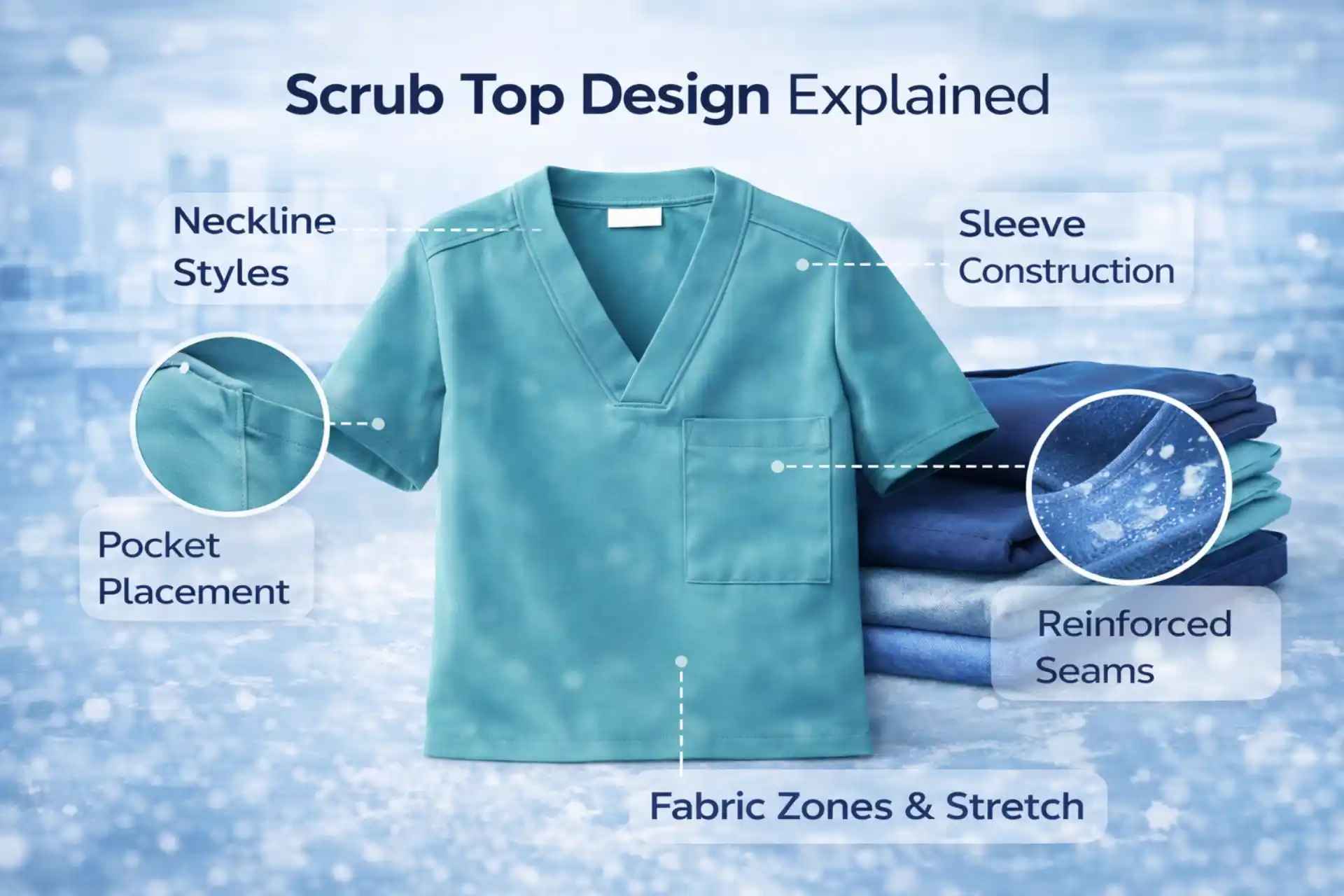
Scrub tops seem simple, but every detail helps healthcare workers stay comfortable, safe, and efficient. Knowing these features helps hospitals, clinics, and nursing schools choose durable and well-fitting tops that meet their staff’s needs.
Neckline Styles and Their Functions
Scrub tops come in different necklines, such as V-neck, mandarin, mock wrap, and crew neck. V-necks are great for layering and provide good ventilation. Mandarin and mock wrap necks offer a polished look while allowing easy movement. Crew necks give full coverage and a classic style. For procurement teams, knowing neckline preferences is essential because it affects how bulk orders fit different staff sizes and uniforms’ overall comfort.
Sleeve Construction and Mobility
Sleeves can be short, 3/4, or long, and their construction plays a big role in movement. Armhole designs and underarm gussets give extra stretch where it’s needed, while fabrics with 2–4% spandex provide flexibility during bending, lifting, or reaching. Hospitals often face problems like seam tearing in high-movement areas, so reinforced stitching and proper sleeve design help reduce wear and staff complaints.
Pocket Placement and Reinforcement
Pockets are important for holding tools, pens, and small items. Scrub tops may have chest pockets, side pockets, or multiple pockets with pen slots. Strong corners and special stitching prevent pockets from sagging or tearing, even with heavy use. Business buyers care about how strong and roomy the pockets are because bad pockets can lead to returns and unhappy staff.
Body Panels, Hems, and Seams
The design of the body panels affects how the tops fit and move. The panels are shaped to allow easy movement, and the hems and seams are finished to stop fraying and stretching. Strong seams help keep tops durable after many washes, which is vital for buying in bulk. Hospitals need tops that keep their shape and function over time to reduce the need for replacements.
Fabric Zones and Stretch Performance
The choice of fabric and its placement greatly influences comfort. Breathable areas and fabric that wicks away moisture keep staff cool during long shifts. Stretch fabrics, whether 2-way, 4-way, or 360°, support dynamic movements in busy departments. Standard fabrics include cotton/poly blends, spandex, and rayon, which balance durability, flexibility, and softness. Knowing about these fabrics helps business buyers choose scrub tops that work well and last through daily hospital use.
Scrub Pant Design in Detail
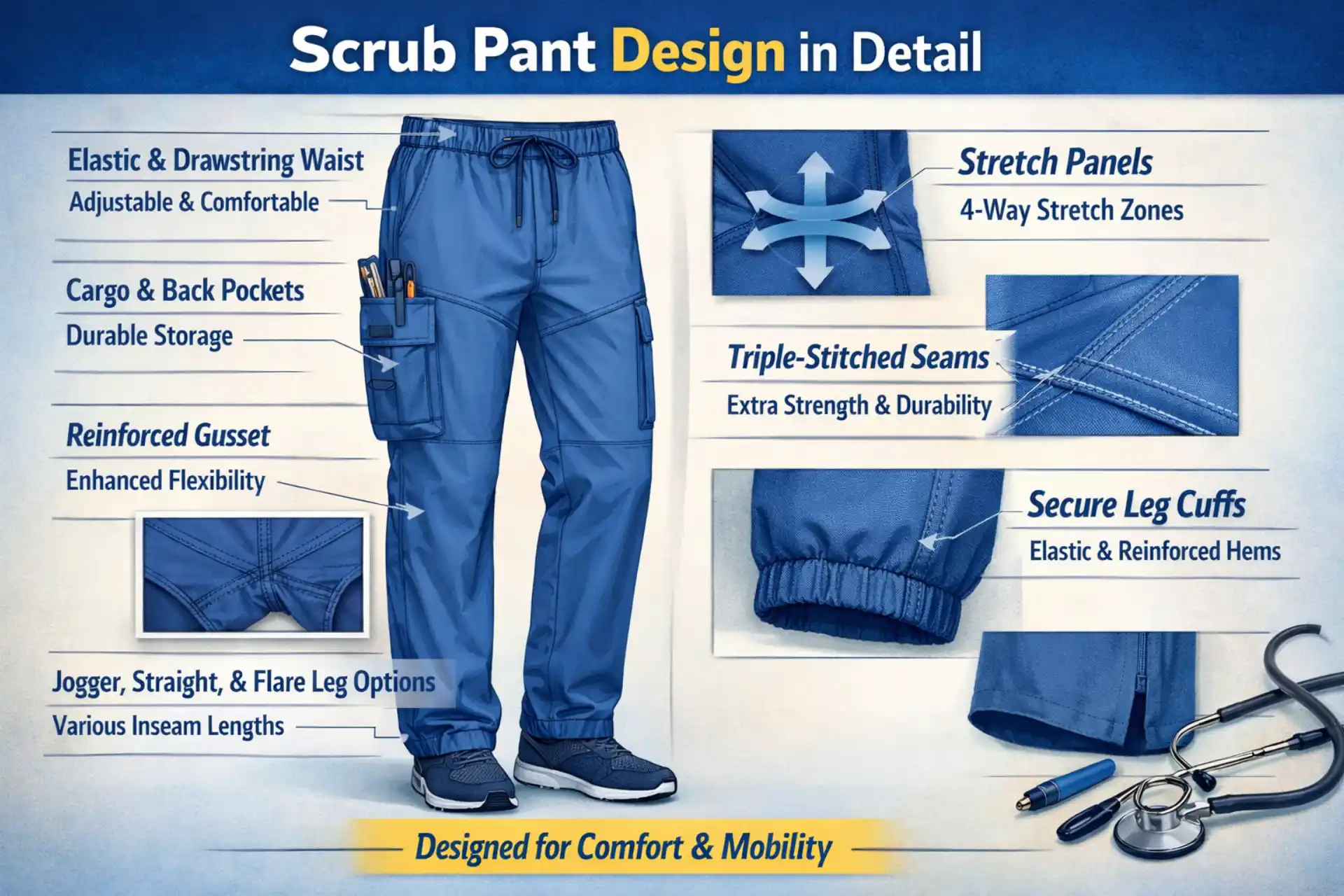
Scrub pants help healthcare workers move easily, feel comfortable, and keep their tools safe. Every detail, like waistbands and cuffs, affects how well they perform and how satisfied staff are. Knowing these details helps hospitals and clinics make smart bulk purchases.
Waistband Systems and Fit Options
Scrub pants offer different waistbands, including elastic, drawstring, and yoga-style styles. These designs allow adjustable sizing, usually from 28 to 50 inches, making it easier to fit staff of all shapes. Flexible waistbands improve mobility, comfort, and reduce the chances of returns because staff can wear them all day without discomfort.
Inseams, Rise, and Leg Cuts
Scrub pants come with different waistbands, such as elastic, drawstring, and yoga styles. These allow for adjustable sizes, typically from 28 to 50 inches, making it easier for all body types to fit. Flexible waistbands enhance movement and comfort, reducing returns since staff can wear them all day without discomfort. Use the size chart to confirm proper fit before bulk ordering.
Pocket Configurations and Durability
Inseam lengths usually range from 28 to 33 inches, with options for petite and tall sizes. Leg cuts include straight, flare, and jogger styles, chosen based on the worker’s role. For instance, nurses may prefer joggers for ease of movement, while surgeons might like straight or flare cuts for layering with gowns. Knowing seams and cuts helps buyers meet different needs.
Stretch Zones and Gusset Reinforcement
Scrub pants often have cargo and back pockets for carrying tools. Strong stitching prevents sagging and tearing, which often happens in busy hospitals. Good pocket design improves workflow and ensures staff can safely carry devices and pens.
Cuffs and Hem Details
Scrub pant cuffs may have elastic or drawstring options for a better fit and more freedom to move. Strong hems and reinforced stitching stop fraying and help the pants last longer. This is important for bulk orders because pants that survive over 50 washes save money and cut down on replacements.
Critical Specifications & Materials
Choosing the right fabric and materials is crucial when buying scrubs in bulk. Hospitals, clinics, and nursing schools need uniforms that are strong, comfy, and meet hygiene needs. Knowing about fabric types, performance, wash testing, and safety standards helps teams make good choices that save costs and keep staff satisfied.
Fabric Blends and Performance Features
Scrubs often come in cotton/polyester blends. Adding 2–4% spandex allows stretch in key areas so staff can move easily during long shifts. Some fabrics are treated to be antimicrobial, moisture-wicking, or water-resistant, keeping scrubs clean and comfortable. Hospitals depend on these features to ensure hygiene, avoid cross-contamination, and keep uniforms soft and functional after many washes. The right fabric blend also impacts durability; some materials hold up better after frequent washing.
Durability and Wash Testing
Before buying scrubs in bulk, hospitals need to know they can withstand heavy use. Quality tops and pants are tested for 50 or more washes to ensure seams and fabric stay intact. Acceptable shrinkage is usually between 4–6% to avoid fit problems. By knowing these durability standards, B2B buyers can reduce returns, keep staff happy, and ensure bulk orders last longer without losing appearance or performance.
Compliance Standards and Certifications
Medical scrubs must meet safety standards. OSHA and AAMI PB70 levels 1–4 check fluid resistance and safety at work. ISO 13485 and FDA certifications show that the scrubs follow global quality and medical clothing standards. Hospitals and nursing schools can trust these certifications to ensure the uniforms are safe and meet regulations, making it easier to buy in bulk and manage paperwork.
Customization and Branding Opportunities
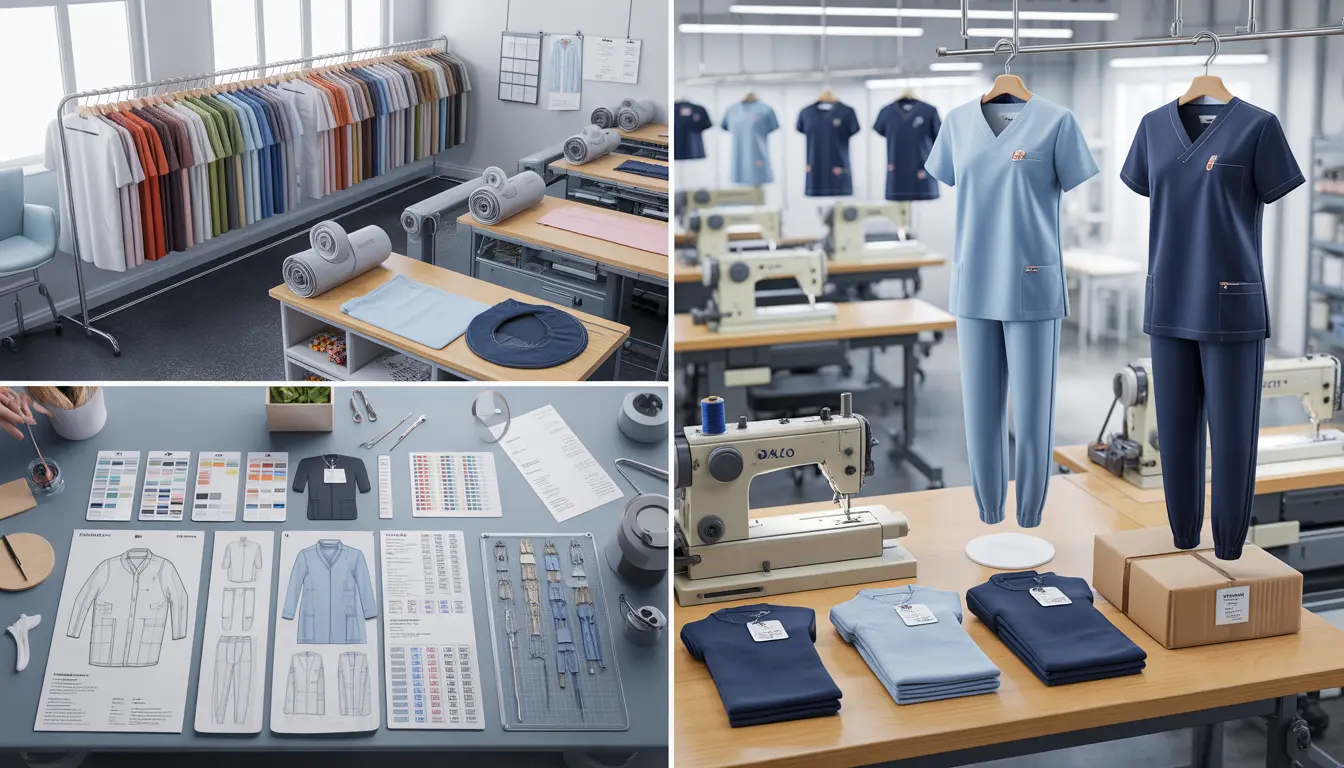
Customization lets hospitals, clinics, and nursing schools make scrubs more than just uniforms; they become part of the team identity. One popular option is embroidery, which can add logos, staff names, or department color coding. This not only looks professional but also helps quickly identify roles in busy environments like the ER or OR.
Private label options allow organizations to create their own branded scrubs, giving a consistent look across all staff while maintaining quality and durability. Color matching and batch consistency are also important for bulk orders. Uniform color across all items maintains a polished, professional appearance and prevents confusion between staff members. Steek Apparel’s USA-based manufacturing ensures these options are high-quality, consistent, and delivered efficiently.
B2B Buyer Decision Factors and Pain Points
When hospitals, clinics, and nursing schools buy scrubs in bulk, they look at several essential factors. Quality and durability come first; staff need uniforms that can last through long shifts and many washes. Cost matters, but buyers also check to see if the scrubs meet safety standards like OSHA, AAMI PB70, ISO, and FDA. Good service, custom options, and reliable delivery are also key when choosing a supplier.
Role-Based Scrub Selection Use Cases
Different healthcare jobs have specific scrub needs. Surgeons need fluid-resistant fabrics, long inseams, and fitted tops for safety during surgeries. Nurses want multiple pockets, jogger-style pants, and stretch zones for ease of movement. ER staff benefit from cargo pockets and strong stretch panels for agility.
Pediatric staff wear bright, soft scrubs to create a friendly atmosphere while staying comfortable. Procurement managers can use trial kits to check fit, fabric, and durability for different roles before ordering in bulk. It helps ensure uniforms meet specific needs, reduce returns, and keep a professional look in the facility.
Steek Apparel Advantages for B2B Procurement
Steek Apparel offers USA based manufacturing, reducing lead times to 10–15 days versus offshore production of 4–8 weeks. Flexible minimum order quantities start as low as 10 units, making it easier for small facilities to order only what they need.
Supply chain resilience allows emergency orders and consistent delivery during high demand periods. Direct quality control and compliance assurance ensure scrubs meet safety and performance standards. These advantages make bulk procurement simple, fast, and reliable for B2B buyers.
FAQ – Hospital Procurement Insights
Choosing the right neckline and fit for bulk orders
V-neck and crew necks are popular for comfort and layering. Select styles that suit staff roles and ensure consistent sizing across bulk orders.
Recommended fabric blends for hygiene and durability
Cotton/polyester blends with 2–4% spandex offer comfort, stretch, and durability. Antimicrobial and moisture-wicking treatments help maintain hygiene.
MOQ considerations for small vs. large facilities
Smaller facilities can order as few as 10 units, while larger hospitals often order in the hundreds to ensure batch consistency.
Ensuring pocket durability
Look for reinforced corners and bartack stitching. Multi-pocket designs improve tool storage and reduce wear in high-use areas.
Timeline expectations for USA-based suppliers
USA-based manufacturing typically delivers in 10–15 days, faster than offshore options taking 4–8 weeks.
Closing Thoughts
Choosing the right scrubs involves key decisions about fabric, fit, compliance, customization, and selecting a reliable supplier. Sampling and trial orders help hospitals, clinics, and nursing schools test quality, durability, and fit before committing to bulk purchases. Steek Apparel’s USA-based manufacturing offers fast lead times, flexible order sizes, and direct quality control, ensuring uniforms meet performance and compliance standards. By understanding design, materials, and customization options, procurement teams can provide staff with comfortable, durable, and professional scrubs that support daily work and maintain a polished appearance.