

Hospitals operate in cold environments, and long shifts expose healthcare staff to constant temperature changes that affect comfort and performance. Regular lightweight scrubs don’t keep staff warm enough, which can lead to discomfort and reduce focus. Choosing the right winter scrubs helps staff stay comfortable, move easily, and work well, while supporting operational efficiency and long-term uniform durability.
Medical scrubs with thermal insulation, moisture control, and good layering improve staff performance. This guide covers the best fabrics for winter scrubs, how to layer effectively, and tips for bulk orders to maintain size consistency, comfort, and operational efficiency.
Why Cold Weather Scrubs Matter
Cold work environments affect staff comfort and productivity. Static roles like monitoring equipment can lead to heat loss, while active roles like patient transport may cause sweating. Lightweight fabrics often can’t keep warmth or manage moisture, leading to chills or overheating. Proper winter scrubs help protect staff, reduce fatigue, and maintain consistent workflow, especially during night shifts, outdoor work, and emergencies.
Winter Scrub Fabric Options

Selecting the right fabric is critical for warmth, movement, and durability. Winter scrubs should provide thermal insulation while allowing moisture to escape. Mobility is essential, so stretchy fabrics or well-designed cuts work best. The weight should keep you warm without limiting your movement. Durability is also important, ensuring the scrubs hold up even after multiple washes.
Fleece-Lined Scrubs
Fleece-lined scrubs keep you very warm with an inner soft fleece layer, making them great for night shifts, cold wards, and transporting patients. However, they hold moisture longer, which means they take extra time to dry and are harder to layer. They are not suitable for operating rooms or hot areas where breathability is essential.
Brushed Cotton, Flannel, and Thick Scrubs
Flannel and thick cotton scrubs have a soft inside for warmth. They soak up more moisture and dry slowly, making them suitable for low-volume outpatient clinics but not great for heavy-duty washing.
Thermal Pants and Layering
Thermal scrub pants and insulated bottoms keep you warm without being heavy. You can layer them with regular scrub tops to easily move between indoor and outdoor areas, staying comfy without wearing oversized clothes.
Cotton-Polyester Blends
Cotton-poly blends provide warmth, manage moisture, and last longer. They dry quicker than fleece or flannel, making them suitable for hospitals with changing temperatures and outdoor work.
Heavyweight Polyester Blends
High GSM polyester blends keep you warm, resist wear, and retain their color after many washes. Their moisture-wicking features help reduce sweat, making them ideal for ICUs, emergency departments, and hospitals with high laundry demands.
Comparing Winter Scrub Fabrics
| Fabric Type | Warmth | Moisture Management | Mobility | Laundry Durability | Ideal Use |
|---|---|---|---|---|---|
| Fleece-Lined | High | Moderate | Moderate | Moderate | Night shifts, transport |
| Flannel / Thick | Moderate | Low | Moderate | Low | Low-volume clinics |
| Thermal Pants | Moderate | High | High | High | Indoor/outdoor staff |
| Cotton-Poly Blends | Moderate | High | High | High | Variable temperature hospitals |
| Heavyweight Polyester | High | High | Moderate | High | ICUs, emergency, high-laundry stress |
Choosing Winter Scrubs Based on Work Environment
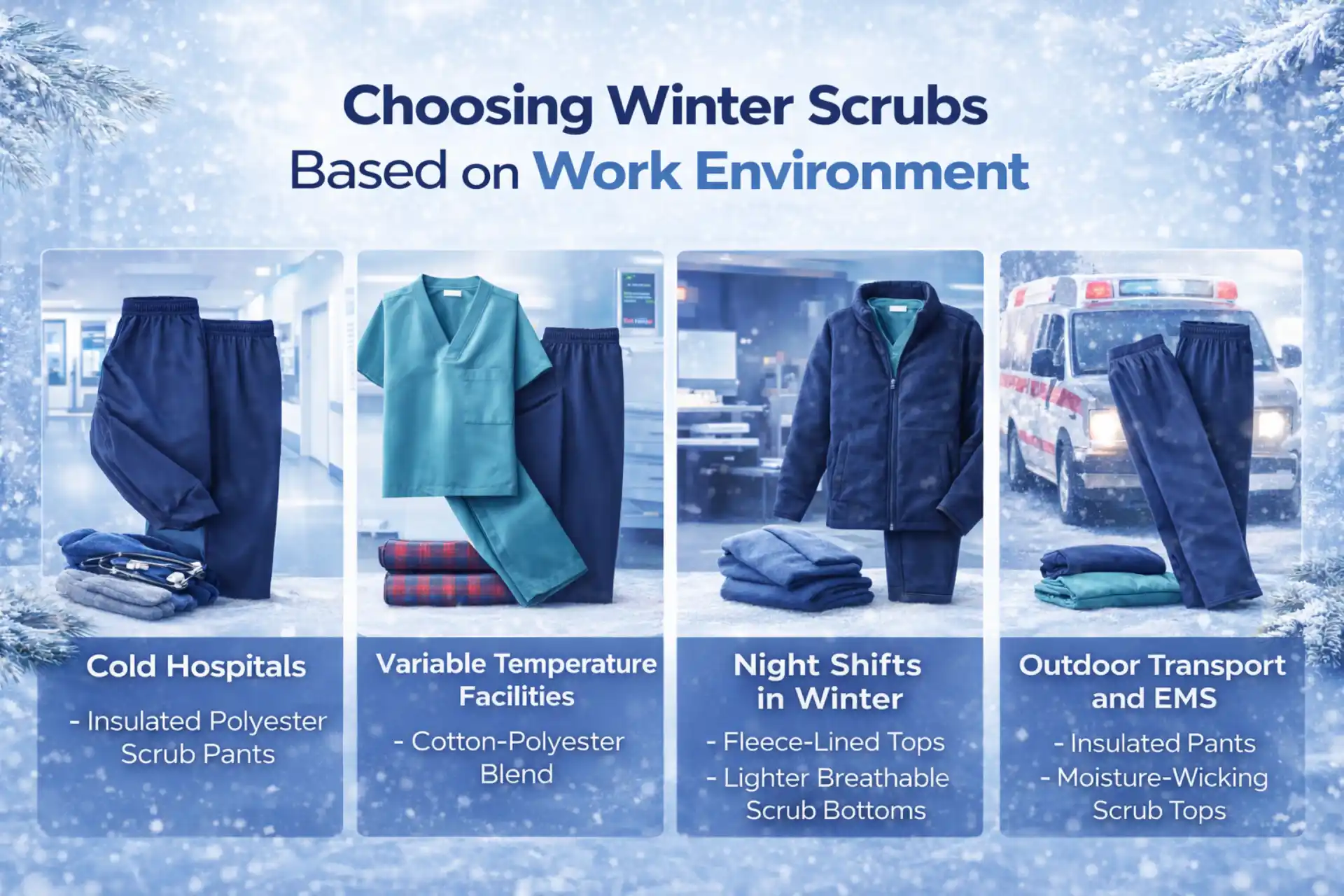
Healthcare facilities have different temperature needs, so one winter scrub solution won’t work for everyone. Winter medical scrubs should support warmth without limiting mobility or causing overheating during active periods.
- Cold Hospitals: Use insulated polyester blends with thermal scrub pants for warmth.
- Variable Temperature Facilities: Choose cotton-polyester blends for flexible layering.
- Night Shifts in Winter: Fleece-lined tops with lighter breathable scrub bottoms
- Outdoor Transport and EMS: Combine insulated pants with moisture-wicking scrub tops.
Laundry, Care, and Durability
Industrial washing affects fabrics differently. Fleece and cotton are sensitive to chlorine and require longer drying, increasing energy use. Polyester blends outperform in winter settings due to faster drying, better color retention, and repeated laundering resistance. Selecting durable winter fabrics reduces operational costs and ensures staff comfort.
Key Considerations for Bulk Winter Scrub Orders
Successful winter scrub procurement depends on controlled testing, accurate sizing, and disciplined inventory planning. These steps help reduce returns while ensuring staff comfort and seasonal readiness.
- Audit temperatures by department before selecting winter fabrics.
- Stock Tall and Petite sizes for core colors and high volume fits.
- Pilot test small batches to confirm comfort, mobility, and durability.
- Manage seasonal stock to avoid overage and simplify inventory.
Final Thoughts
No single winter scrub fits all healthcare environments. Choosing the right fabric, layering, and durability helps ensure comfort and performance. Smart scrub selection boosts efficiency, cuts down laundry issues, and supports staff well-being during cold shifts.